
Last updated October 31, 2026
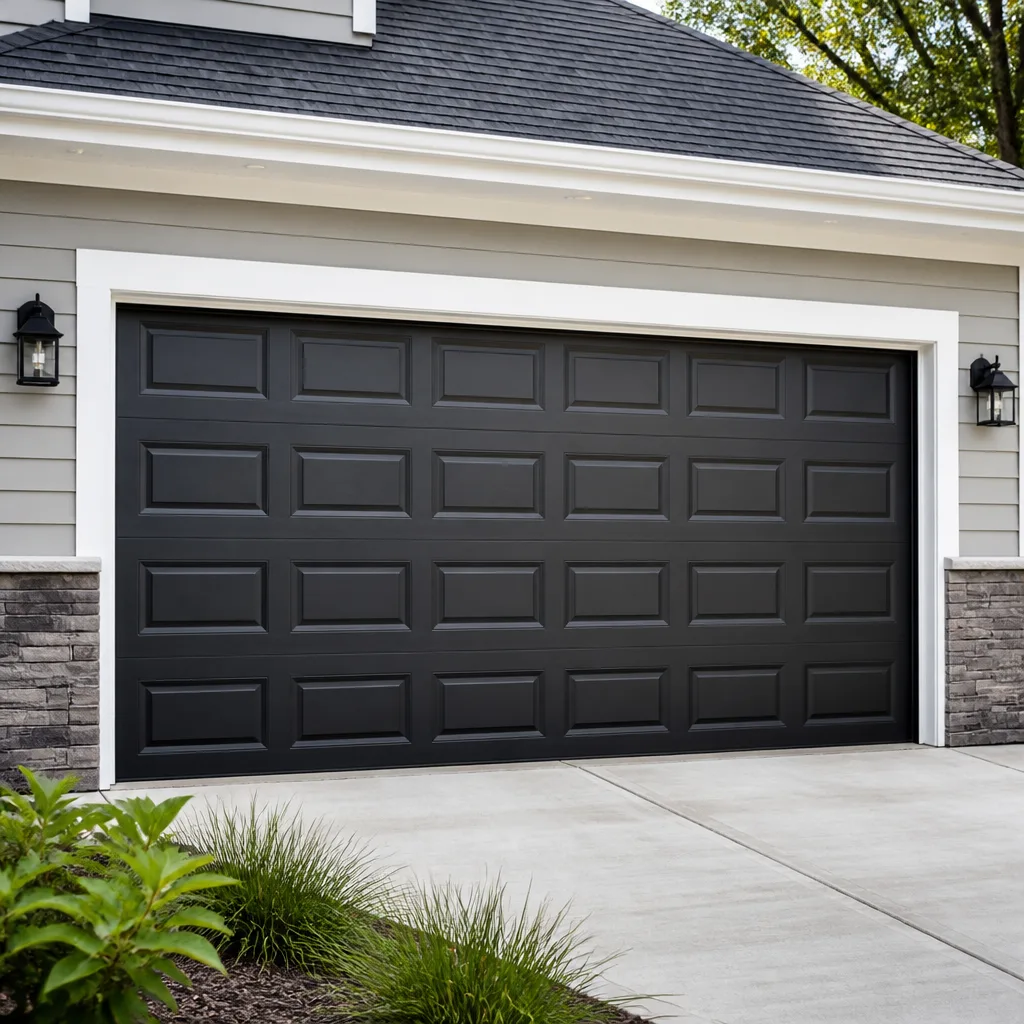 Raised-panel steel
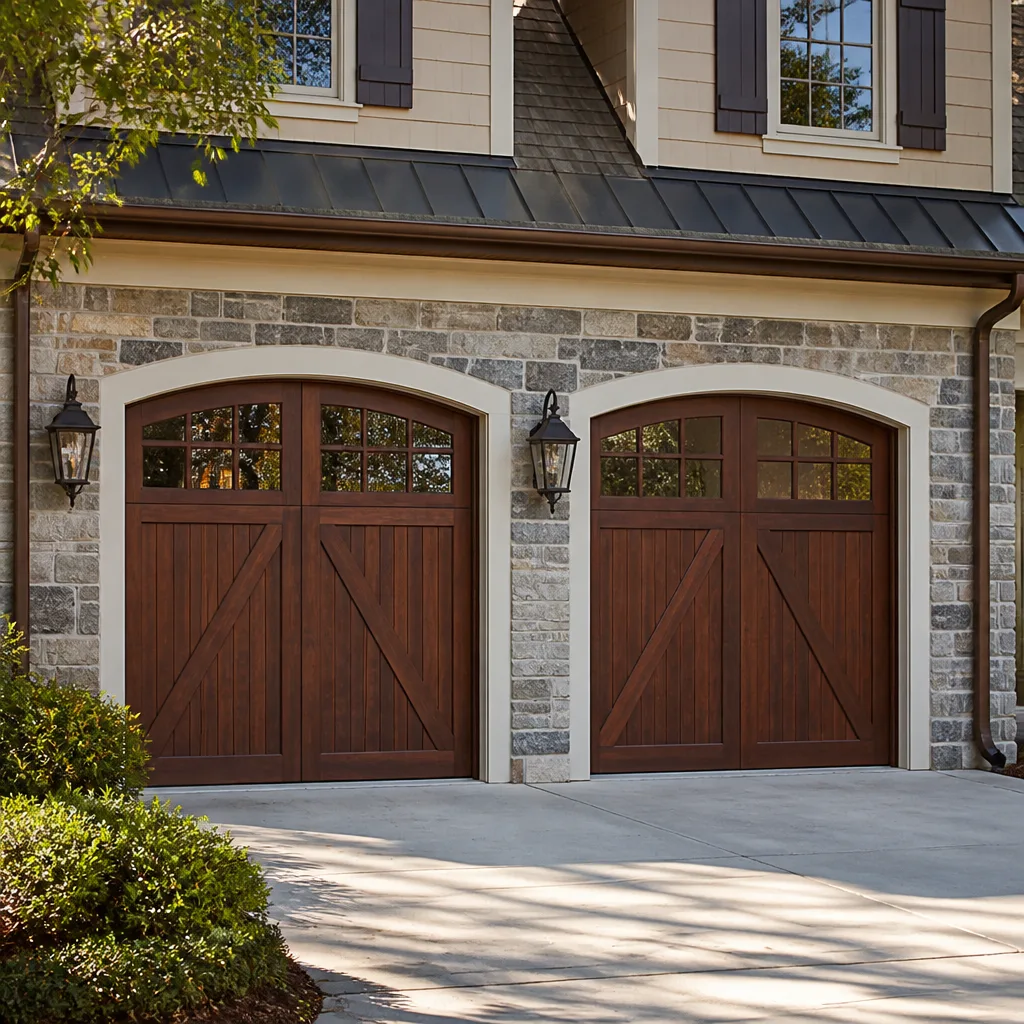 Carriage house
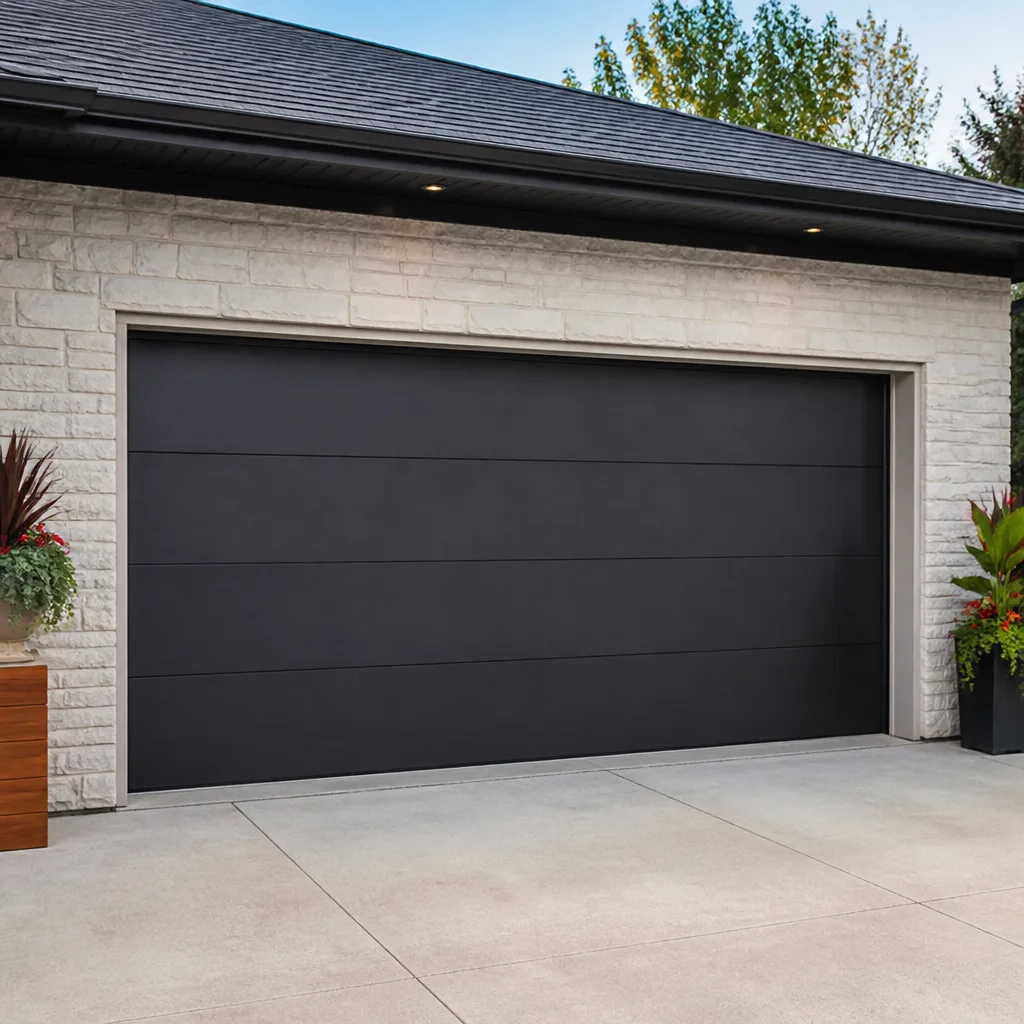 Modern flush
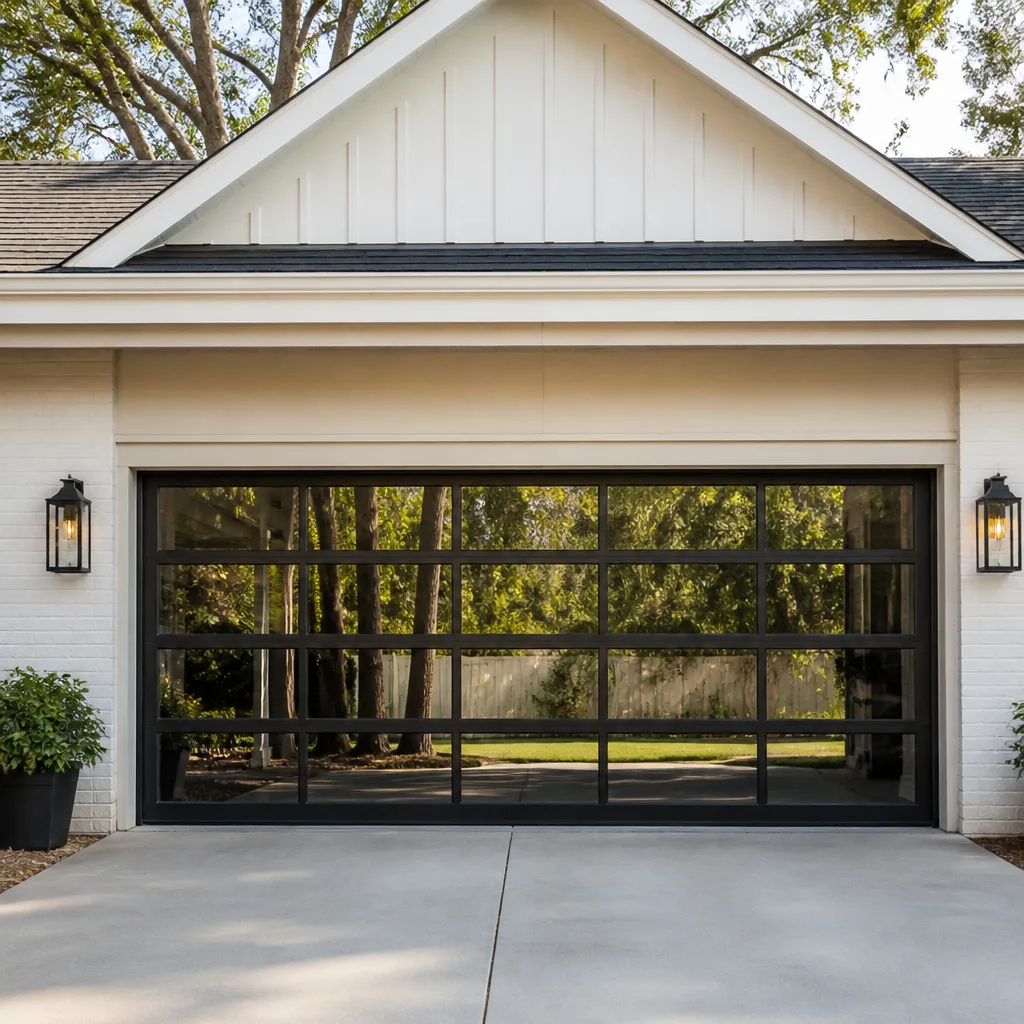 Full-view glass
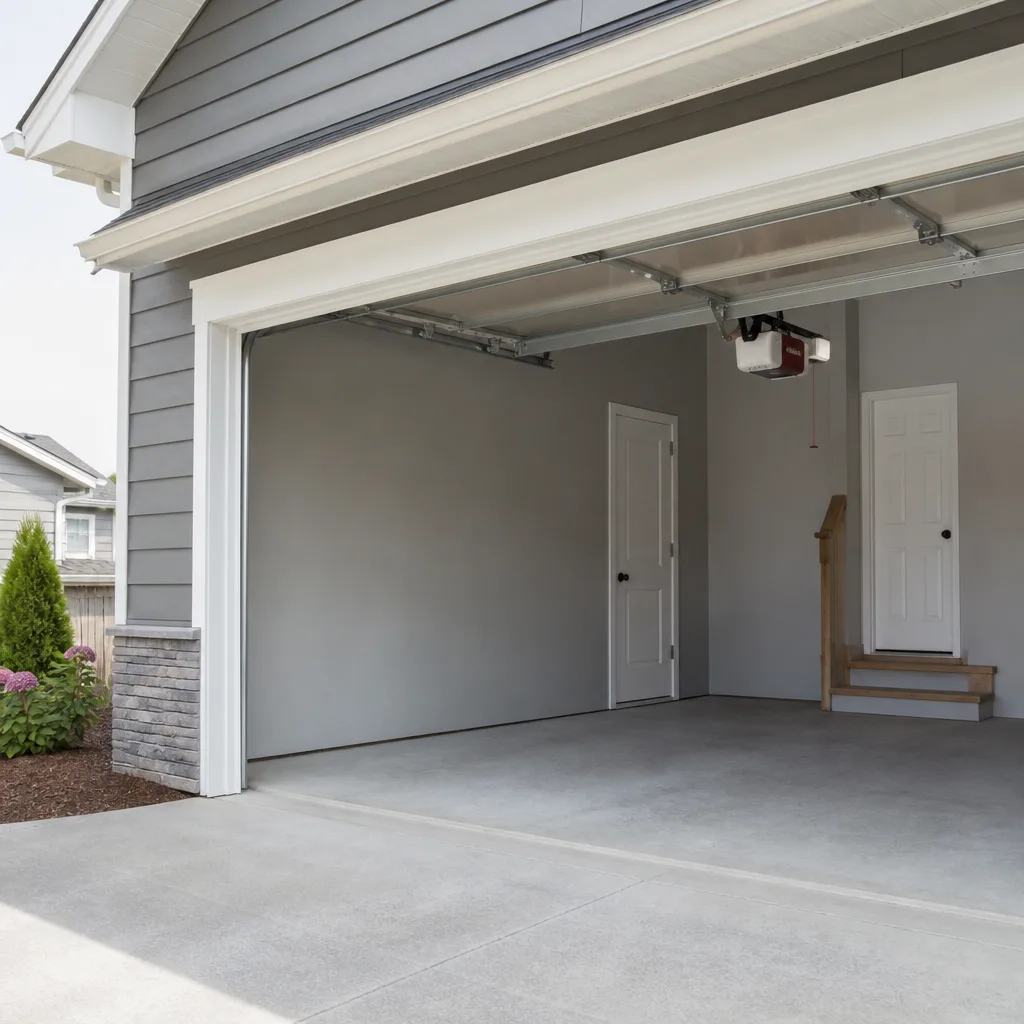 LiftMaster openers
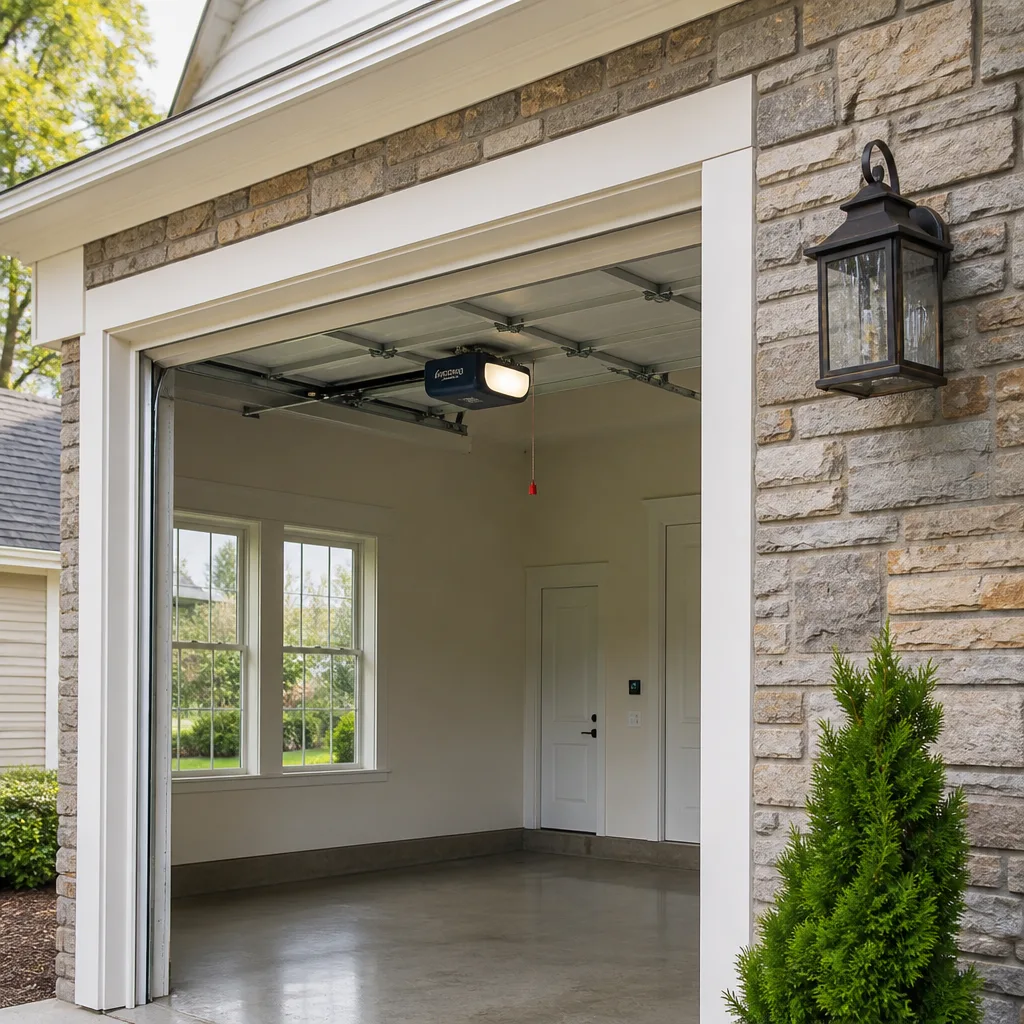 Chamberlain openers
Full 25-point door and opener safety check with every visit - springs, cables, rollers, tracks, and your LiftMaster or Chamberlain opener included
You get a price before we start. It does not change when the truck arrives.
Get your free estimateGarage Door Repair Maintenance Checklist for Lakeland Homeowners
Most maintenance checklists tell you to “lubricate moving parts.” That advice is so vague it’s useless, and using the wrong lubricant in Florida heat actually accelerates wear. A Lakeland garage door faces a specific set of enemies: relentless UV exposure, 70%+ humidity, afternoon thunderstorms, and the salt-tinged air that works its way inland from the Gulf. This guide replaces generic advice with pass/fail criteria built for Lakeland conditions, so you know exactly what to inspect, what to use, and when a creak or a lag means it’s time to pick up the phone.
Styles & brands we work with
Quick Answer
A Lakeland garage door maintenance routine should include monthly visual inspections of springs, cables, rollers, and weather seals; lubrication every 6 months with a lithium-based grease (never WD-40); and a full pre-hurricane-season check of anchor bolts, bottom seals, and the emergency release mechanism each May. If you find frayed cables, cracked springs, or an opener that won’t reverse on resistance, stop using the door and call our Garage Door Repair services immediately.
Table of Contents
- Why Lakeland’s Climate Demands a Different Maintenance Approach
- The 10-Minute Monthly Visual Inspection (With Pass/Fail Criteria)
- Lubrication in High Humidity: What to Use and What to Skip
- Springs and Cables: The Parts That Can Kill You and When to Replace Them
- Opener Force and Auto-Reverse Testing: The 2×4 Test and What It Tells You
- Pre-Hurricane-Season Inspection for Lakeland Homes
- Rollers, Hinges, and Weather Seals: The Humidity Failure Points
- Common Mistakes to Avoid
- When to Call a Professional
- Frequently Asked Questions
- The Bottom Line
Why Lakeland’s Climate Demands a Different Maintenance Approach
Garage door maintenance advice written for a homeowner in Ohio or Colorado doesn’t transfer to Lakeland. Here’s what we deal with on a daily basis: metal parts that sweat, rubber that bakes and cracks, and lubrication that either evaporates or turns gummy depending on the month. The average summer afternoon in Polk County pushes garage interior temperatures past 110 degrees, and that heat soaks into every spring, hinge, and opener circuit board. Then the humidity settles in overnight, condensing on the cooler metal surfaces and starting the corrosion cycle all over again.
The west-facing doors in neighborhoods like Lakeland‘s Beacon Hill or the south-facing doors near Lake Hollingsworth take the worst of the afternoon sun. We’ve pulled rollers off doors where the nylon had literally melted into the hinge barrel. If your garage door gets direct afternoon sun for more than three hours a day, your inspection schedule needs to be tighter than the standard “twice a year” generic advice. Think monthly visual checks and lubrication every four to five months, not six.
The point of this guide isn’t to turn you into a technician. It’s to give you the same pass/fail criteria we use in the field so you can catch a $40 roller replacement before it turns into a $600 track repair. Every recommendation below is written for the specific weather and wear patterns we see across Lakeland, Lift Line Garage Door Repair home territory.
The 10-Minute Monthly Visual Inspection (With Pass/Fail Criteria)
Here’s the inspection routine we run on every service call, simplified into a version any homeowner can complete in ten minutes with a flashlight and a step stool. The key is that each check has a clear pass or fail standard. “Looks worn” is not a standard. “The spring gap is wider than 3/16 of an inch” is.
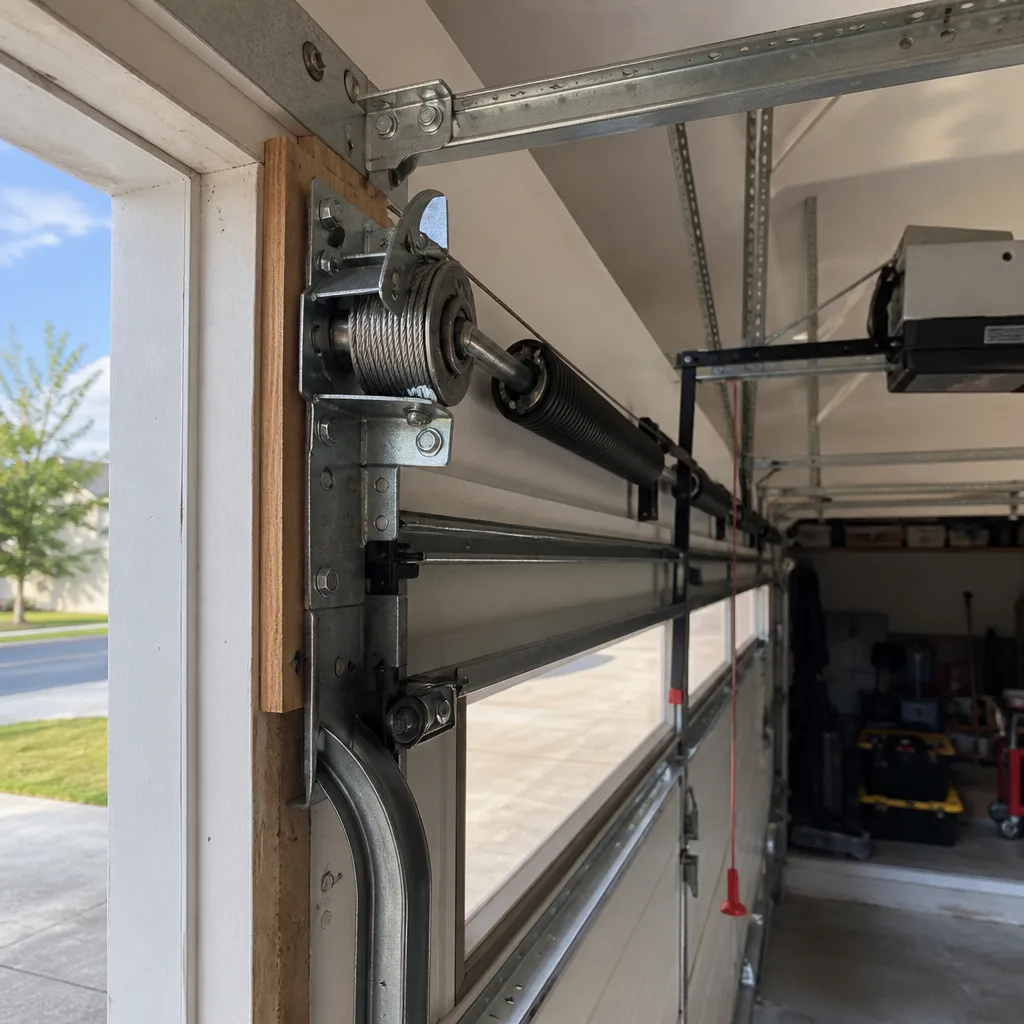
- Spring gap check (pass/fail: gap under 3/16″): Look at the torsion spring above the door. A healthy spring has coils that are evenly spaced with no visible gaps between them. If you can see daylight between coils, or if one section of the spring has separated, the spring is fatigued. We see this most often on doors that face the afternoon sun in Lakeland subdivisions like Christina and Scott Lake. Fail means the spring is approaching the end of its cycle life, usually 10,000 to 15,000 open/close operations.
- Cable condition check (pass/fail: no broken strands, no rust bloom): The lifting cables run along both sides of the door. Run your finger lightly along each cable (with the door closed, it’s safe). A smooth pass is good. If you feel burrs, snags, or a powdery rust residue, that’s a fail. Salt air and humidity start the breakdown invisible to the eye. By the time you see visible fraying, the cable is a snapped-under-load waiting to happen.
- Roller wobble test (pass/fail: no more than 1/8″ side play): With the door closed, grab each roller stem and try to wiggle it side to side. A snug fit passes. Visible lateral movement means the roller bearing is wearing out. Listen for grinding or scraping during operation. A grinding Genie or LiftMaster opener usually isn’t the motor, it’s the rollers fighting the track.
- Track alignment check (pass/fail: vertical tracks within 1/4″ of plumb): Use a level on the vertical track sections. A 1/4-inch variance over an 8-foot span is tolerable. More than that means the door is pulling against itself every cycle, which is how you end up with bent tracks and prematurely worn cables.
- Bottom seal light test (pass/fail: no visible light, no standing water): With the door closed and the interior light off, look for daylight under the bottom edge. In Lakeland‘s summer rainy season, a failed bottom seal means more than pests; it means water pooling on your garage floor every afternoon. If you see light or water stains, the seal needs replacement, which is a 20-minute fix.
If every check passes, your door’s in good shape. If two or more items fail, the fixes compound fast, and that’s when a professional Garage Door Repair in Jan-Phyl Village technician becomes cheaper than waiting.
Lubrication in High Humidity: What to Use and What to Skip
Here’s the truth that generic checklists get wrong in Lakeland: WD-40 is not a garage door lubricant. It’s a solvent and water displacer, which means it strips existing lubricant and evaporates within days in Florida heat. Spray it on a torsion spring in July, and by August that spring is running dry and squealing louder than before. We’ve replaced springs in Lake Gibson and Dixieland that were basically rusted solid because someone followed a viral video that told them to “spray everything down with WD-40.”
Here’s what actually works in high-humidity conditions:
- White lithium grease (spray or tube) on torsion springs: It clings to metal, resists water wash-off, and doesn’t break down at interior garage temperatures that routinely hit 110 degrees in Lakeland summers. Apply a light, even coat, not a drip-heavy mess. Excess grease attracts fine dust and grit that Polishes the spring into early failure.
- Silicone spray on nylon rollers and hinges: Nylon is self-lubricating, but the hinge pins are steel-on-steel. A silicone spray penetrates and repels moisture without leaving a sticky film that grabs pollen and construction dust. Avoid petroleum-based oils on anything nylon; they degrade the material over time.
- Garage door-specific spray lubricant on tracks (optional, minimal): Counter to what most people think, tracks should stay mostly dry. Rollers ride on the track, they don’t need a lubricant film. If you do apply anything, use a dry silicone spray and wipe off the excess. Greasing tracks is how you end up with a door that sticks in summer and grinds grit into the rollers.
The schedule that works for Lakeland homes: lubricate every 4 to 6 months, not the 12-month interval you’ll see on northern-state guides. Before hurricane season each May is the non-negotiable point, since that’s when the door gets the heaviest use and the highest winds put maximum stress on every moving part.
Springs and Cables: The Parts That Can Kill You and When to Replace Them
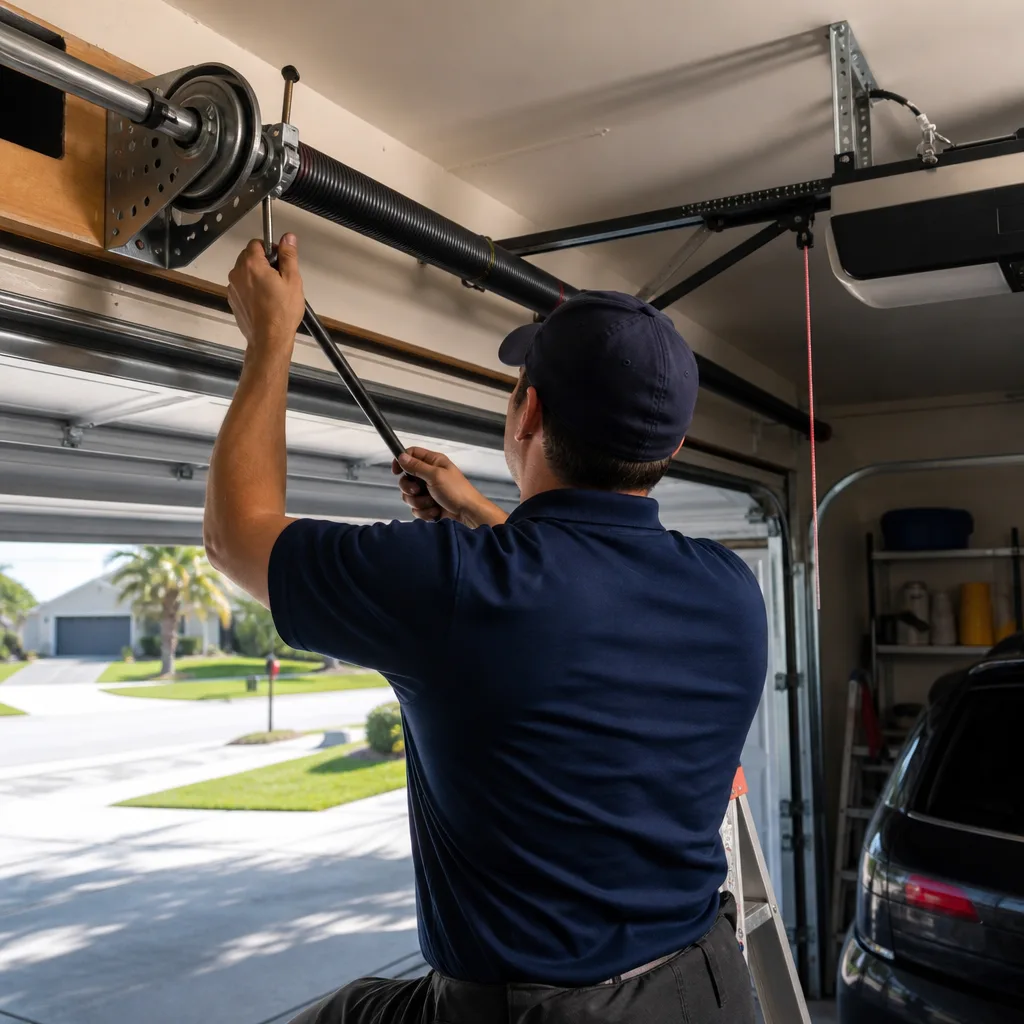
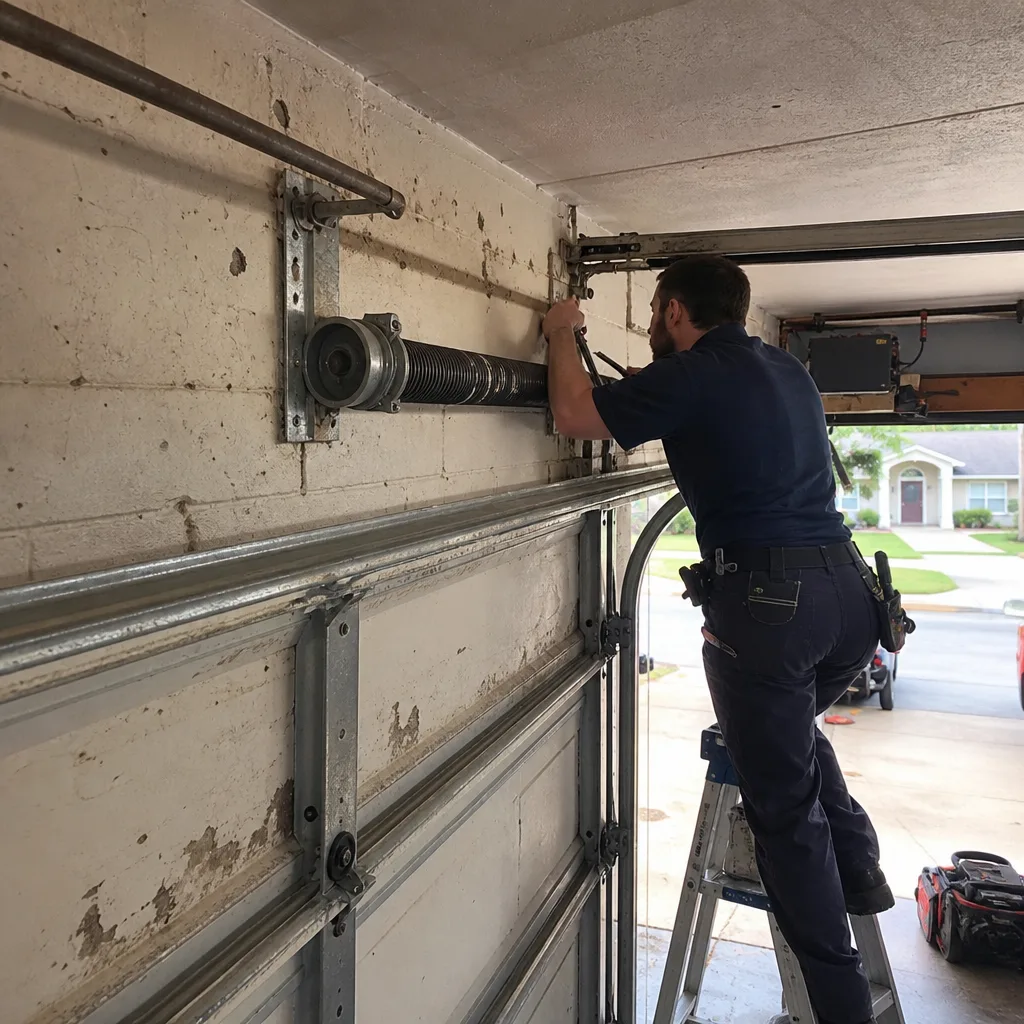
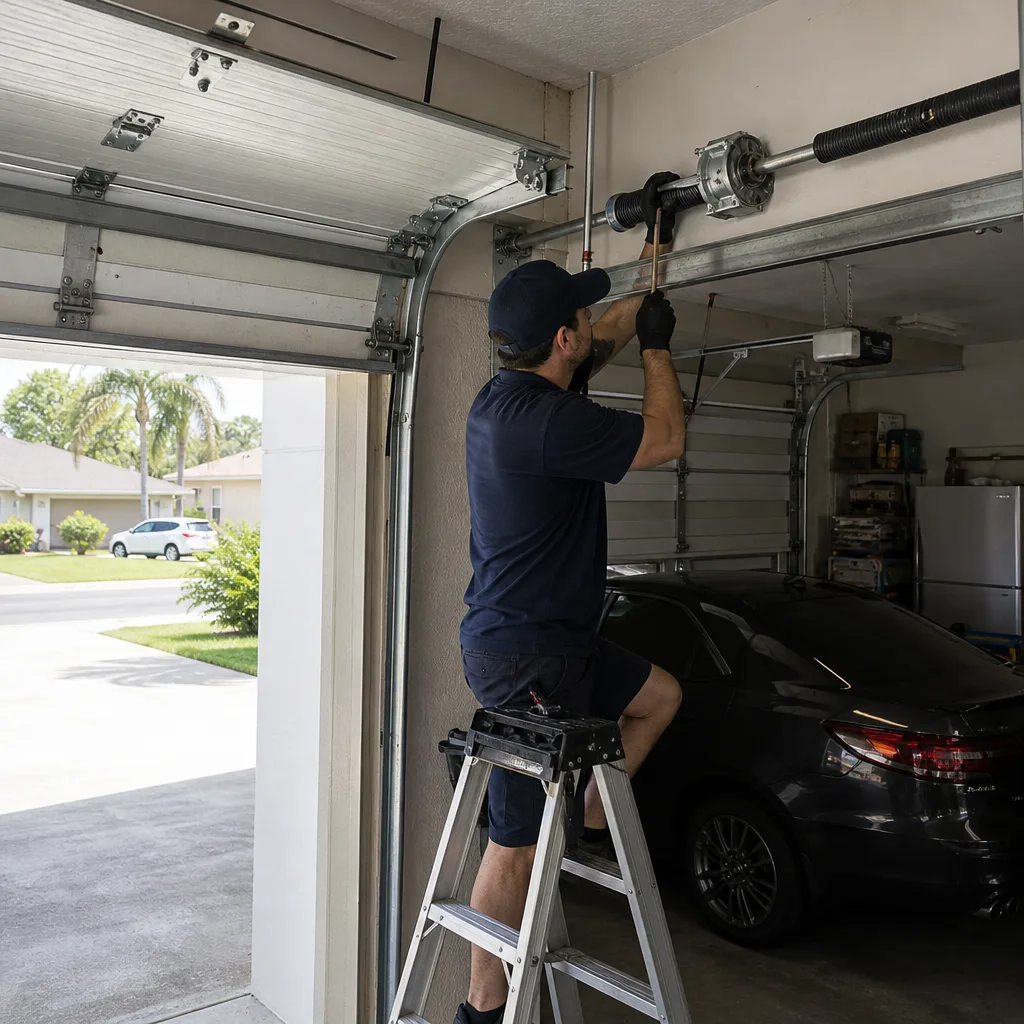
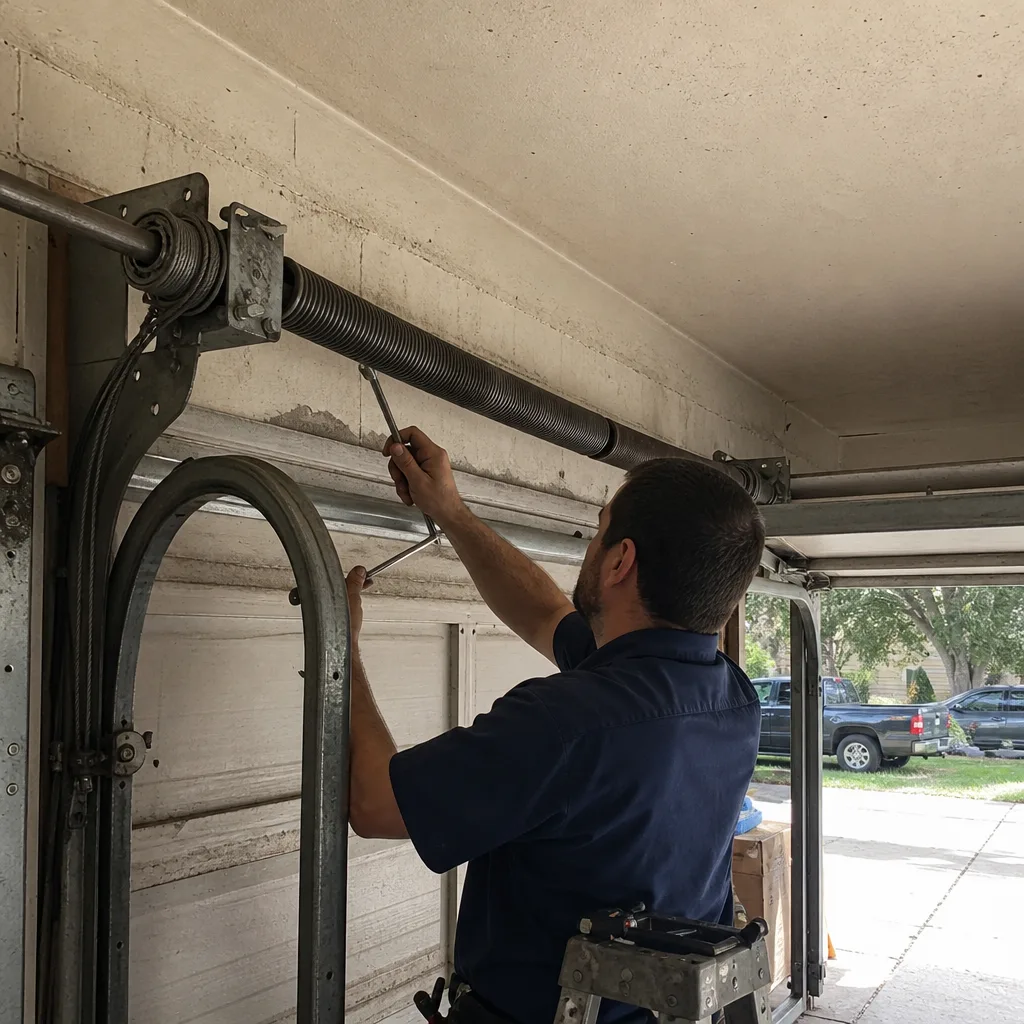
Let’s be direct about this: torsion springs hold tremendous stored energy. A typical 7-foot residential door spring carries roughly 100 to 150 pounds of torsion when wound. When one breaks, it releases that energy instantly. People have lost fingers, fractured eye sockets, and worse trying to wind or unwind springs without the proper tools and training. If you take nothing else from this guide, take this: do not attempt to repair, adjust, or replace torsion springs yourself. Call a trained professional. The same applies to lifting cables, which carry the entire weight of the door when the spring fails.
Now, here’s how to know when replacement is near, so you can schedule a repair before the spring snaps at 7 a.m. on a Monday:
- Visible gap between coils (torsion springs): As described above, once coils separate, the spring has lost tension. It’s not a matter of if it breaks, it’s when.
- Door feels heavier than it used to: Test by disengaging the opener (pull the red emergency release) and lifting the door manually. It should lift smoothly with roughly 8 to 10 pounds of effort. If it feels like dead weight, the spring is losing strength. In Lakeland‘s heat, we see spring fatigue set in at around 8 to 10 years, often sooner on doors that face west.
- Door won’t stay open halfway: A healthy spring holds the door wherever you stop it. If it drifts down from the halfway point, the spring is done. If it drifts up, the spring is over-torqued and dangerous.
- Cable showing rust bloom or broken strands: As noted in the inspection section, a powdery rust residue on cables in humid conditions means the steel is degrading from the inside out. Visible fraying means the cable has lost structural integrity and could snap, which drops the door and often bends the track in the process.
We work on doors from Wayne Dalton, Craftsman, Raynor, and LiftMaster. Each has different spring specs and cable routing, but the failure signs are universal. When a spring or cable fails, the repair cost is predictable: spring replacement typically runs $180 to $340 in Polk County, cable replacement $150 to $250, depending on door weight and whether you have one cable or both degrading at once. A spring that’s replaced before it snaps spares you the secondary damage that doubles the bill.
Opener Force and Auto-Reverse Testing: The 2×4 Test and What It Tells You
Your opener’s auto-reverse mechanism is the single most important safety feature on the entire door. It’s not about protecting the door; it’s about protecting your kids, your dog, your car, and you. Since 1993, all residential openers have been required to include a force sensor that reverses the door if it meets resistance. But these sensors drift out of calibration, especially in Lakeland‘s heat, where plastic gears and brackets expand and contract seasonally.
Here’s the test you should run every six months, and exactly what the results mean:
- Place a 2×4 flat on the ground under the center of the door. It needs to be at least 3 feet long and laid flat, so the door hits it on the way down.
- Close the door using the wall button or remote. The door should contact the 2×4 and reverse direction within 2 seconds of hitting it. It should reverse with enough force to fully return to the open position.
- Pass: The door reverses immediately and returns to open. Your force settings are within safe limits.
- Fail – Door doesn’t reverse: The force limit is set too high, or the gearbox has worn to the point where it’s producing inconsistent output. This is the setting that crushes things. Stop using the door until it’s recalibrated.
- Fail – Door reverses with a jolt or a bang: The force limit is set too low, or a track obstruction is causing excess friction. This setting will wear out the opener and shatter springs prematurely.
Older openers from the Craftsman era, which we still see all over Lakeland‘s established neighborhoods near Lake Morton, often have manual plastic adjustment screws that creep out of position over time. Newer LiftMaster and Chamberlain units with myQ have digital force calibration that’s more stable, but the sensor can still fail. If your door passes the visual inspection but the 2×4 test says fail, the opener is the problem, and Garage Door Opener Repair in Jan-Phyl Village is usually a same-visit fix.
Pre-Hurricane-Season Inspection for Lakeland Homes
Every May, before the Atlantic season really gets going, there’s a short list of checks that matter more in Lakeland than almost anywhere else in the country, as covered in our Garage Door Warning Signs: A Lakeland Homeowner’s Reference Guide. This isn’t about the door working when the power’s out (though that matters too). It’s about the door staying attached to the house when a Category 2 storm shoves 60 to 80 mph gusts against it. A garage door is the largest single opening in most homes, and when it fails under wind load, the pressure differential can lift the roof.
- Anchor bolt torque check: The vertical track brackets are anchored to the wall studs at multiple points. Check each bolt with a socket wrench; they should be snug, not stripped. In older Lakeland homes, especially those built before the 2000s, we find brackets that have loosened over decades of door cycling. Loose anchors mean the track flexes, the cables ride at an angle, and under wind load, the whole assembly can pull away from the wall.
- Bottom seal condition: A failed bottom seal doesn’t just let water in; it creates a wind tunnel under the door. In high winds, that gap funnels pressure into the garage interior, putting stress on the door panels and the track system. If your seal shows any cracks, gaps, or daylight, replace it before June 1.
- Emergency release function test: When the power goes out (and it will, during hurricane season), you need the emergency release to actually work. Pull the red handle; it should disconnect the opener carriage with a firm tug, not a wrestle. Then practice operating the door manually. It should lift smoothly and stay up at the halfway point. If it doesn’t, the spring is compromised, and you’ll be locked out of your garage during an outage.
- Panel integrity check: Look at each panel, especially the bottom two. Hairline cracks at the corners, rust on the panel edges, or a panel that’s bowed inward mean the door’s structural skin is compromised. Wind will find those weak points first.
For homeowners planning a full door replacement before storm season, the investment in a wind-rated door pays for itself in insurance savings over time. Garage Door Installation in Jan-Phyl Village includes wind-rated options from Amarr and Clopay that are engineered specifically for Central Florida’s wind code requirements.
Rollers, Hinges, and Weather Seals: The Humidity Failure Points
In Lakeland, the parts that fail first aren’t the big, dramatic components. They’re the small ones that suffer from constant humidity exposure: the nylon bearings in rollers, the steel pins in hinges, and the rubber weather seals. Here’s what to watch for, and what each failure typically costs to fix before it cascades.
Rollers: Most Lakeland homes have nylon-tired rollers with steel ball bearings. The nylon resists moisture, but the bearing races are exposed and eventually rust, especially when the door sits in a humid garage all summer. A failing roller sounds like a grinding or rattling during door travel. If you catch it early, a replacement roller set of 10 runs $80 to $120 installed. If you ignore it, the roller can seize entirely, which then chews up the track edge, and you’re into a $300+ track replacement. Roller replacement on any door, from a Wayne Dalton to a Raynor, follows the same labor process: release tension, pop out the old, insert the new.
Hinges: The hinges that connect the door panels are the unsung workhorses. They flex every time the door passes through the curve of the track. In high humidity, the hinge pins develop surface rust, which increases friction, which causes the door to chatter and the opener to work harder. A squeaking hinge is lubricant territory. A hinge that’s visibly cracked, bent, or has a pin that won’t stay seated is replacement territory. We replace hinges on local doors almost weekly during the summer months.
Weather seals: The rubber or vinyl strip along the bottom of the door, plus the side and top weatherstripping, is the first line of defense against Lakeland‘s afternoon downpours and the Palmetto bugs that follow moisture. Rubber bottom seals typically last 2 to 4 years in Florida sun exposure, less if the door faces south or west. Check by running your hand along the seal while the door is closed; if it’s brittle, cracked, or flattened to the point where it doesn’t rebound, it’s time. A bottom seal replacement is one of the cheapest maintenance items on this list, usually $60 to $90 parts and labor.
Common Mistakes to Avoid
- Using WD-40 as a garage door lubricant: It strips existing lubrication and evaporates within days, leaving springs and hinges drier than before. In Lakeland‘s summer humidity, a dry spring rusts fast. Use white lithium grease instead.
- Greasing the tracks: Tracks are not a lubrication point. Grease on the track collects dust and humidity, turning into an abrasive paste that grinds rollers down. Wipe tracks clean with a dry rag; let the rollers do the work.
- Ignoring a door that’s getting louder: Every garage door makes some noise, but a door that’s progressively louder every month is telling you something specific. A grinding noise is rollers, a squeak is hinges or springs, a bang is a track or panel issue. Early attention costs $80; late attention costs $500.
- Adjusting springs or cables without proper tools: As covered earlier, this is the one mistake that can permanently change your life. These parts are under lethal tension. The cost of a professional repair is cheap compared to the cost of a hospital visit.
- Replacing an opener without checking the door balance: We see this all the time in Lakeland. A homeowner buys a new Chamberlain or Genie opener, installs it, and the door still struggles. The problem was never the opener; it was a tired spring and dry rollers. Always balance-test the door before blaming the motor.
- Running the door with the emergency release disengaged: If the red cord is dangling, the carriage is disconnected from the trolley. Running the opener in that state slams the carriage into the traveler, strips the gear, and turns a $0 fix into a $250 opener repair.
- Deferring maintenance until the door actually breaks: Garage doors fail predictably before they fail catastrophically. The spring gap, the cable rust, the roller wobble, all of those are early warnings. Ignoring them doesn’t save money; it backloads all the costs into one urgent, expensive repair.
When to Call a Professional
If any single item on the monthly inspection list fails, and you’re not sure what it means, call a specialist. Specifically, here are the scenarios where DIY ends and professional territory begins: broken or visibly separated springs, frayed or rust-bloomed cables, a door that reversed at half-mast and won’t settle, an opener that failed the 2×4 test, or any door that’s jumped its track. These are not YouTube-and-pray situations. Lift Line Garage Door Repair offers free estimates in Lakeland, and we show up with the right parts on the truck because we work on every major brand, from the cable to the connected opener. Call (866) 253-2286 and you’ll get a direct answer, not a sales pitch.
Frequently Asked Questions
Every 4 to 6 months, not the 12-month interval that works in drier climates. Lakeland‘s consistent humidity and summer heat break down lubricants faster. Use white lithium grease on springs and silicone spray on hinges and rollers. Call (866) 253-2286 for a free estimate if you’re not sure what to use.
Torsion spring replacement in Polk County typically costs between $180 and $340 per spring, including parts and labor. Extension spring systems (usually on older doors) run $120 to $200. Prices vary based on door weight and spring cycle rating. Call (866) 253-2286 for an exact quote, and the price you hear is the price you pay, no surprises after the work is done.
The most common failure we see in Lakeland homes is roller bearing seizure caused by humidity-induced rust, followed closely by bottom seal degradation from UV exposure. Both are cheap to address early and expensive to ignore.
No, and for your own safety, no one should try. Cables are under the full tension of the spring assembly. A cable that slips or snaps during a DIY repair can cause severe injury. Call a professional, and the replacement typically runs $150 to $250 in Lakeland.
Check the manufacturer’s label on the inside of the door panel. Wind-rated doors will show a design pressure rating (typically labeled in PSF, pounds per square foot) and will reference Florida Building Code compliance. If the label is missing or the door was installed before 2000, it likely doesn’t meet current wind code for Central Florida. A professional inspection before hurricane season is the fastest way to know for sure.
Yes. We work on the brand already on your door, whether that’s a Wayne Dalton, Craftsman, Raynor, LiftMaster, or any of the other major manufacturers. Garage doors are all we do, and we carry the parts for the most common configurations on the truck. Call (866) 253-2286 to schedule.
No. The price you’re quoted over the phone is the price you pay, and it’s confirmed in writing before any work begins. If we find additional issues during the repair, we’ll show you what we found and get your approval before proceeding. That’s how Lift Line operates, and it’s how it should be done.
The Bottom Line
A Lakeland garage door that gets ten focused minutes of attention each month will outlast a neglected door by 30 to 50 percent, beating the Florida heat and humidity cycle that sends most doors to an early grave. Run the visual inspection with pass/fail standards, lubricate with the right products on a 4 to 6 month schedule, test the auto-reverse twice a year, and do the full hurricane-prep list each May. Catch rollers and seals before they cascade, and never touch springs or cables under tension. When something fails the checklist, the fastest, safest resolution is a call to (866) 253-2286 for a free garage door repair estimate in Jan-Phyl Village and throughout the Lakeland area.
Written by the team at Lift Line Garage Door Repair, serving Lakeland since 2012. For more guides & resources, visit our blog.
See the difference
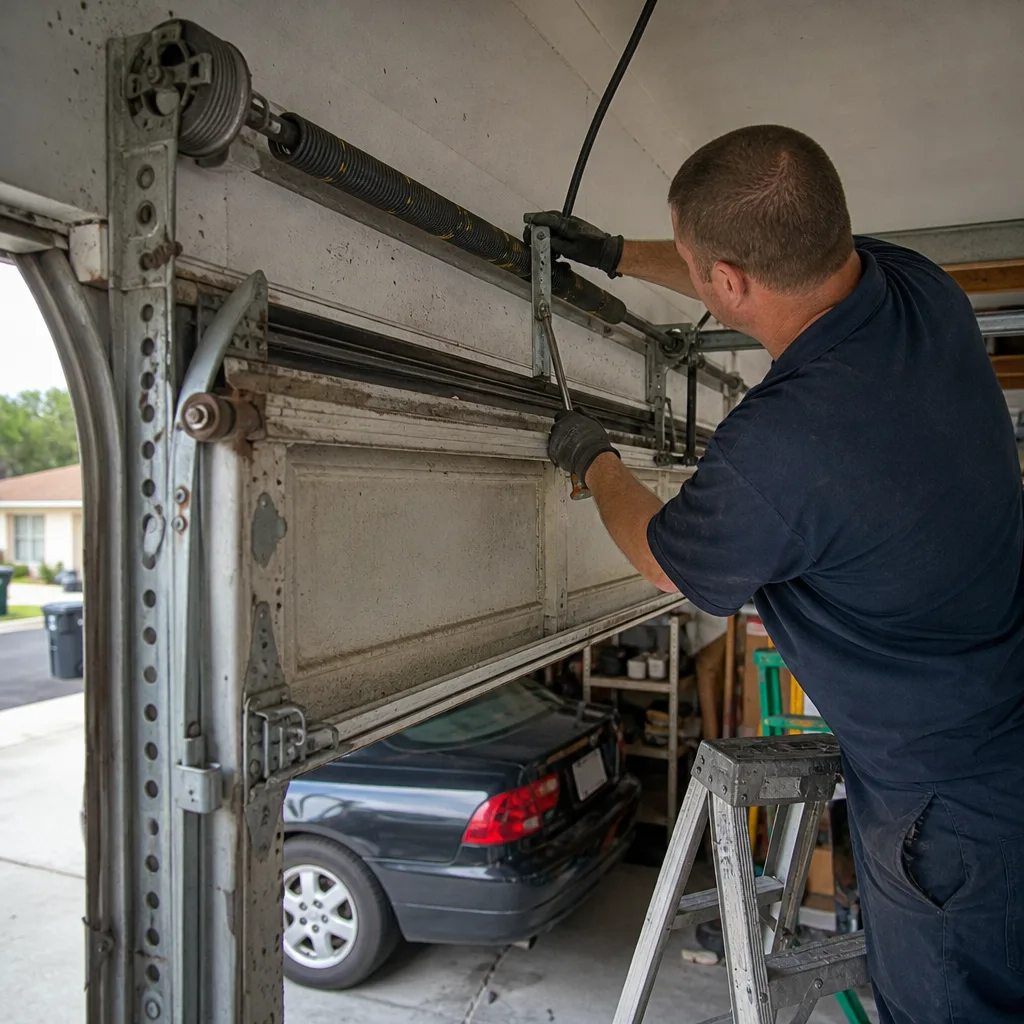 Before
 After
 Before
 After
 Before
 After