

Last updated October 31, 2026
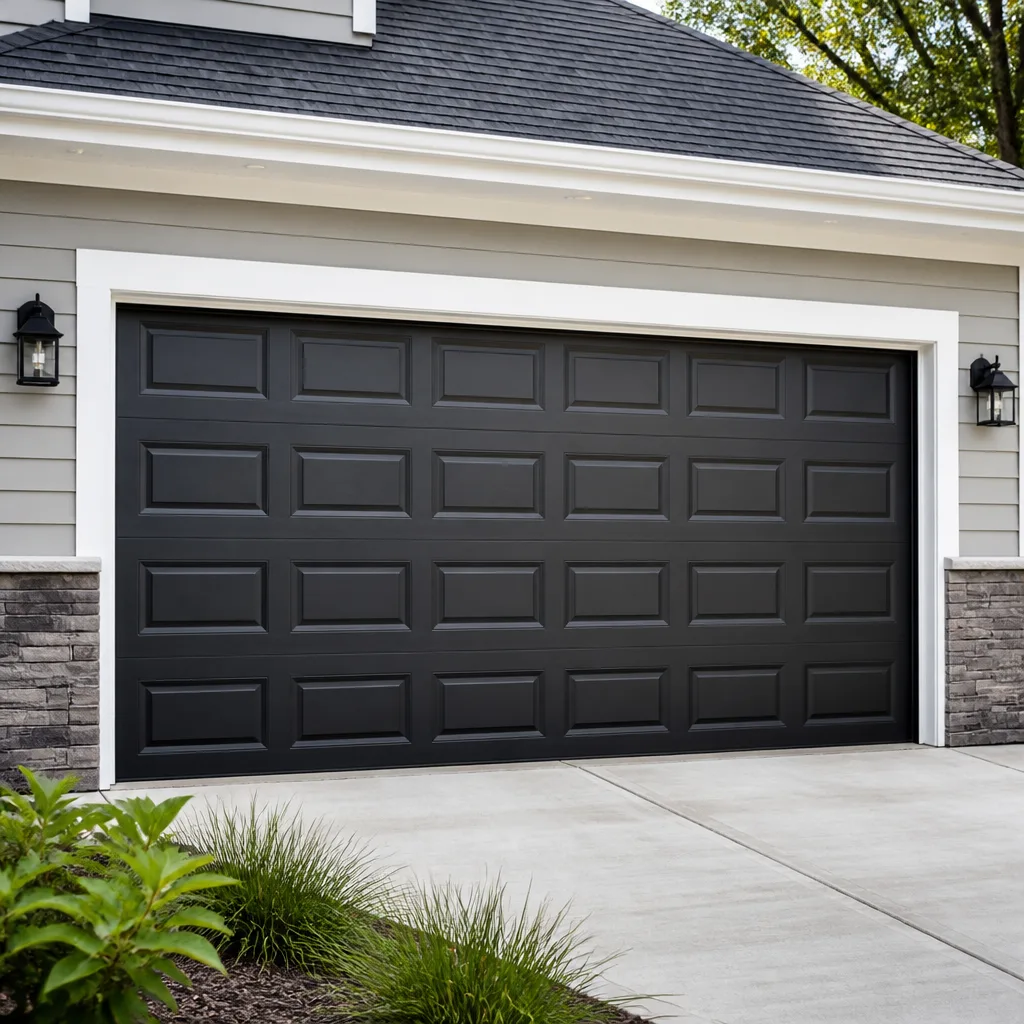 Raised-panel steel
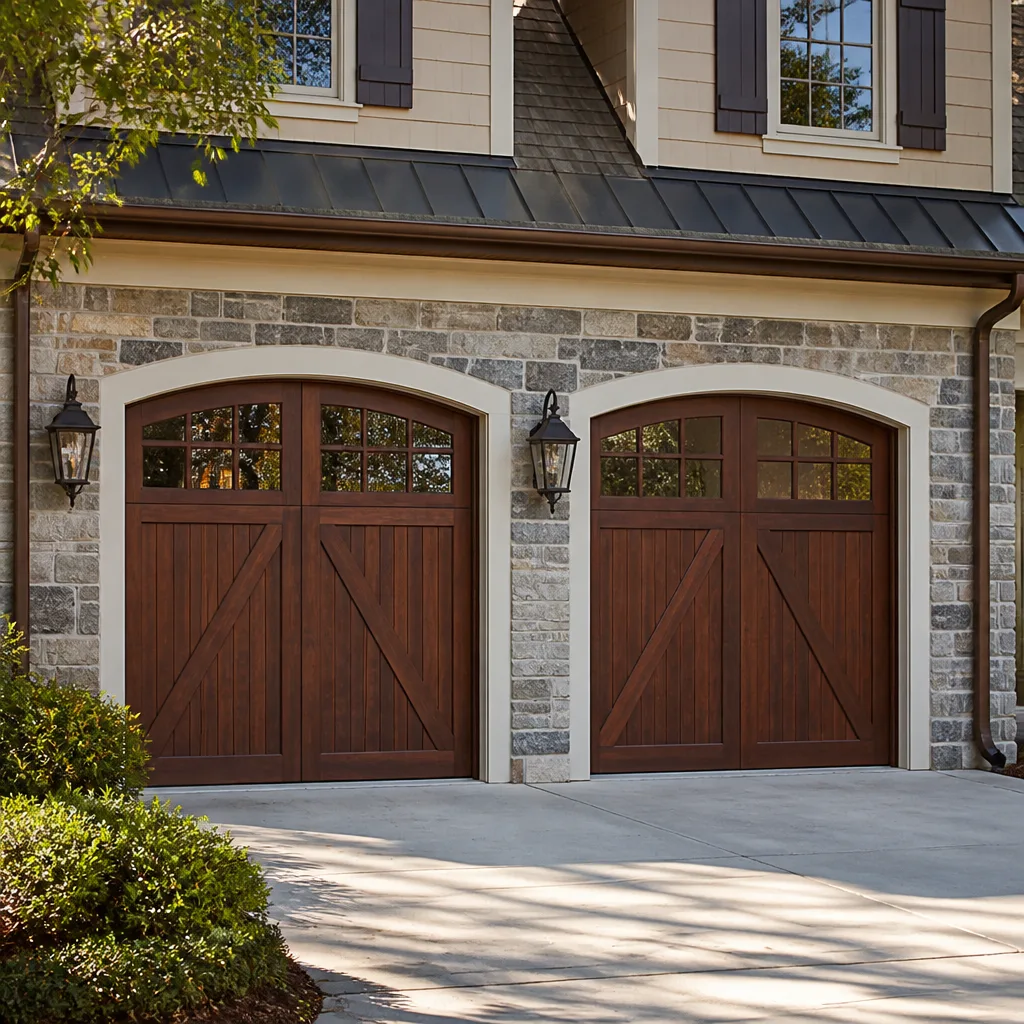 Carriage house
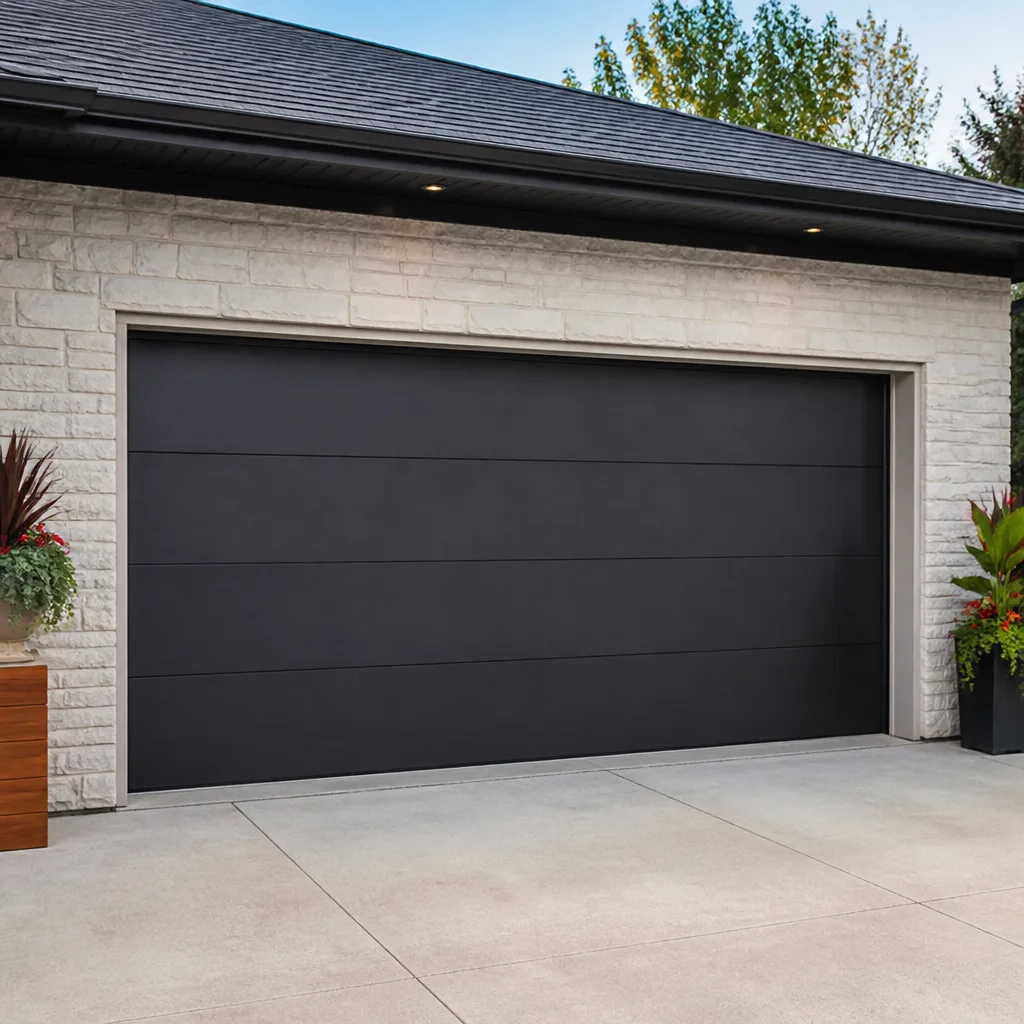 Modern flush
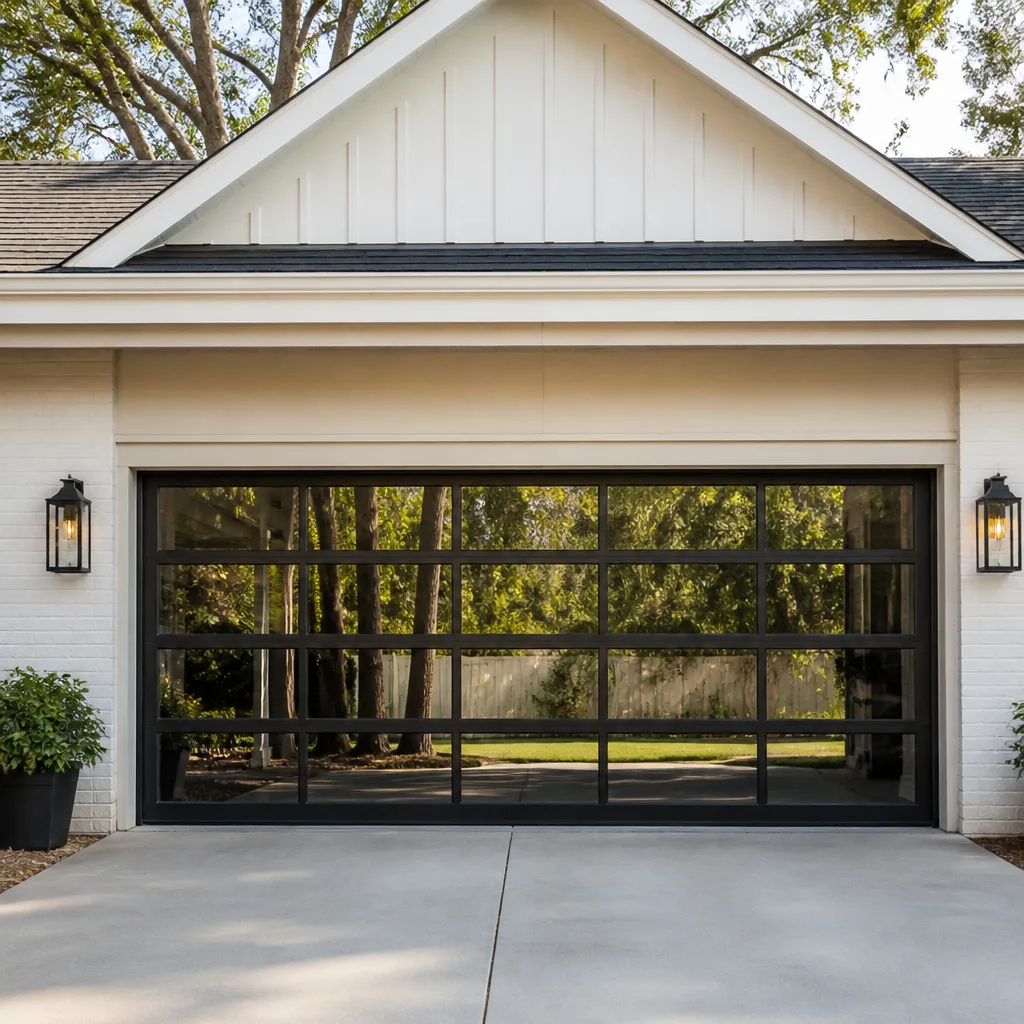 Full-view glass
 LiftMaster openers
 Chamberlain openers
Full 25-point door and opener safety check with every visit - springs, cables, rollers, tracks, and your LiftMaster or Chamberlain opener included
You get a price before we start. It does not change when the truck arrives.
Get your free estimateSeasonal Garage Door Care for Lakeland: Year-Round Homeowner’s Guide
Most garage door maintenance guides read like they were written for a house in Minnesota. They talk about freeze protection, ice buildup, and winterizing your opener. None of that applies here. Lakeland sits in USDA Hardiness Zone 9b, which means your garage door faces two real enemies: hurricane-force wind events from June through November, and relentless UV exposure plus humidity that never fully lets up. This guide lays out exactly when to inspect, what to check, and which tasks matter in a Central Florida climate where the seasonal calendar runs on storm warnings and dew point, not frost dates. For The Complete Guide to Garage Door in Lakeland, see our full resource.
Styles & brands we work with
Quick Answer
Seasonal garage door care in Lakeland centers on two critical windows: a pre-hurricane-season structural and mechanical check in April or May, and a dry-season maintenance deep-dive between November and March when cooler, less humid conditions make spring replacement and opener tune-ups most effective. For detailed guidance, see The Complete Garage Door Repair Guide for Lakeland Homeowners. Homeowners should also perform monthly visual checks during summer months, when heat and humidity accelerate torsion spring fatigue and cause door misalignment that wasn’t there in spring. The single most important annual task is testing your manual release mechanism before storm season begins.
Table of Contents
- The Florida Climate Problem: What Lakeland’s Weather Actually Does to Your Door
- Pre-Hurricane Season Checklist (April – May)
- Post-Storm Assessment: What to Check After a Significant Weather Event
- The Dry-Season Maintenance Window (November – March)
- Summer Heat and Torsion Spring Calibration
- UV and Humidity Degradation: What a Florida Year Does to Door Materials
- Monthly Visual Inspection Routine: The 5-Minute Version
- Opener Maintenance: What to Do Every Season
- Common Mistakes to Avoid
- When to Call a Professional
- Frequently Asked Questions
- The Bottom Line
The Florida Climate Problem: What Lakeland’s Weather Actually Does to Your Door
Lakeland gets roughly 53 inches of rain per year and more than 240 days of sunshine. That combination is brutal on mechanical systems. Humidity hovers above 70 percent most months, which accelerates rust on springs, rollers, cables, and hinges. The intense UV radiation degrades weatherstripping, paint, and polymer components faster than anywhere north of the Florida border. And then there’s wind. Lakeland sits inland enough to avoid direct coastal storm surge, but hurricane-force gusts still reach well past 70 mph during major events, and afternoon thunderstorms routinely produce 40 to 50 mph gusts from May through September.
What that means practically: your garage door is the largest moving object in your home, and in Lakeland it’s the single most vulnerable point of structural failure during a wind event. A door that’s properly maintained will flex slightly and hold. A door with worn rollers, loose track brackets, or tired springs can become a projectile risk when the pressure differential builds. The maintenance rhythm below follows Central Florida’s actual climate calendar, not a generic four-season template.
Pre-Hurricane Season Checklist (April – May)
Hurricane season officially starts June 1, but the smart window for preparation is the six to eight weeks before that. By mid-April, the weather in Lakeland is still dry enough for comfortable outdoor work, and you’re not yet scrambling against a named storm on the five-day forecast cone. Do this checklist once in April or early May, and you’ll have covered 80 percent of the structural risk.
Start with a full visual inspection of the door’s anchoring system. Look at the track brackets fastened to the wall and the ceiling. You’re checking for rust, loose bolts, or any separation between the bracket and the wall. In older Lakeland homes, particularly in neighborhoods like Dixieland or Lake Hollingsworth with garage structures built in the 1950s and 60s, we frequently see original brackets that have pulled away from wood framing after decades of humidity cycling. If you’re considering an upgrade, our post on Choosing the Right Garage Door Brand: A Buyer’s Guide for Lakeland covers what to look for. A bracket that’s moved even a quarter inch weakens the entire door’s resistance to wind load.
Next, test your manual release mechanism. This is the red handle hanging from a rope or cord connected to the opener carriage. Pull it while the door is closed. The door should disengage from the opener and you should be able to lift it manually with moderate effort. If you can’t lift it, or the door feels unusually heavy, your springs are under-tensioned or failing. This matters more in Lakeland than most places because when power goes out during a storm, you need to be able to open and close the door manually to secure your home or get vehicles out.
The third item on the pre-season list is battery backup assessment. If your opener was installed in the last ten years and carries a Chamberlain or Genie badge, it may have a battery backup unit. Test it by unplugging the opener and trying to operate the door. If it doesn’t run on battery, replace the battery before June. A door you can’t operate during an extended power outage in Lakeland becomes a security and access problem that compounds every other storm stress.
Finally, check your wind reinforcement. Many newer garage doors in Lakeland are installed with wind-rated hardware: heavier track, additional struts across the panels, and reinforced mounting brackets. If you don’t know whether your door has this hardware, now is the time to find out. A door that’s been retrofitted with hurricane bracing will have visible horizontal metal struts across the inside of each panel. If your door predates the 2001 Florida Building Code updates and hasn’t been upgraded, it may not meet current wind-load standards for Polk County.
Post-Storm Assessment: What to Check After a Significant Weather Event
After a major storm passes through Lakeland, your garage door needs a deliberate inspection before you resume normal use. This applies whether or not the door took a direct hit. Wind pressure alone can warp panels, knock the door off its track alignment, and over-extend springs. Here’s the process we follow on post-storm assessments across Lakeland and Polk County:
- Visual panel inspection from inside, door closed. Look for dents, cracks, or separation at the panel joints. Wind-driven debris causes most damage. A dented panel may still function, but it’s now a weak point for next season’s winds.
- Track alignment check. Run the door up and down manually if possible. Watch the roller path in the tracks. Any hesitation, scraping sound, or visible gap between roller and track means the door is out of alignment. Skip this step if the door will not move at all.
- Balance test. With the door disconnected from the opener, lift it halfway and release. A balanced door stays in place. If it drops, your springs lost tension or broke during the storm. Don’t operate an unbalanced door by hand or with the opener until springs are serviced.
- Hardware re-torque. Go along the entire track system with a socket wrench and verify every bolt and lag screw is tight. Storms loosen hardware. This takes twenty minutes and prevents a cascade failure later.
- Weatherstripping check. Inspect the bottom seal and the perimeter weatherstripping for any new gaps, tears, or sections that pulled loose. Damaged seals let water and insects in, especially during Lakeland’s daily summer downpours.
- Opener force setting test. Operate the opener and watch the door travel. If it reverses unexpectedly, or strains at any point, the force settings may need recalibration after the storm shifted the door’s weight distribution.
Do this the day after the storm passes, not two weeks later. Post-storm garage door damage left unaddressed in Lakeland’s humid summer air deteriorates quickly. Surface rust on exposed metal starts within days.
The Dry-Season Maintenance Window (November – March)
Florida has a dry season, and it runs from roughly November through March. This is when Lakeland’s average humidity drops into the 50s and 60s, rain becomes intermittent, and temperatures settle into the comfortable 60s and 70s. For garage door maintenance, this window matters for one practical reason: metal expands in heat and contracts in cool, dry air. That means measurements, adjustments, and part replacements done in the dry season hold their calibration better over the following months than work done at the peak of summer heat.
We recommend scheduling your deepest annual maintenance tasks between November and March. Torsion spring replacement is the big one. Springs are rated for a certain number of cycles, typically 10,000 to 20,000 depending on the grade, and Lakeland’s hot summers accelerate metal fatigue. If your springs are two to four years old and you’re noticing the door feels heavier than it did, the dry season is the right time to have them evaluated and likely replaced. Cooler temperatures mean the spring wire is at its most stable, and the technician can set precise tension that will hold through the summer.
Cable inspection is another dry-season priority. The lifting cables run along both sides of the door and bear the full weight whenever the door moves. In Lakeland’s humidity, cables develop surface rust and eventually fray. A frayed cable is a failure waiting to happen, and cable failures are the second most common reason we get emergency calls after spring breaks. During the dry season, cables are easier to inspect because rust formation is slower and existing damage is more visible. This is the time to replace cables that show any sign of wear.
The dry season is also the best window for opener tune-ups. Lubrication applied when humidity is low penetrates better and lasts longer. The same goes for weatherstripping replacement: new seals install cleanly when surfaces are dry, and they’ll be fully seated before spring rain returns. If you’re planning any major work like Garage Door Installation in Jan-Phyl Village or nearby, the dry season gives you the best conditions for proper fit and finish. The team at Lift Line Garage Door Repair home has worked on doors across Polk County and consistently sees better long-term results from dry-season installations.
Summer Heat and Torsion Spring Calibration
Here’s a pattern we see every year in Lakeland: a door works fine all winter and spring, then inexplicably struggles in July and August. The homeowner didn’t do anything different. The springs didn’t suddenly break. The problem is thermal expansion.
Torsion springs are wound to a specific tension based on the door’s weight. They’re calibrated to hold that door balanced. But in July, when a Lakeland garage interior can hit 100 degrees or more, several things happen simultaneously. The metal in the springs expands and their effective tension changes. The door itself absorbs heat and its weight distribution shifts slightly. The lubricant thins out. And the opener motor runs hotter, which affects its force delivery. The result: a door that was perfectly balanced in March starts to feel sluggish, reverses unexpectedly, or strains the opener by August.
This is not a reason to panic, and it’s not usually a sign that your springs need replacement. It’s a sign that your spring tension was calibrated for one temperature range and now needs adjustment for another. A qualified technician can re-tension your springs for summer conditions, or if your springs are nearing the end of their cycle life, replace them with a fresh set calibrated to the season. We service doors in Lakeland with Chamberlain, Genie, Clopay, and Amarr hardware among others, and see this seasonal calibration issue on every brand. It’s a Florida-specific problem that generic maintenance guides simply don’t address.
The practical rule: if your door operated smoothly in March and starts misbehaving in August, don’t assume a broken spring. Book a calibration check first. It’s a faster and less expensive fix than spring replacement in most cases.
UV and Humidity Degradation: What a Florida Year Does to Door Materials
Lakeland’s UV index regularly hits 10+ in summer. That level of radiation breaks down polymer weatherstripping, fades and cracks paint surfaces, degrades vinyl trim, and compromises the integrity of any plastic component on your opener. At the same time, humidity cycles cause metal hardware to rust even when it’s not raining. This is a slow but relentless degradation process that plays out differently depending on your door material.
Steel doors in Lakeland typically rust first along the bottom edge and around the panel seams, where moisture accumulates. The best defense is keeping the door clean (simple soap and water every few months) and touching up any paint chips immediately. Once rust gets under the paint, it spreads fast in humid air. Aluminum doors resist rust but dent more easily and can develop corrosion around hardware attachment points if dissimilar metals are in contact.
Wood doors face the steepest challenge. Solid wood garage doors are beautiful, and we see plenty of them on older Lakeland homes, but they require the most consistent maintenance of any door type in this climate. Wood absorbs moisture in summer and dries out in winter, which causes warping, cracking, and panel separation. A wood door needs re-sealing or repainting every two to three years in Lakeland, minimum, and the bottom panel in particular needs attention because it sits closest to ground moisture.
Composite doors, including those from Clopay and Amarr product lines, are generally the lowest-maintenance choice for Central Florida. They resist rust, don’t warp like wood, and handle UV exposure better than steel. That said, even composite doors need weatherstripping replacement on a regular cycle. Plan on replacing the bottom seal on any garage door every 18 to 24 months in Lakeland, and more often if the door faces west and gets full afternoon sun.
The finish/seal maintenance timing is straightforward: do seal work in the dry season when surfaces are dry, and do paint touch-up in late fall or early winter before the summer UV blitz begins. A well-maintained finish protects the structural material for years longer than a neglected one.
Monthly Visual Inspection Routine: The 5-Minute Version
Between the seasonal deep-dives, a monthly five-minute inspection catches problems before they become emergencies. We recommend doing this on the first Saturday of every month, or whenever you remember. The goal is not to fix anything, just to notice changes.
Step one: run the door up and down once, and listen. A door in good working order is quiet. New squeaking, grinding, or rattling means something changed: a roller is wearing out, a hinge is binding, or a bracket is loose. Changes in sound are the earliest diagnostic signal available to a homeowner.
Step two: look at the springs when the door is closed. Torsion springs sit horizontally above the door opening. Extension springs run parallel to the tracks on either side. You’re looking for visible gaps, rust, or any sign of distortion. A spring that looks different from how it looked last month needs professional attention. Do not attempt to repair or remove springs yourself; they’re under extreme tension, and a failed torsion spring can cause serious injury.
Step three: check the cables. The lifting cables on both sides of the door should appear taut when the door is in any position. A slight slack on one side means the door is binding or a spring is failing. Frayed strands anywhere along the cable mean immediate replacement is required. Like springs, cables carry enormous tension and are not a DIY repair item.
Step four: run your hand along the weatherstripping at the bottom of the door when it’s closed. You’re checking for a consistent seal against the floor. Gaps let in water during summer thunderstorms, and in Lakeland’s climate, a wet garage floor quickly becomes a mold and insect problem.
That’s it. Five minutes. If everything passes, close the door and move on with your weekend. If something fails, book a professional inspection. For Lakeland-area homeowners, Garage Door Repair in Jan-Phyl Village and the surrounding communities is available through Lift Line.
Opener Maintenance: What to Do Every Season
Garage door openers get less attention than they should. In Lakeland, openers face the same heat and humidity as everything else in your garage, and they’re also the most electronically complex part of the system. Here’s what matters by season.
During the dry season, test your opener’s safety reversal system. Place a rolled-up towel or a piece of 2×4 flat under the door’s path, then close the door. The door should reverse within two seconds of contacting the object. This is a federal safety requirement dating back to 1993, and it’s the single most important safety feature on your opener. Test it at least twice a year.
During summer months, pay attention to opener overheating. Modern openers from Chamberlain and Genie have thermal protection that shuts the unit down when it gets too hot, which is frustrating when it happens but better than burning out the motor. If your opener cuts out during the hottest part of a Lakeland summer day, that’s likely thermal shutdown. Give it time to cool, then consider whether the opener is undersized for your door or whether the door itself is binding and making the opener work harder than it should.
Year-round, check the opener’s drive mechanism. Belt drives stay quieter over time and handle Florida heat well. Chain drives are durable but noisier and need periodic chain tension adjustment. Screw drives are common on older Genie units and work fine in heat but can be loud as they age. If your opener uses a chain or screw drive and it’s getting louder month over month, that’s a sign the drive components need lubrication or service.
If you have a smart opener connected to myQ or Aladdin Connect, make sure the opener’s firmware stays updated. Chamberlain, LiftMaster, and Genie all push firmware updates that improve connectivity and add security features. In Lakeland, where afternoon thunderstorms can cause power flickers, a smart opener that disconnects from Wi-Fi after an outage often just needs a quick re-pair. We handle Garage Door Opener Repair in Jan-Phyl Village for homeowners who’d rather not troubleshoot connectivity themselves.
Common Mistakes to Avoid
- Lubricating everything with WD-40. WD-40 is a solvent, not a lubricant. Spraying it on rollers and hinges temporarily quiets noise but strips away the lubricant that was there, making wear worse. Use a silicone-based or lithium-based garage door lubricant instead.
- Skipping the balance test. A door that runs fine on the opener but is unbalanced puts enormous strain on the opener motor. You’ll replace an opener years early simply because the springs were out of tension. Check balance monthly.
- Ignoring small rust spots. In Lakeland’s humidity, a small rust spot on a steel door becomes a rust-through spot within a year. Touch up paint chips immediately.
- Delaying post-storm inspection. After a hurricane or severe thunderstorm, waiting to inspect your door allows minor damage to compound. Check it the next day.
- Replacing springs with mismatched parts. Torsion springs are rated for specific door weights and heights. Installing whatever spring is on hand is dangerous and shortens the life of the new spring. A trained technician matches spring specification to the door.
- Operating a door with a frayed cable. A frayed cable can snap without warning while the door is moving. If you see fraying, stop using the door and call for service.
- Treating all garage door brands as interchangeable. Opener settings, sensor alignment procedures, and spring specs vary by manufacturer. Knowing the quirks of the specific brand already on your door saves time and prevents mistakes.
When to Call a Professional
Some garage door work is safe and sensible to do yourself: visual inspections, cleaning, painting touch-up, lubricating rollers and hinges with the right product, and replacing weatherstripping. Other work is not. Torsion spring replacement, cable replacement, track realignment, and opener force recalibration all involve either extreme tension or precision adjustment. A miscalculation on spring work can cause serious injury, and a botched track adjustment can bring down the entire door system.
Use this rule: if the repair involves springs, cables, or removing the door from its tracks, call a professional. If your door sustained storm damage and isn’t operating correctly, call a professional before running it. Lift Line Garage Door Repair offers free estimates in Lakeland, and we’re garage-door-only by design. Visit our more guides & resources page for additional maintenance tips and local advice. Every call we take is about a garage door, because that’s all we work on. When you need help, call (866) 253-2286.
Frequently Asked Questions
You should do the 5-minute visual inspection monthly, plus the full pre-hurricane checklist every April or May and one deep maintenance session during the dry season between November and March. That three-tier rhythm covers the climate risks Lakeland actually faces and catches problems before they become emergency calls. If anything looks off during your monthly check, call (866) 253-2286 for a free estimate.
Yes. Lakeland’s summer heat causes thermal expansion that changes effective spring tension, which is why doors that worked fine in March can struggle in August. This doesn’t always mean the springs need replacement. A calibration check by a technician who understands Florida’s climate cycle is often all that’s needed to restore smooth operation.
Test your manual release mechanism and make sure you can open and close the door by hand. Power outages during storms are common in Lakeland, and you need to be able to operate the door manually. After that, check your track brackets and anchoring hardware for security. A door that fails at the brackets is a serious wind-load risk.
Expect to replace your bottom seal every 18 to 24 months. UV radiation and summer humidity break down polymer seals faster in Central Florida than in most of the country. A west-facing door that gets full afternoon sun may need even more frequent replacement. The good news: it’s an inexpensive part and a quick job.
Yes, with the right product. Use a silicone-based or lithium-based lubricant on rollers, hinges, and the torsion spring. Avoid WD-40, which strips lubrication. And never attempt to adjust or replace springs yourself. Lubrication is safe; spring work is not.
First, check your breaker and GFCI outlet. Power surges from lightning are common in Lakeland and often trip the circuit. If power is fine, test the opener’s backup battery if equipped. If neither resolves the issue, the opener’s logic board may have taken surge damage. Lift Line works on all major opener brands, including Chamberlain and Genie systems, and can diagnose it over the phone before scheduling. Call (866) 253-2286.
The Bottom Line
Lakeland doesn’t have four seasons. It has two relevant to your garage door: hurricane season, which demands structural preparation and post-storm assessment, and the dry season, which offers the best window for springs, cables, and opener maintenance. Between those, monthly five-minute checks and attention to UV and humidity degradation will keep your door running for years longer than neglect. Working on the brand already on your door, from the cable to the connected opener, is what a garage-door specialist does. Garage doors are all we do at Lift Line Garage Door Repair.
Written by the team at Lift Line Garage Door Repair, serving Lakeland since 2012.
See the difference
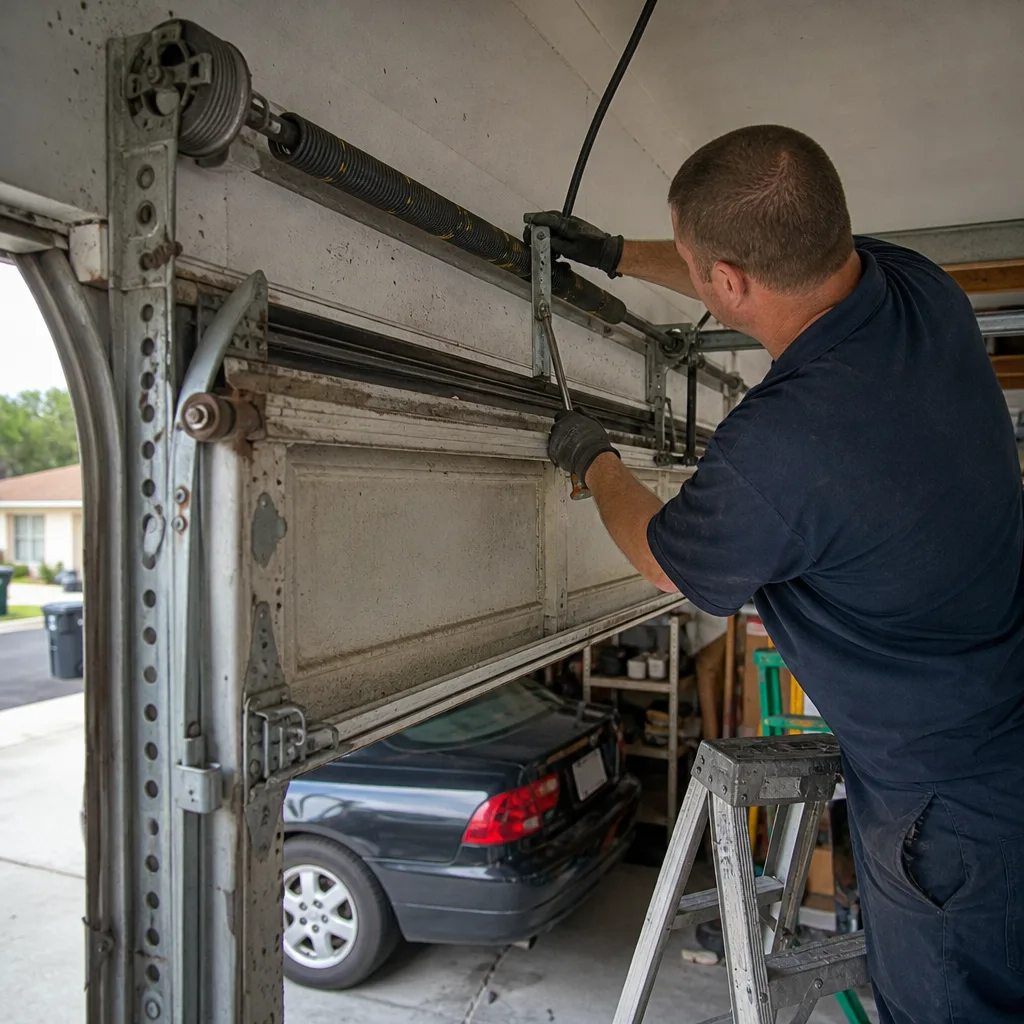 Before
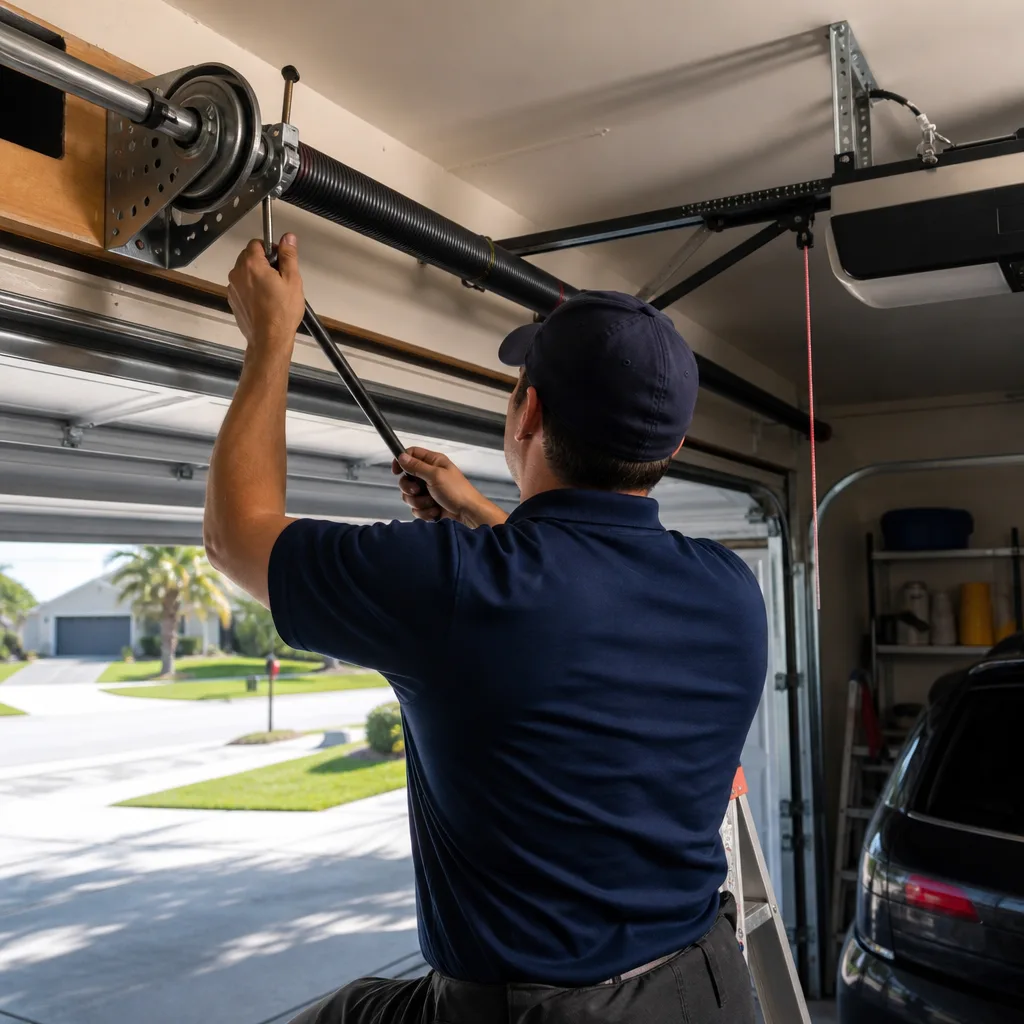 After
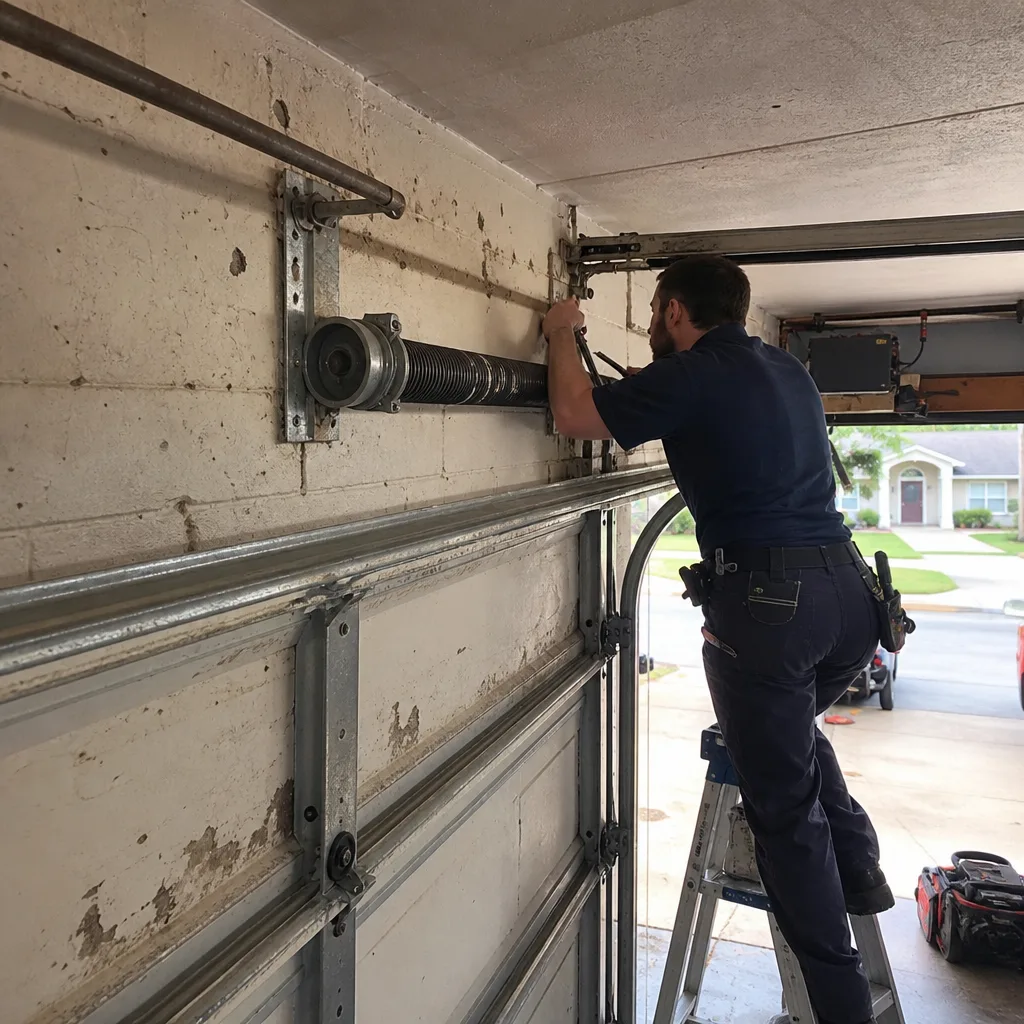 Before
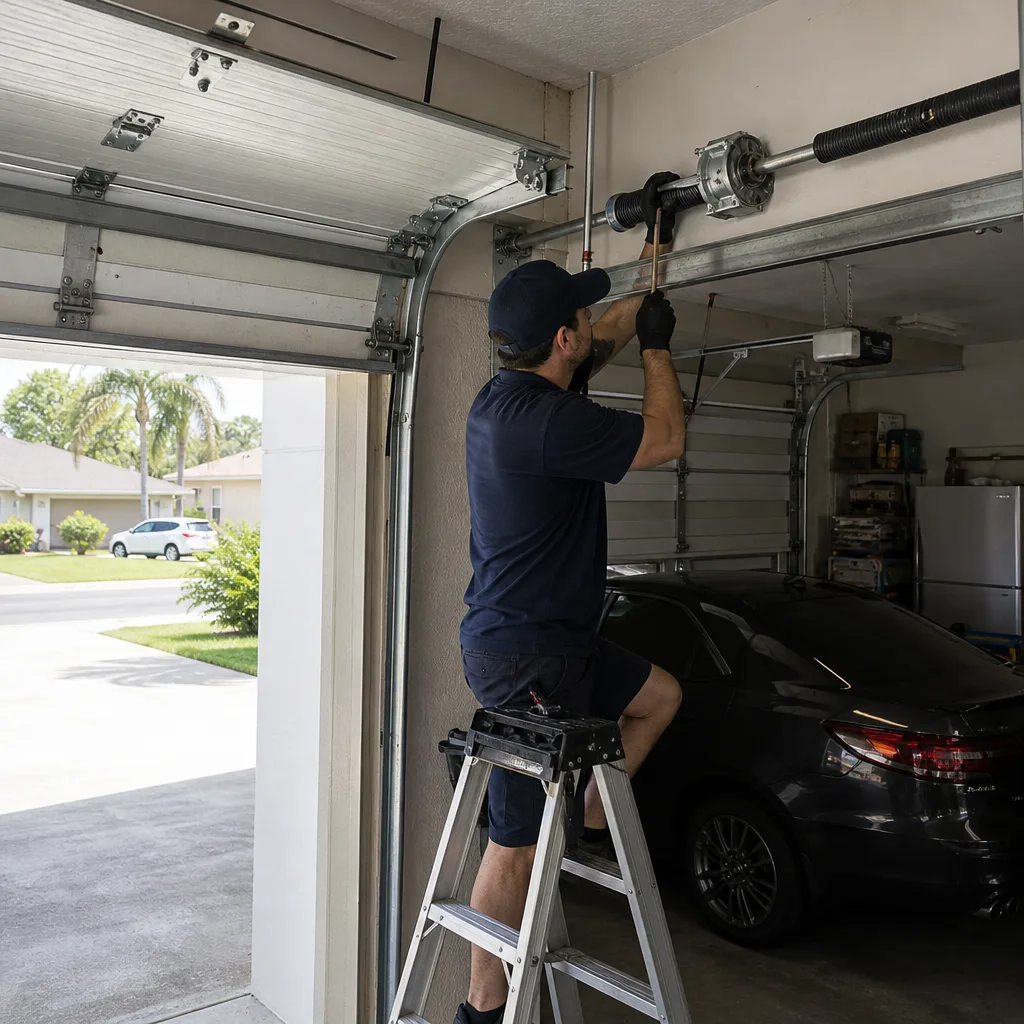 After
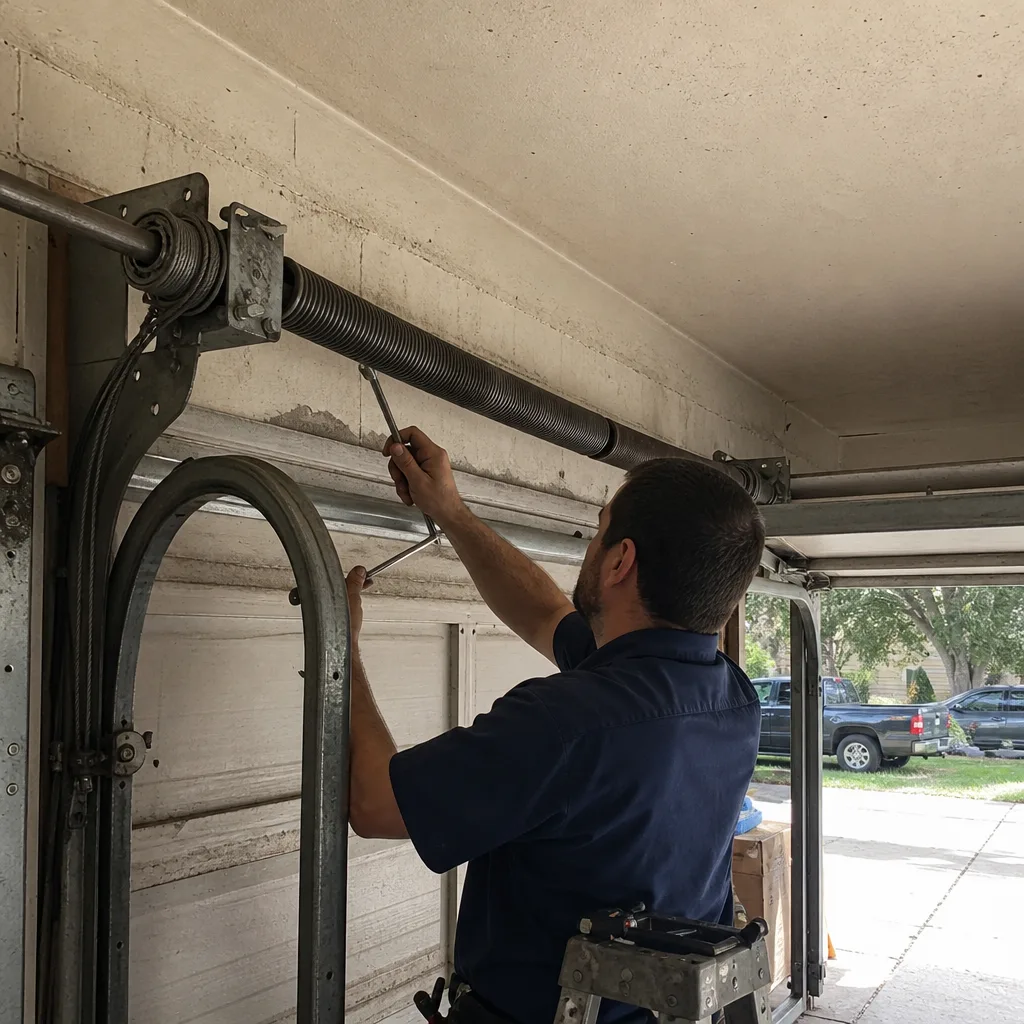 Before
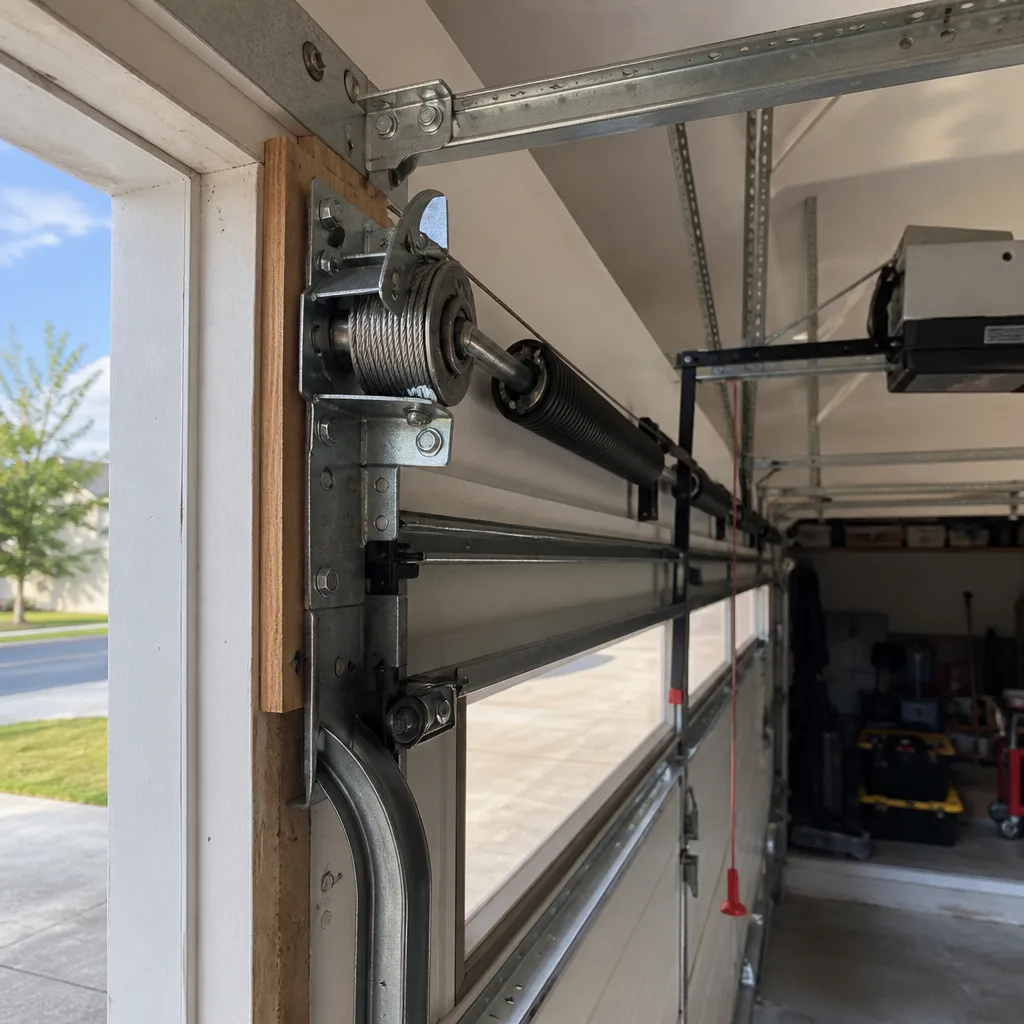 After