
Last updated October 31, 2026
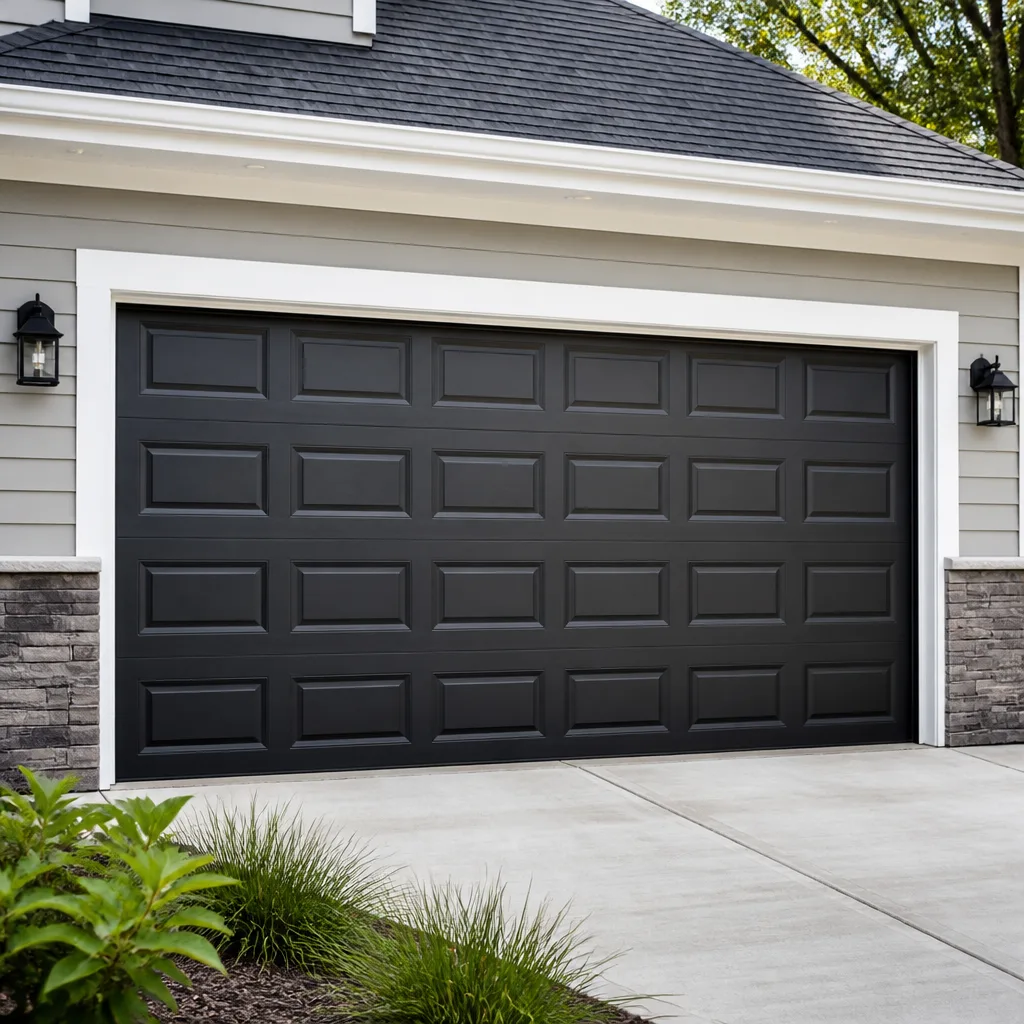 Raised-panel steel
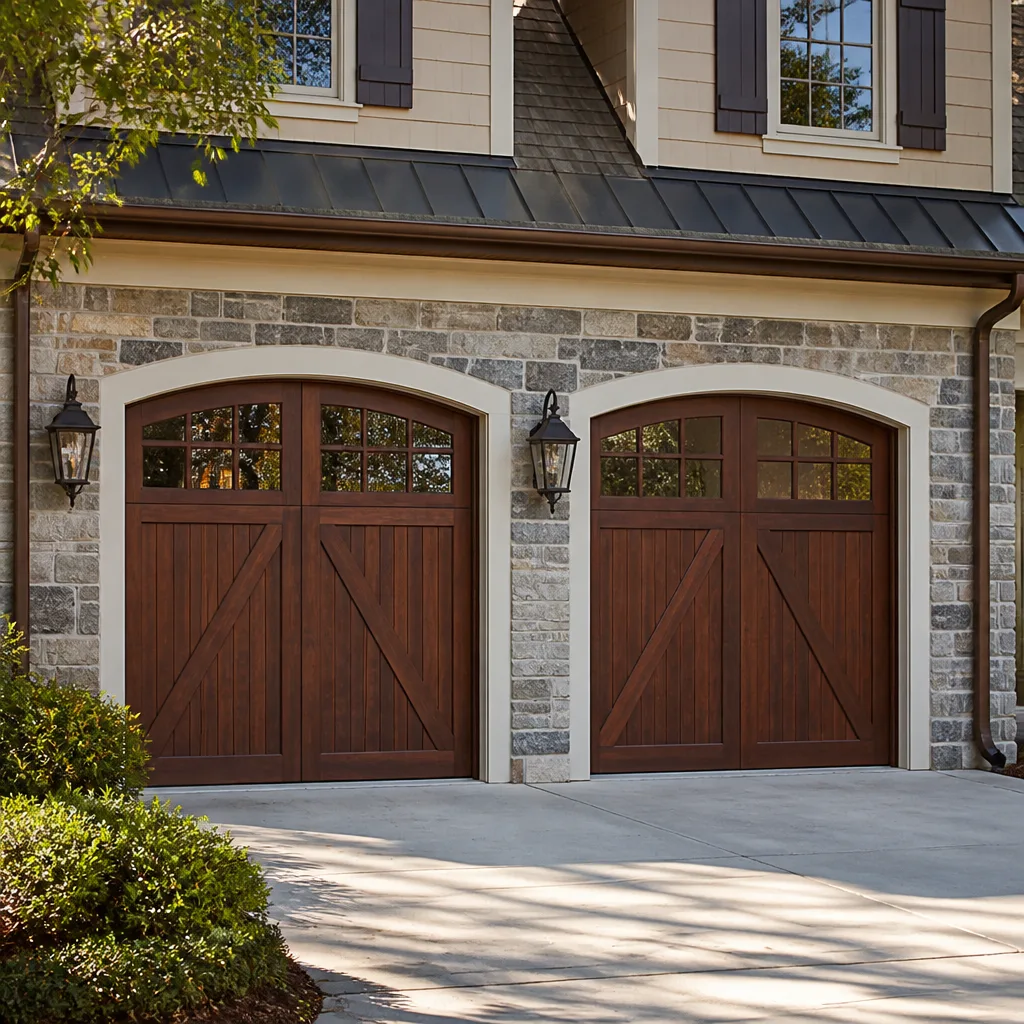 Carriage house
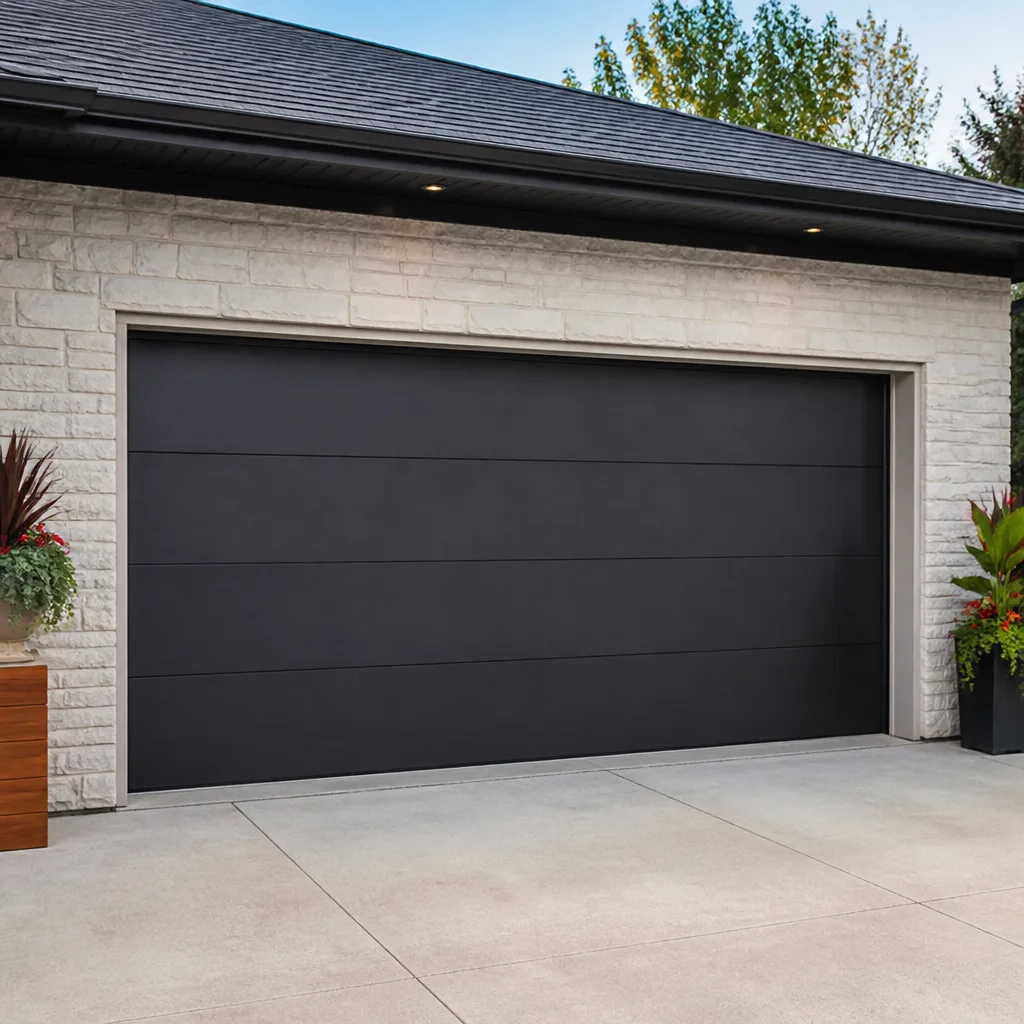 Modern flush
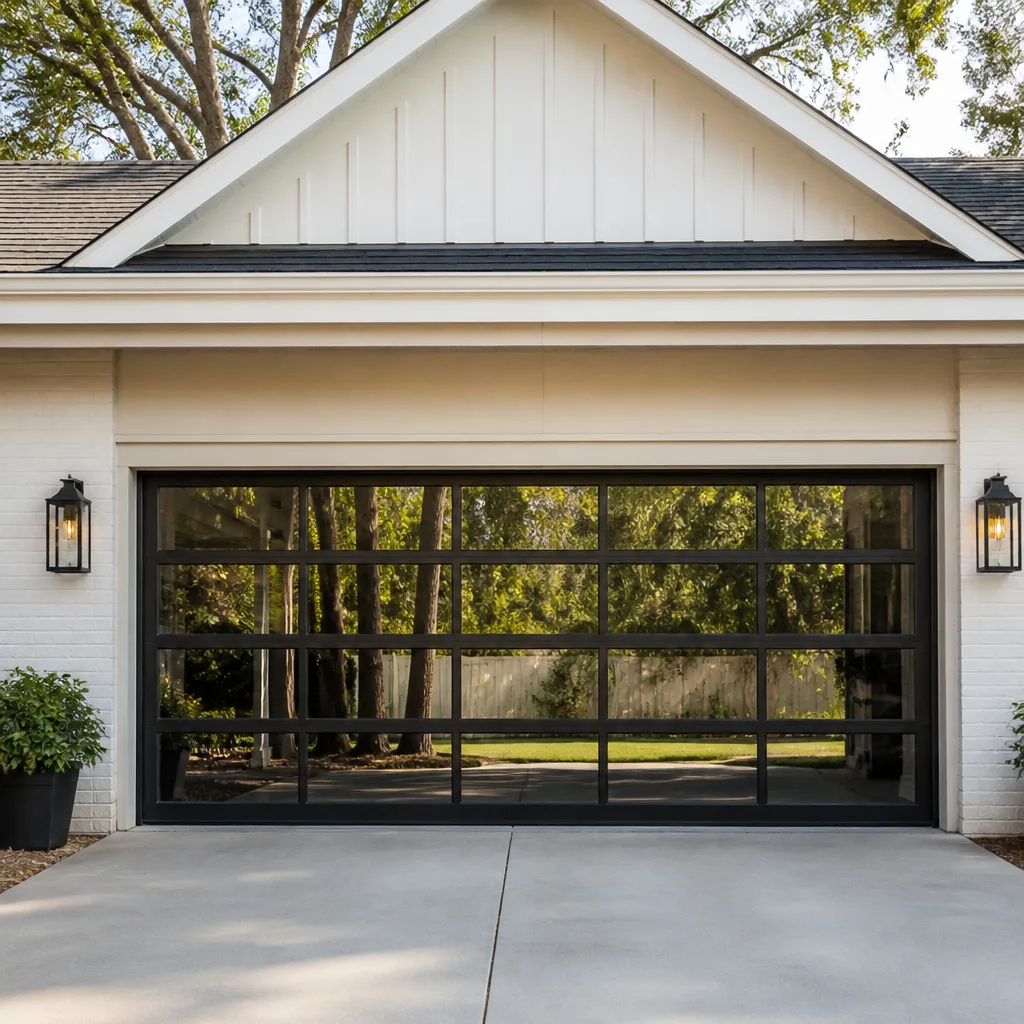 Full-view glass
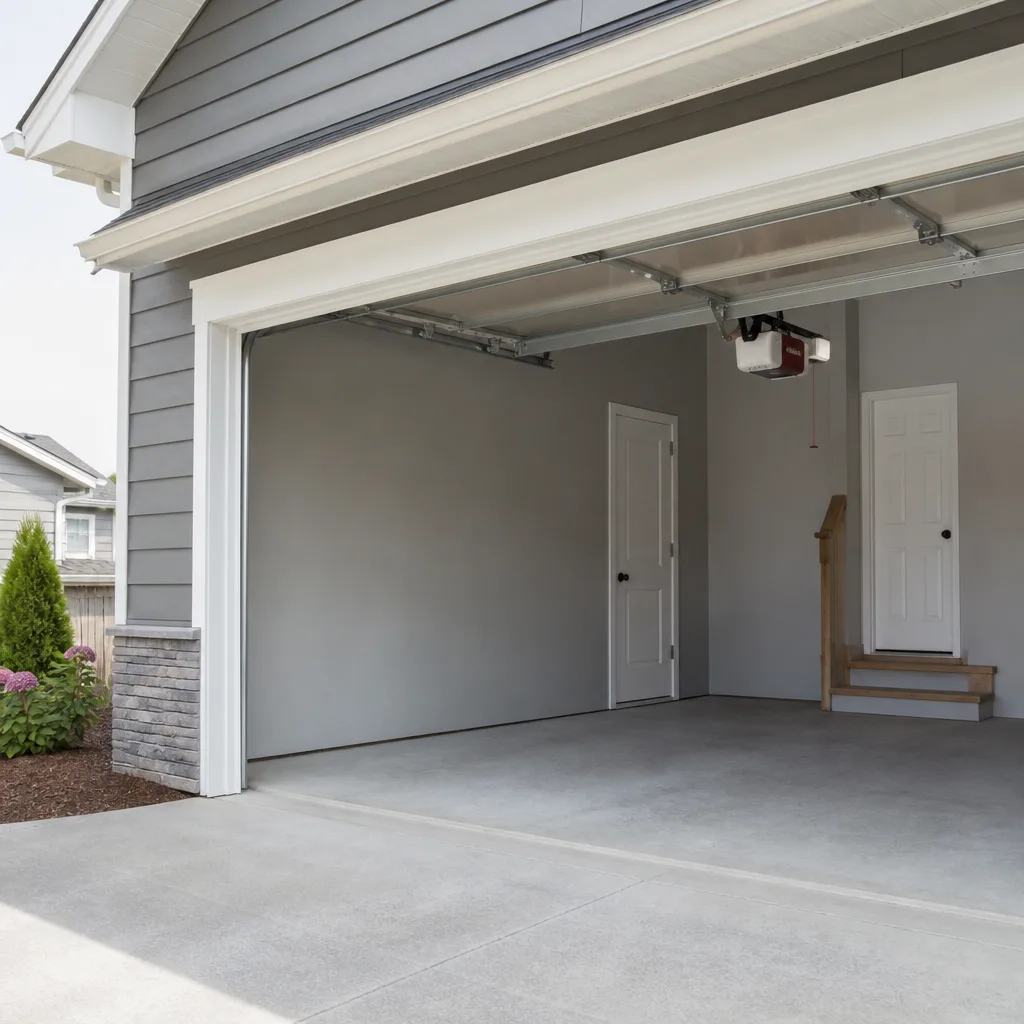 LiftMaster openers
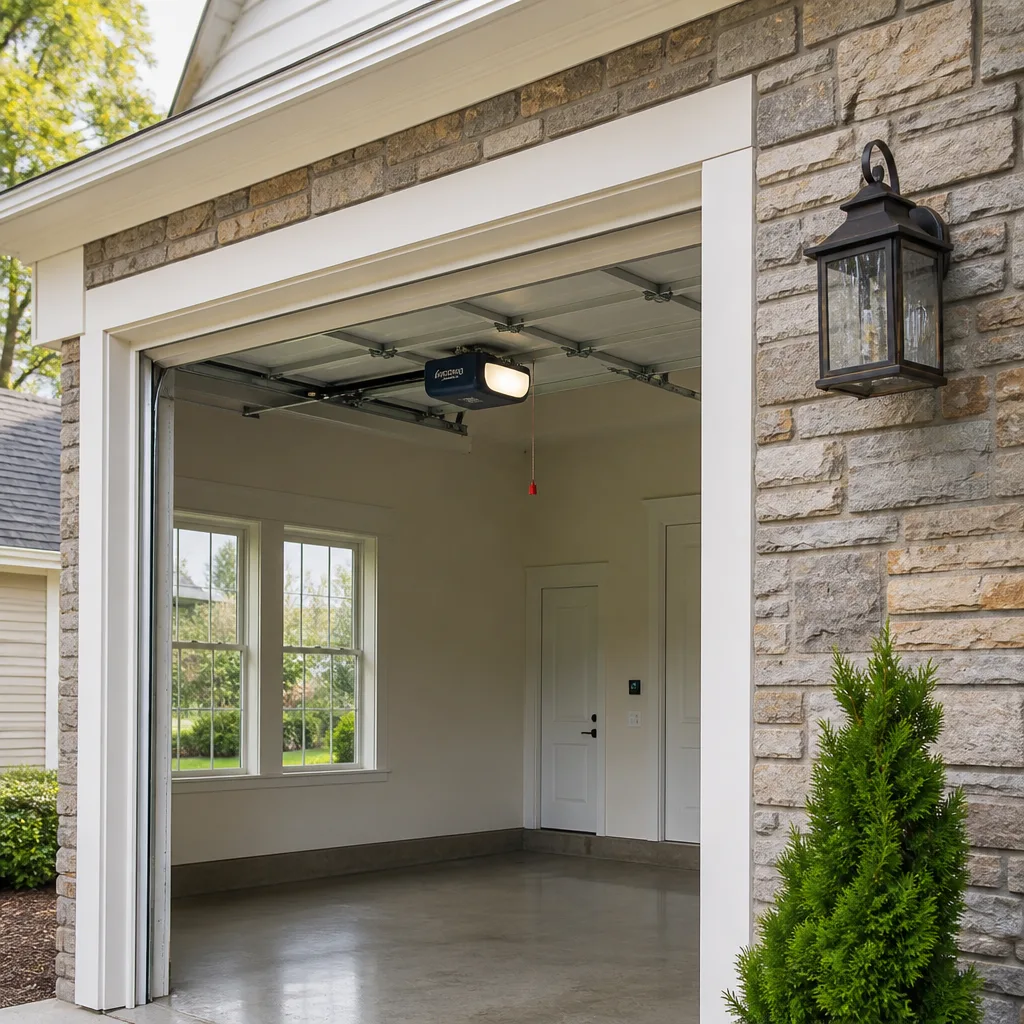 Chamberlain openers
Full 25-point door and opener safety check with every visit - springs, cables, rollers, tracks, and your LiftMaster or Chamberlain opener included
You get a price before we start. It does not change when the truck arrives.
Get your free estimateThe Complete Garage Door Repair Guide for Lakeland Homeowners
Florida’s average humidity sits above 74% year-round. That number matters more than most Lakeland residents realize. High enough to accelerate spring corrosion, swell wooden panels, and degrade unsealed bottom seals roughly twice as fast as the national average, it changes which garage door components fail, how often they fail, and what a legitimate repair looks like. Most repair guides weren’t written for this environment. This one was. You’ll learn what actually breaks on garage doors in Lakeland, which failures follow predictable timelines, what you can safely handle yourself, and when the smartest move is calling a Garage Door Repair specialist who already knows the hardware on your door.
Quick Answer
Garage door repair in Lakeland FL most often involves spring replacement, cable realignment, sensor misalignment, or opener logic board failure, with climate-driven corrosion accelerating wear on springs, rollers, and seals compared to drier regions. Most repairs cost between $125 and $450 depending on the component, and a trained technician can typically diagnose the exact failure within 30 minutes. The fastest path to an accurate fix is calling Lift Line Garage Door Repair home expertise at (866) 253-2286 for a free estimate.
Styles & brands we work with
Table of Contents
- Why Lakeland’s Climate Creates a Different Failure Timeline
- The Signs Your Garage Door Needs Repair, Not Replacement
- What’s Safe to Do Yourself vs. What Needs a Trained Technician
- Brand-by-Brand Repair: What to Know About the Hardware on Your Door
- Hurricane-Season Garage Door Preparation for Lakeland Homes
- How to Document Garage Door Damage for Insurance Claims
- Repair vs. Replacement: The Decision Framework
- Common Mistakes to Avoid
- When to Call a Professional
- Frequently Asked Questions
Why Lakeland’s Climate Creates a Different Failure Timeline
In our experience working on garage doors across Lakeland, the same pattern repeats every year. A door that would last 15 years in Denver or Columbus needs spring replacement in 7 to 9 years here. The reason is straightforward: humidity plus heat equals accelerated metal fatigue and polymer breakdown. Lakeland’s combination of 90-degree summer days, afternoon thunderstorms that push humidity to saturation, and Gulf-driven salt content in the air (mild but measurable this far inland) creates conditions that most manufacturer warranty estimates simply don’t account for.
Here’s the component-by-component timeline we see on Lakeland doors:
- Bottom seals: 2 to 4 years. UV exposure breaks down the rubber, then water pools under the door during summer downpours, inviting rust at the panel seams.
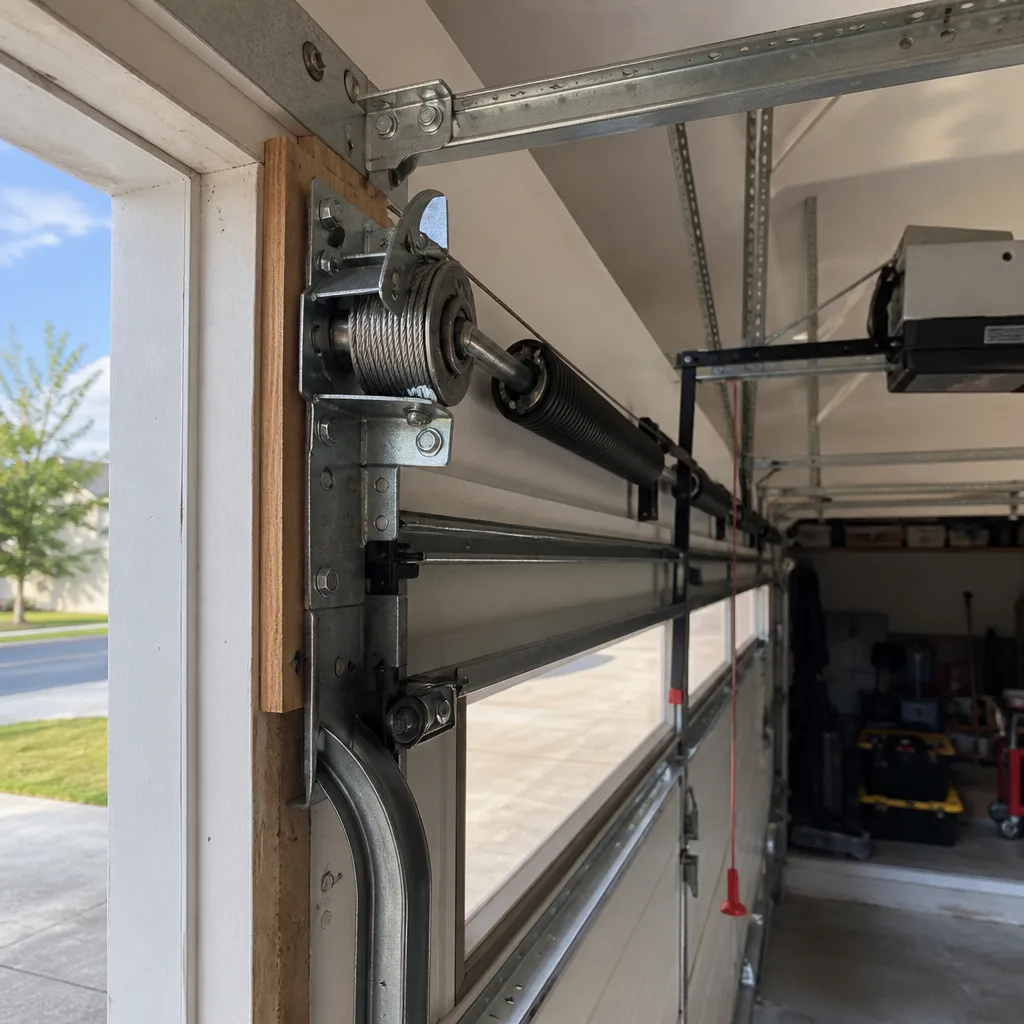
- Extension springs: 5 to 7 years. Corrosion from humidity eats at the coil surface, and the constant temperature swings between air-conditioned garage interiors and exterior heat create metal stress cycles.
- Torsion springs: 8 to 10 years. These last longer because they’re typically oil-tempered, but Lakeland’s humidity still takes roughly 20% off the national average lifespan.
- Steel rollers with nylon bearings: 5 to 8 years. The bearings hold up, but the steel shafts rust, which grinds the bearings to failure.
- Logic boards on openers: 6 to 10 years. Central Florida’s daily lightning season between June and September sends power surges through circuits that a simple surge protector won’t always stop.
- Wooden panels on older homes: 10 to 15 years with maintenance. Without resealing every two years, high humidity can swell them enough to change the door’s balance and force strain on the opener.
What this means for Lakeland homeowners is that your maintenance calendar shouldn’t follow national generic advice. If your door is 8 years old, you’re not in a “wait and see” window. You’re in a “schedule an inspection before the spring lets go on a Saturday morning” window.
The Signs Your Garage Door Needs Repair, Not Replacement
A garage door that’s struggling isn’t necessarily a garage door that’s finished. We regularly repair doors in Lakeland that other companies quoted for full replacement, and the fix often comes down to one or two components. Here’s what to watch for, and what each symptom usually means:
- The door opens halfway and stops, or reverses. This typically points to a broken spring, not a broken door. When a torsion spring snaps, the opener suddenly has to lift the full weight of the door, which its motor can’t handle. One spring replacement later, the door works normally.
- Loud grinding or squealing during operation. Usually worn rollers or dry hinges. Replacing the rollers and lubricating moving parts solves this in the vast majority of cases.
- The door sits unevenly in the frame, one side lower than the other. Could be a stretched cable or a worn spring. Both are repairable without touching the panels.
- The remote works, but the wall button doesn’t, or vice versa. This is an opener wiring or logic board issue, not a door problem. The fix is component-level, not door-level.
- Visible rust on the bottom panel corners, especially near the seal. Common in Lakeland’s flood-prone neighborhoods like Crystal Lake and around Lake Parker. The panel can often be patched and resealed rather than requiring a new door.
The repair-first approach matters financially. A full door replacement on a standard two-car garage in Lakeland typically runs $1,200 to $3,500 installed. Component repair almost always runs under $500. If the panels are structurally sound and the track is straight, repair is the rational choice.
What’s Safe to Do Yourself vs. What Needs a Trained Technician
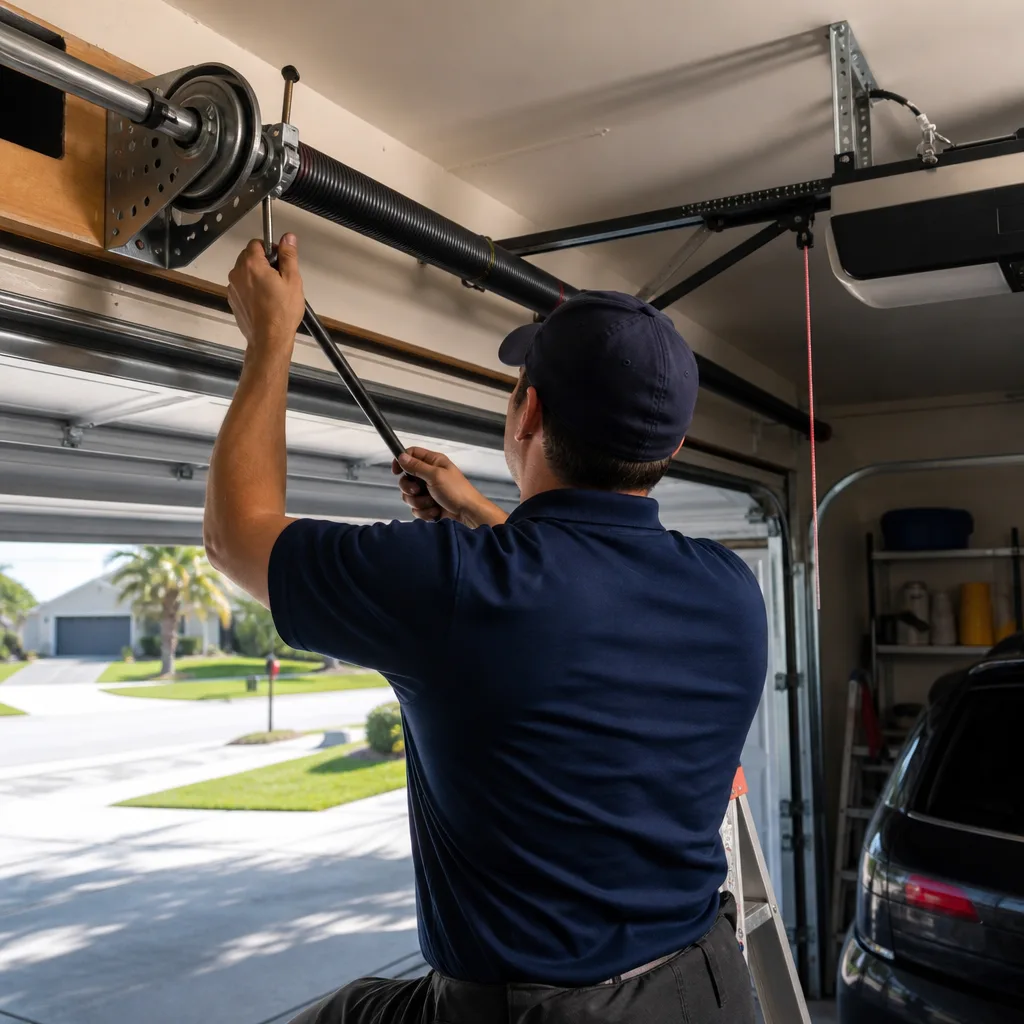
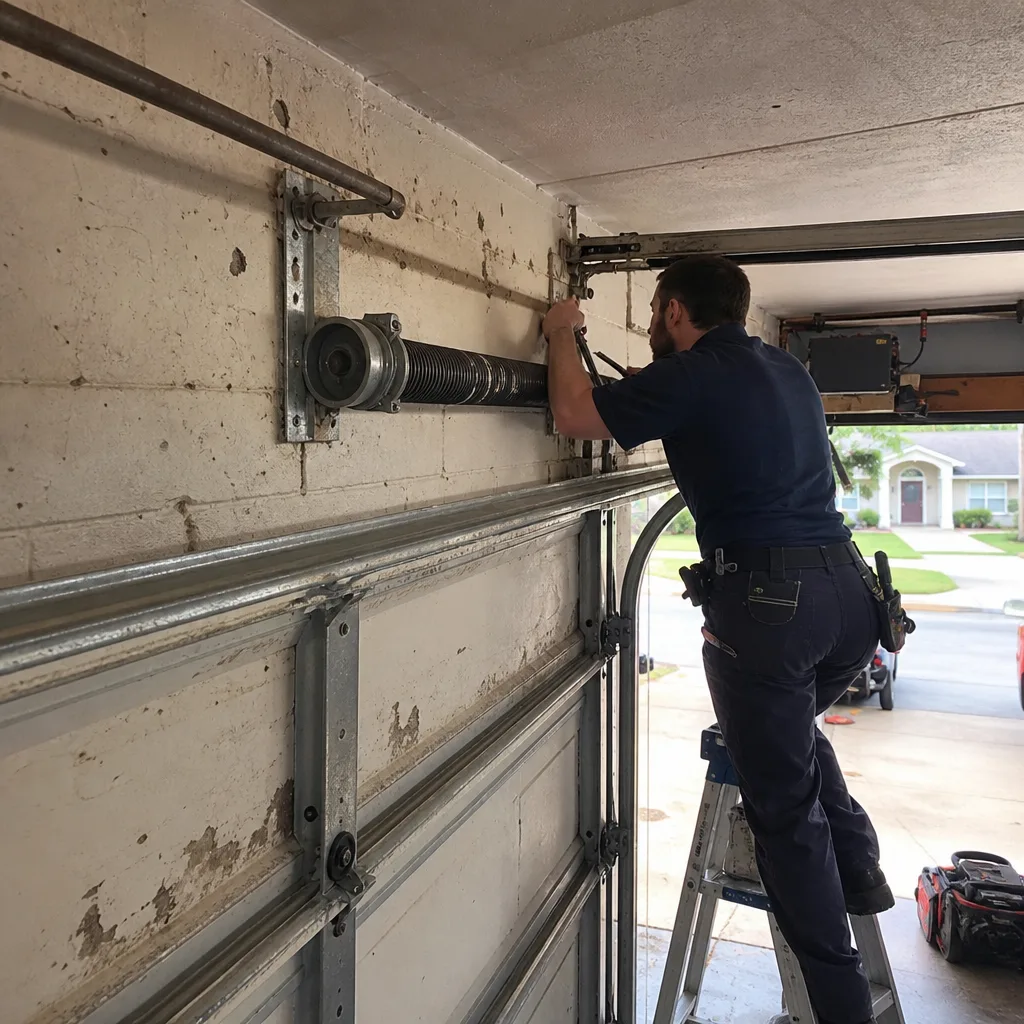
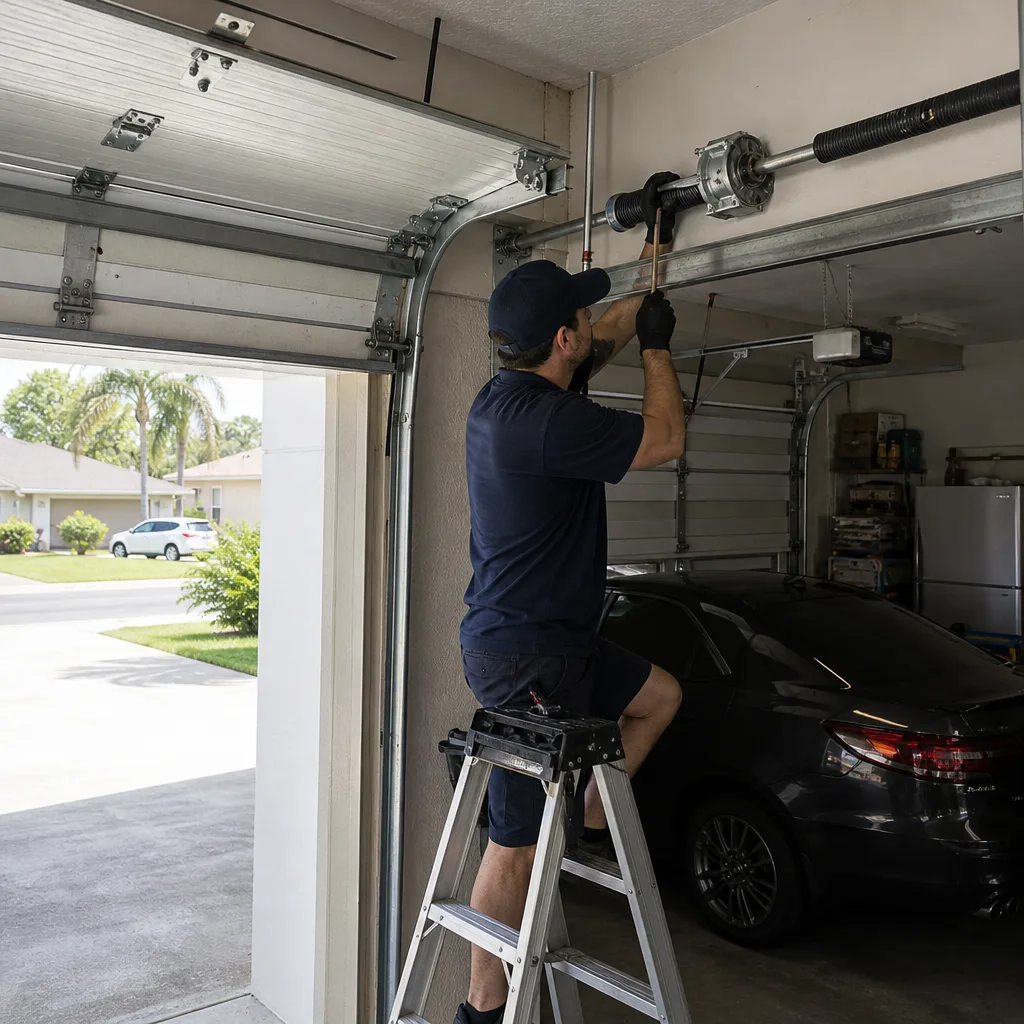
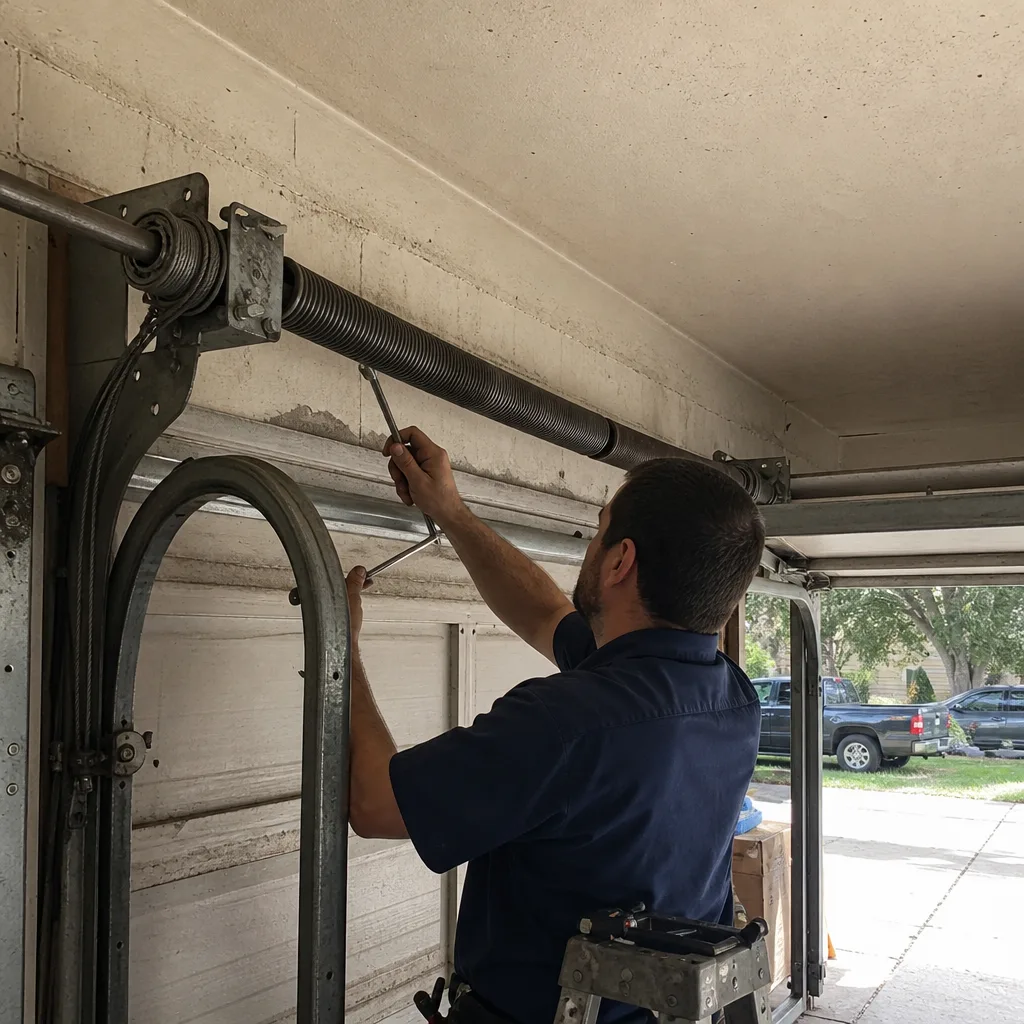
Garage doors are deceptively dangerous. The torsion spring on a standard 16-foot door holds enough tension to cause serious injury or death if it releases unexpectedly. Every year, homeowners are injured attempting spring work without the proper winding bars and training. We’ll be direct: springs and cables are not DIY territory. The risk calculation doesn’t close. That said, there are legitimate maintenance tasks every Lakeland homeowner should be able to handle, and knowing the difference saves you money without compromising safety.
Safe to DIY
- Lubricating rollers, hinges, and springs with a lithium-based garage door lubricant. Do this every 6 months in Lakeland’s climate. The humidity means lubrication breaks down faster than the national average.
- Cleaning and aligning photo-eye sensors. Dust, spider webs, and Florida’s famous love bugs can block the beam. A soft cloth and a level solve most sensor issues.
- Replacing weather stripping and the bottom seal. This is a straightforward pry-off, press-on job. In Lakeland’s rain season, a functioning bottom seal is the difference between a dry garage and a damp, rust-accelerating environment.
- Tightening loose track bolts and hinge screws. Vibration from daily cycles loosens hardware over time. A socket set is all you need.
Leave to a Trained Technician
- Spring replacement of any kind, including extension springs. The tension in these components doesn’t announce itself before releasing. Full stop.
- Cable replacement or re-spooling. Cables work in tandem with springs. Working on one without releasing the other’s tension is how accidents happen.
- Track realignment when the track is visibly bent or pulled from the wall. This affects the door’s entire weight distribution.
- Any repair involving electrical wiring beyond swapping a wall button. Lakeland’s lightning season means openers can develop internal shorts that are best handled with the unit unplugged and opened by someone who does this daily.
We service the brand already on your door, and part of that service is knowing when a problem is genuinely simple enough for you to handle versus when calling us protects both your safety and your door. The line is drawn where tension and current live.
Brand-by-Brand Repair: What to Know About the Hardware on Your Door
Most Lakeland homes have one of eight garage door or opener brands installed, and each has its own quirks. A technician who only works on Clopay doors may misdiagnose a Wayne Dalton torqueMaster issue. Same hardware, right knowledge. That’s why we work across all eight: LiftMaster, Chamberlain, Genie, Clopay, Amarr, Wayne Dalton, Craftsman, and Raynor. Here’s what matters for the brands we see most often in Lakeland-area homes:
Clopay Doors
Clopay makes some of the most durable steel doors on the market, but here’s a Lakeland-specific truth: Clopay doors from the 2000s and early 2010s used a specific bottom seal design that degrades quickly in UV-heavy environments. When we see a Clopay door with rust along the bottom edge, the seal has almost always failed at least a year before the homeowner noticed. The fix is straightforward: replace the seal, treat the rust, and repaint the edge. The door itself usually has years left.
LiftMaster and Chamberlain Openers
These two brands share the same parent company and the same myQ smart platform, and they account for more than half of the openers we service in Lakeland. The weakness we see most often in Central Florida is the logic board, which is sensitive to the power flickers that accompany our afternoon thunderstorms. If your LiftMaster or Chamberlain opener starts behaving erratically after a storm, cycling without command or failing to respond to remotes, the board is the prime suspect. It’s a component-level fix, not a reason to replace the whole unit.
Craftsman Openers
Craftsman openers are all over older Lakeland homes, particularly in neighborhoods built before 2000. The brand left the garage door opener market years ago, but the units are mechanically simple and often repairable. The main issue is parts availability. We keep a stock of the gears, sprockets, and drive belts that older Craftsman units need, because a snapped drive gear on a 1998 Craftsman doesn’t warrant a full opener replacement if the motor’s still strong. That’s a repair-first reality many homeowners don’t know is available.
Amarr and Wayne Dalton
Both brands have significant presence in newer Lakeland construction, particularly in planned communities like Grasslands and around South Lakeland. Amarr doors are built around torsion systems that are generally over-engineered for residential use, which is a good thing in Florida. Wayne Dalton’s torqueMaster systems, if you have one, are a different story. The spring is enclosed in a tube, which protects it from humidity but makes diagnosis harder. If your torqueMaster door suddenly becomes heavy or makes a clicking sound during operation, the spring has likely failed inside the tube. A technician who’s never dealt with that system will tell you to replace the whole door. We’ll replace the spring.
Hurricane-Season Garage Door Preparation for Lakeland Homes
Garage doors are the single largest opening in most Lakeland homes, and during hurricane season, they become the structural weak point. A door that fails under wind pressure can allow the roof to lift from the inside. This isn’t theoretical. Building engineers have documented the mechanism for decades. So this section matters.
Here’s what we recommend for every Lakeland homeowner before June 1:
- Inspect and replace the bottom seal. A worn seal doesn’t just let water in. It changes how wind moves under the door, which affects the entire panel structure during a storm.
- Check and tighten all track brackets, hinges, and spring mounting pads. Loose hardware amplifies wind vibration and can turn a moderate gust into a catastrophic failure.
- Verify the door’s balance by disconnecting the opener and manually lifting the door halfway. It should stay in place. If it falls, your springs are not holding proper tension, and the door is under extra stress it cannot afford before a storm.
- Install a garage door bracing system if your door faces open exposure. Homes around Lake Parker, Lake Hollingsworth, and open-area subdivisions experience higher wind loads. A brace kit strengthens the door’s resistance substantially.
For homes with newer reinforced doors, the prep is less involved but still necessary. Spring tension diagnostics before hurricane season is the single highest-value check you can schedule. A spring that’s at 80% capacity in May might be at 40% by September, and you don’t want to discover that as a tropical system is approaching Polk County.
How to Document Garage Door Damage for Insurance Claims
Most Lakeland homeowners don’t realize that garage door damage is frequently covered by homeowner’s insurance, and that documenting it correctly is the difference between a smooth claim and a denied one. Here’s the step-by-step process we recommend, based on what we’ve seen work (and fail) in claims from Lakeland storms:
- Photograph everything before touching anything. Take wide shots that show the whole door in context, then close-up shots of every damaged component: bent panels, broken springs, pulled cables, damaged tracks. Include the brand label if visible.
- Photograph the date. Take a photo of the damage with a newspaper from that day, or make sure the photo metadata (timestamp) is preserved. This establishes when the damage occurred, which matters for storm-related claims.
- Document the age of the door if you know it. Insurance adjusters calculate actual cash value based on depreciation, and a 2-year-old door gets more than a 12-year-old door. Any paperwork showing the door’s installation date helps.
- Get a written repair estimate OR a written declaration that the door is beyond repair. This is critical. Insurance companies want to know whether the door can be repaired or needs replacement, and an expert assessment is the evidence they respect.
- Do not authorize permanent repairs before your adjuster has reviewed the damage. You can make temporary, safety-related fixes (like reconnecting a door that’s stuck open). But replacing a full door before the claim is processed can complicate your payout.
The part most guides skip is this: insurance companies in Florida process thousands of garage door claims after every major storm, and they look for patterns. Inconsistent documentation is the most common reason a legitimate claim gets reduced. The more structured your evidence, the smoother the process.
Repair vs. Replacement: The Decision Framework
The most common question we hear in Lakeland isn’t “what’s wrong with my door?” It’s “should I fix this or just replace the whole thing?” The answer, honestly, is usually repair. But there are clear cases where replacement is the right call. Here’s the framework we use when advising homeowners, and it’s the same framework that guides our own recommendations:
Repair when:
- The panels are intact and the door opens smoothly once the broken component is replaced.
- The door is less than 15 years old and the track is straight.
- The opener is less than 10 years old and the issue is a gear, sprocket, or board rather than motor failure.
- You’re planning to stay in the home and want to maximize the remaining lifespan of the current door.
Replace when:
- Multiple panels are dented, rusted through, or structurally compromised. Rust along panel seams in Lakeland’s humid climate can spread faster than you’d expect.
- The door is 20+ years old and showing signs of failure in multiple systems simultaneously: springs, rollers, hinges, and panels all worn.
- You want to upgrade to a modern insulated door for energy efficiency or hurricane resistance. Some older doors in Lakeland simply don’t meet current wind-load standards.
- The track is bent, the door is off-kilter repeatedly, and repairs keep addressing symptoms rather than causes.
The repair-first philosophy isn’t just about saving money today. In many cases, a $300 repair that gives you 3 to 5 more years of service life is the mathematically smarter choice. But we’ll be straightforward with you: when replacement makes more sense, we’ll say so. Because we work across all major brands and don’t have a financial incentive to push you toward one manufacturer’s product, our replacement recommendations are driven by what’s actually best for your door, your home, and your budget.
Common Mistakes to Avoid
- Ignoring the bottom seal until water damage is visible. By the time you see water on the garage floor, the seal has usually been failing for months. In Lakeland’s rain season, that’s months of accelerated rust on the bottom panel and track hardware.
- Using WD-40 instead of a lithium-based lubricant on rollers and hinges. WD-40 is a solvent, not a lubricant. It temporarily quiets noise but strips existing lubrication, making the problem worse within weeks. Lakeland’s humidity then compounds the issue.
- Attempting spring replacement without proper tools and training. Torsion springs hold hundreds of pounds of tension. This is the one mistake on this list that can put you in the hospital. We’ll repeat it as many times as necessary: springs are not DIY.
- Replacing an opener when the real problem is the door’s balance. If the springs are weak, every opener will struggle, and a new opener will fail prematurely too. The fix is the spring, not the opener. This is a misdiagnosis we see regularly.
- Setting the opener’s force limit too high to compensate for a binding door. When a door resists movement, some homeowners crank up the force setting. That works until the opener burns out or the door gets pulled off its track. The underlying resistance needs to be addressed.
- Skipping pre-season inspection until after a storm reveals the problem. By then, you’re potentially dealing with both door damage and whatever got exposed when the door failed. The inspection is cheaper than the aftermath.
When to Call a Professional
Call a professional when the repair involves loaded springs, high-tension cables, or a door that has come off its track. These are systems under force, and the margin for error is measured in inches. Call when your opener’s logic board is behaving inconsistently after Lakeland’s daily lightning storms, because the fix is diagnosis-driven, not guesswork. Call when you need an honest assessment of whether your 15-year-old door is worth repairing in the first place. And call when you want the work done by someone who works on the exact brand already installed in your home, with the right parts on the truck, not ordered from a catalog after the first visit. For The Complete Guide to Garage Door in Lakeland and deeper local insights, see our dedicated resource. Lift Line Garage Door Repair offers free estimates in Lakeland, call (866) 253-2286. Garage doors are all we do, and we’ll give you a straight answer whether the solution is a $200 repair or a full replacement.
Frequently Asked Questions
Most garage door repairs in Lakeland run between $125 and $450 depending on the component. Spring replacement typically costs $180 to $340, cable replacement $150 to $250, and sensor realignment or replacement $100 to $180. Call (866) 253-2286 for an exact quote, estimates are free.
For most common repairs like broken springs, cable issues, and sensor problems, a technician can typically diagnose and complete the fix in a single visit. The key is having the right parts on hand, which is why we stock components for all eight major brands including LiftMaster, Chamberlain, Genie, Clopay, Amarr, Wayne Dalton, Craftsman, and Raynor.
No. The price is quoted and agreed before any work starts. If we discover an additional issue during diagnosis, we’ll explain it and give you an updated figure before proceeding. You’ll never get a surprise invoice from us.
In most cases, no. This is typically a receiver board issue, a remote programming problem, or interference from Lakeland’s afternoon storm activity. The motor and drive system are often completely fine. We diagnose the specific component and replace only what’s failed, which is almost always less expensive than a full opener replacement.
No, but you need a technician who understands the specific hardware design. Wayne Dalton’s torqueMaster spring system is enclosed and functions differently from a traditional torsion setup. Clopay doors have specific seal and panel designs. We work on all eight major brands found in Lakeland, including Wayne Dalton and Clopay, so the technician who arrives already knows the hardware on your door.
Twice a year is ideal for Lakeland homes. Once in spring before hurricane season begins, and once in late fall. The spring inspection focuses on wind resistance and structural integrity. The fall inspection addresses wear from summer’s heat and humidity. Between inspections, lubricate moving parts every six months and visually check the bottom seal monthly.
The Bottom Line
Garage doors in Lakeland don’t fail the way garage doors fail in dry climates. Humidity accelerates spring corrosion, UV exposure breaks down seals and panels, and hurricane season adds structural stress that northern homeowners never face. The repair framework that matters here is built around those realities: inspect before storm season, lubricate frequently, replace seals early, and never attempt spring or cable work without a trained technician. When you do need professional help, explore our more guides & resources or call (866) 253-2286. We work on the brand already on your door, we repair before recommending replacement, and garage doors are all we do. From the cable to the connected opener, that focus makes the difference.
Written by the team at Lift Line Garage Door Repair, serving Lakeland since 2012.
See the difference
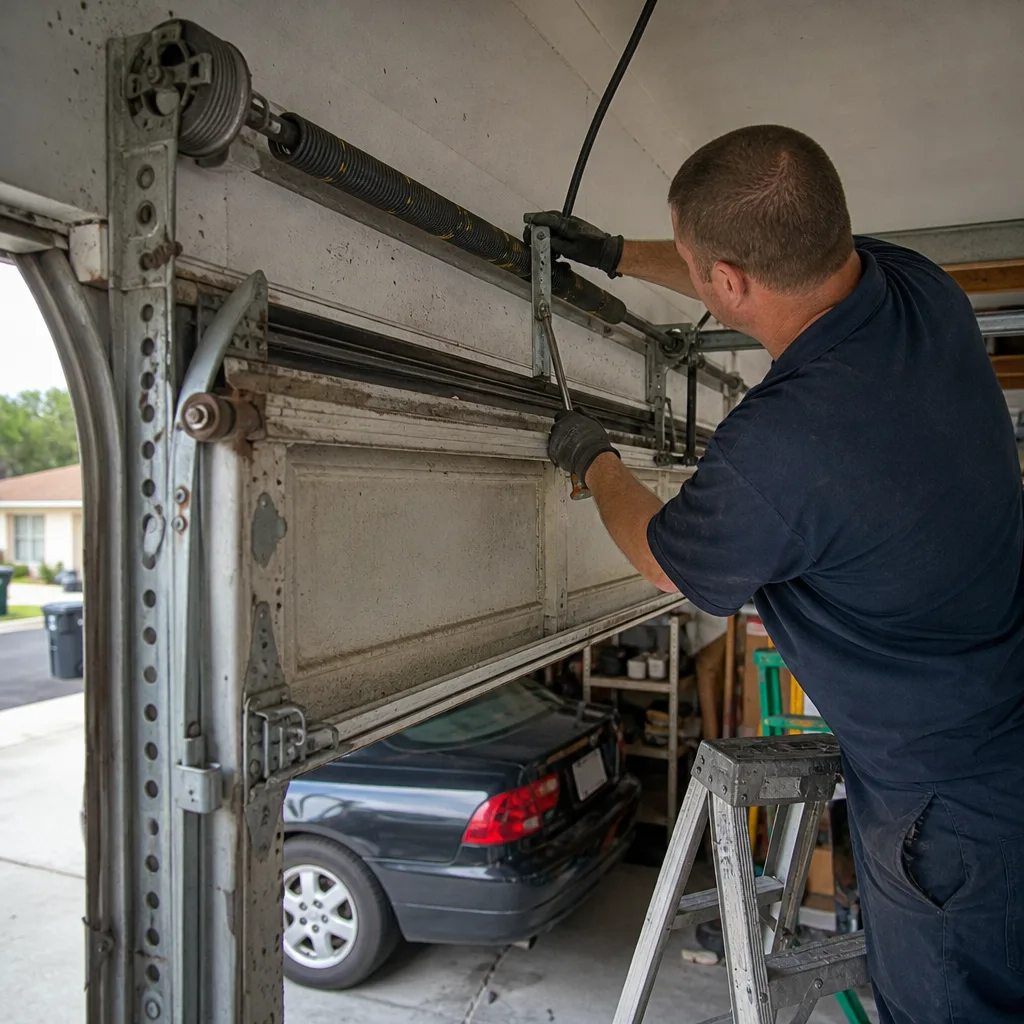 Before
 After
 Before
 After
 Before
 After