

Last updated October 31, 2026
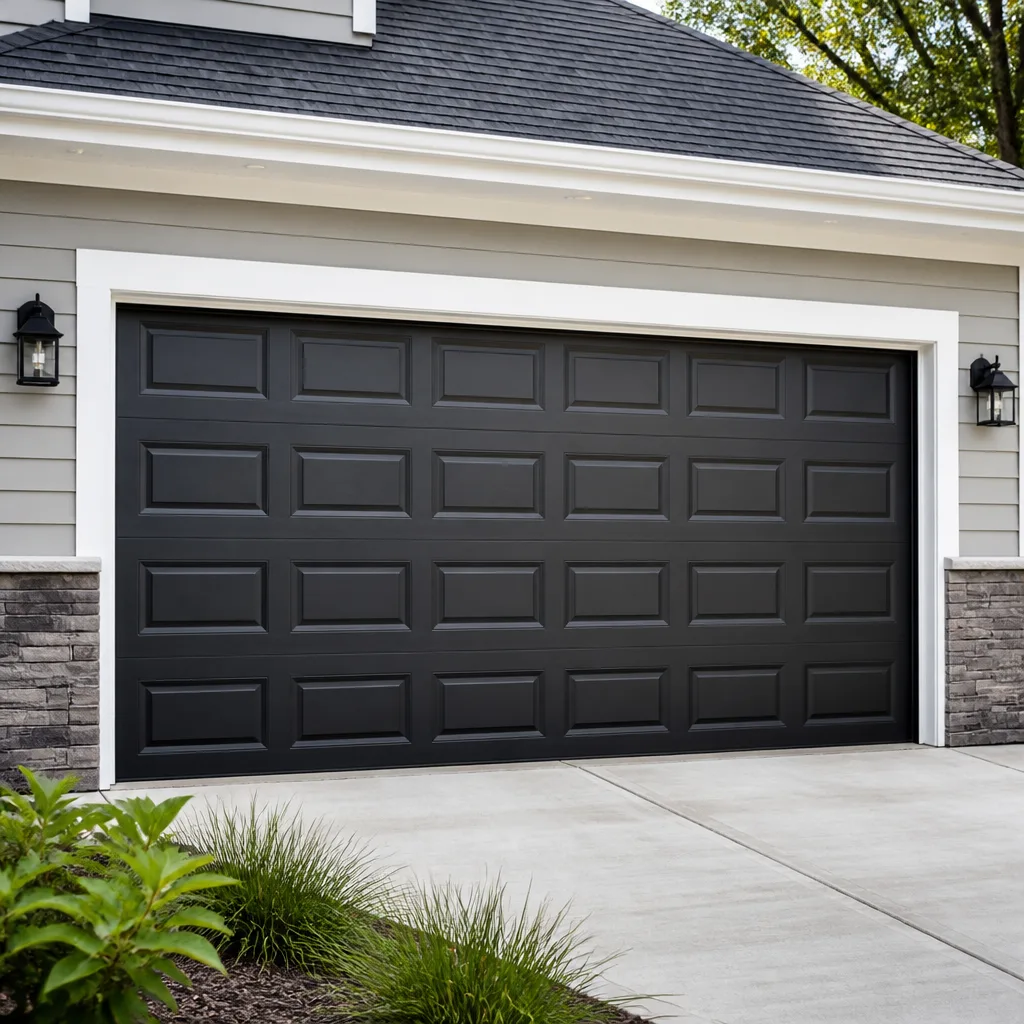 Raised-panel steel
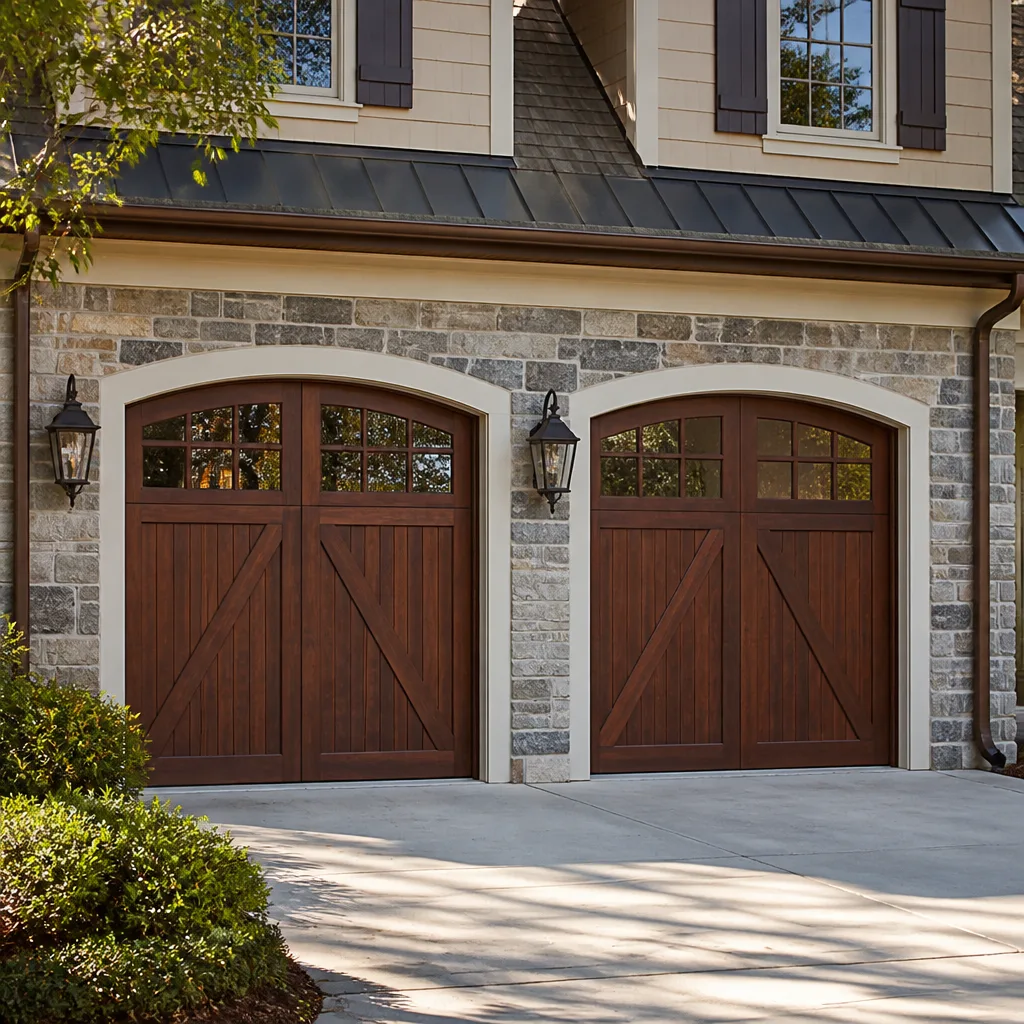 Carriage house
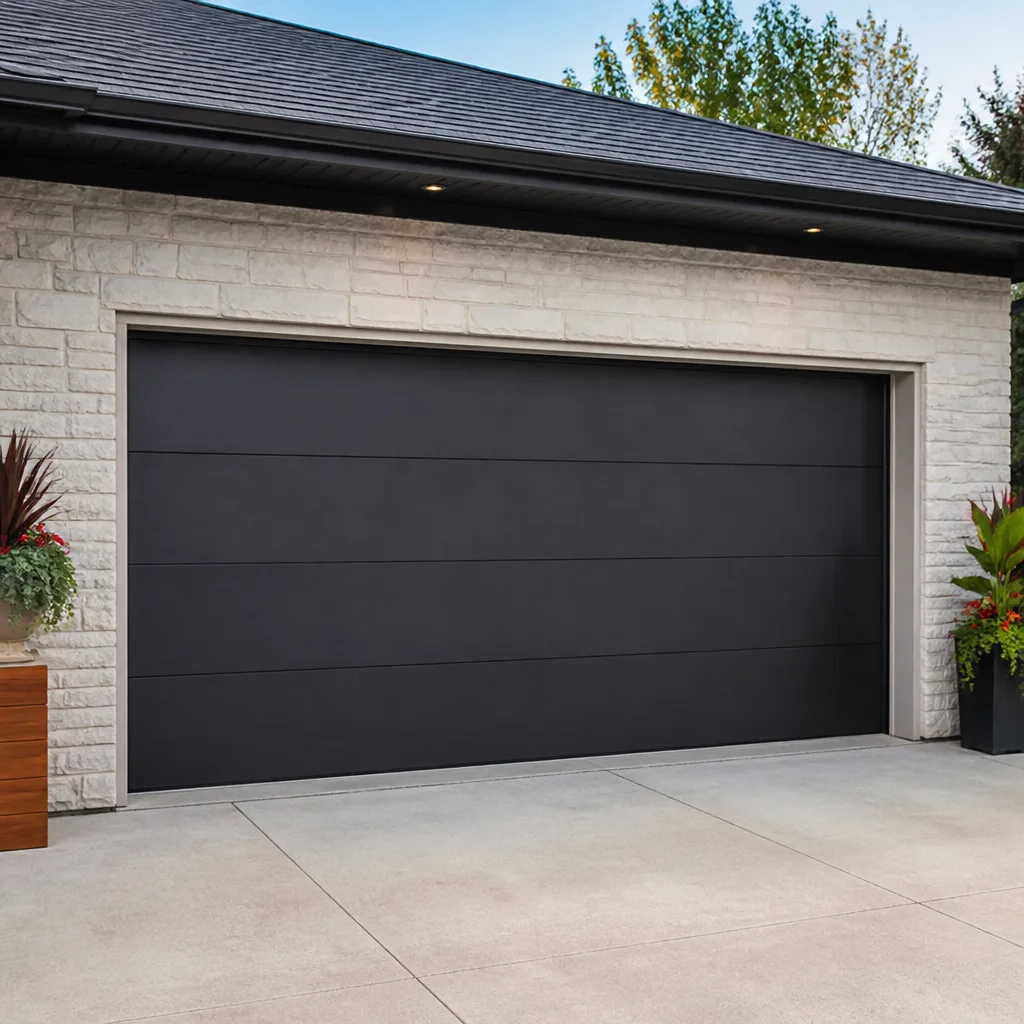 Modern flush
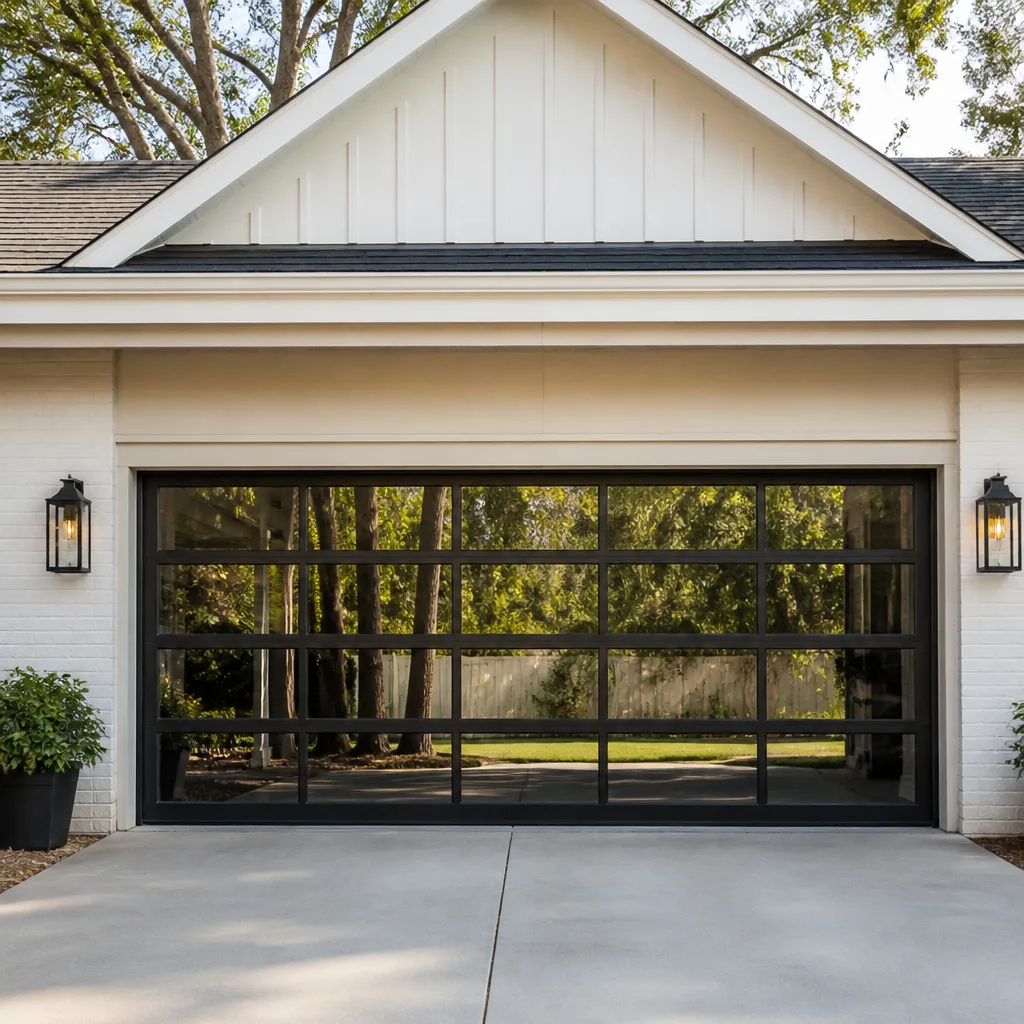 Full-view glass
 LiftMaster openers
 Chamberlain openers
Full 25-point door and opener safety check with every visit - springs, cables, rollers, tracks, and your LiftMaster or Chamberlain opener included
You get a price before we start. It does not change when the truck arrives.
Get your free estimateGarage Door Permits, Codes & Inspections in FL: What You Need to Know
An unpermitted garage door installation in Florida isn’t just a code violation. It’s a documented gap in your homeowner’s insurance coverage that insurers will use to deny storm-damage claims. Florida’s garage door permitting rules are stricter than most states, and Polk County adds wind-load requirements that make an unpermitted installation a costly liability when you sell or file an insurance claim. In Lakeland, where hurricane-season wind ratings and the Florida Building Code Chapter 16 govern nearly every structural upgrade, homeowners who skip permits are gambling with six-figure exposure. This guide explains exactly when a permit is required, what inspectors check at each stage, and how to avoid the mistakes that trigger failed inspections and insurance denials.
Quick Answer
In Lakeland and across Polk County, a permit is required for any new garage door installation, any replacement that changes the door’s size, material, or wind-load rating, and any structural modification to the opening. Simple repairs like spring replacement, cable fixes, panel realignment, and opener swaps typically do not require a permit. Permitted installations must pass a wind-load inspection verifying compliance with Florida Building Code Chapter 16, and homeowners should keep the permit, inspection report, and product approval documents for the life of the door.
Styles & brands we work with
Table of Contents
- When Do You Need a Garage Door Permit in Florida?
- Repair vs. Replacement: Where Polk County Draws the Line
- Florida Building Code Chapter 16: Wind-Load Requirements for Lakeland
- The Inspection Sequence for New Garage Door Installations in Polk County
- How Unpermitted Work Surfaces During Real Estate Transactions
- Documentation to Keep After a Permitted Installation
- Permit Costs and Timeline in Polk County
- Common Mistakes to Avoid
- When to Call a Professional
- Frequently Asked Questions
When Do You Need a Garage Door Permit in Florida?
Florida law requires a building permit for any garage door installation that involves structural work, changes the opening dimensions, or replaces a door with a product carrying a different wind-load certification. The Florida Building Code, 7th Edition (2023), which Lakeland and Polk County enforce, treats the garage door as part of the building envelope. That means the door has to resist wind pressure just like your roof and exterior walls do. When a new door goes in, the building department wants documentation proving the product meets the minimum design pressure rating for your specific wind zone.
Here’s what requires a permit in Polk County:
- New garage door installation on new construction or an existing opening that previously had no door
- Replacement with a different size door, which requires reframing the opening
- Replacement with a different material when the wind-load rating changes (for example, swapping a solid wood door for an aluminum door)
- Any modification to the door opening itself, including adding or removing header supports
- Converting a carport to a garage, which triggers a full envelope review
What does not require a permit: replacing the opener, swapping out springs, cables, rollers, hinges, sensors, or weatherseal, and replacing panels when the door’s frame, size, and wind rating remain unchanged. These are considered repairs, not installations, under Florida’s permitting framework. We’ve seen homeowners in Lakeland’s Dixieland and Lake Morton neighborhoods get caught out on this distinction, so the rule of thumb is simple: if the door leaves the opening, check our Garage Door Repair Troubleshooting: Common Problems and How to Fix Them first. If only a part gets swapped, you’re usually in repair territory.
When in doubt, Polk County’s Building Division answers permit questions by phone, and the question takes five minutes. The answer may save you thousands at resale or claims time.
Repair vs. Replacement: Where Polk County Draws the Line
The single most confusing piece of Florida code for homeowners is the repair-versus-replacement threshold. The Florida Building Code defines a repair as restoring a component to its original condition without changing its size, material, or structural capacity. A replacement changes one of those factors. Polk County inspectors apply this definition literally, and their interpretation determines whether you needed a permit six months ago when the work happened.
Here’s how that distinction plays out in practice on the brands we see most often in Lakeland garages. A homeowner with a Clopay steel door whose torsion spring breaks calls for a spring replacement—no permit required, though our Garage Door Warning Signs: A Lakeland Homeowner’s Reference Guide explains when to spot trouble early. The technician arrives, replaces both springs, checks the cables, and the door leaves the truck. That’s a repair. But suppose that same homeowner decides the old door has enough dents and wants a new Amarr door of the same size. Same opening, same dimensions, but the wind-load rating changes because the new door’s construction differs from the original. That triggers the permit.
The thresholds that trip people up:
- Panel replacement vs. full door replacement. Replacing one dented panel on a Wayne Dalton door is a repair. Replacing all four panels to effectively create a new door is a replacement in the inspector’s eyes, because the cumulative change alters the door’s rated performance.
- Opener changes never trigger a permit. Swapping a Craftsman opener for a LiftMaster unit involves electrical work, but the garage door itself remains unchanged. Florida exempts this from structural permitting.
- Track and hardware replacement. New tracks, rollers, and hinges are repairs if the original configuration is maintained. Changing track geometry (for example, converting from standard lift to high lift to accommodate a car lift) modifies the door’s load path and generally requires a permit.
We tell Lakeland homeowners the same thing every time: if the work can be described as “fixing what’s there,” you don’t need a permit. If the phrase “new door” enters the conversation, you almost certainly do. The Garage Door Repair in Jan-Phyl Village guide covers the repair side in detail, but the permit question is always the first one to answer.
Florida Building Code Chapter 16: Wind-Load Requirements for Lakeland
Chapter 16 of the Florida Building Code governs structural loading, and it’s the reason garage door permits exist in Florida at all. The code assigns every location in the state a wind speed and design pressure rating based on its distance from the coast and local topography. Lakeland sits in a wind zone with design wind speeds ranging from 130 to 140 mph depending on the exact parcel location, with the higher end applying to newer construction and structures in more exposed settings. That’s not a suggestion. It’s the engineering standard your door must meet.
A garage door’s wind-load resistance is measured in pounds per square foot of design pressure. The code requires that the door you install carries a product approval document, typically a Florida Product Approval (FPA) or Miami-Dade NOA, that certifies it for your home’s design pressure rating. Without that document, the inspector can’t sign off. With it, the inspection is usually routine.
Manufacturers test doors for these loads, and the results vary by size, material, and reinforcement. A Raynor steel door with a wind-load reinforcement package may carry a higher design pressure rating than a standard aluminum door of the same size. That’s why the permit process asks for the specific product approval document, not a generic brand name. The document corresponds to an exact model, size, and reinforcement configuration.
For Lakeland homeowners, the practical implications are: (1) an off-the-shelf door purchased without verifying its FPA may not meet your home’s rating; (2) wind-load reinforcement, which typically adds struts or a thicker gauge steel, is often required even when the basic door looks identical to a non-rated model; and (3) the inspector will look for the FPA sticker or label on the door itself during the final inspection. No sticker, no pass.
The Inspection Sequence for New Garage Door Installations in Polk County
Polk County’s inspection sequence for a permitted garage door installation follows a predictable path. Understanding it before the work starts prevents delays and failed inspections. Here’s the step-by-step process a typical Lakeland homeowner will experience:
- Permit application submitted. The contractor or homeowner files the permit application with Polk County’s Building Division, including the product approval documents for the specific door being installed. The plan review checks that the door’s design pressure rating meets or exceeds the home’s wind zone requirement.
- Permit issued. Once the plan review clears, the county issues the permit. At this point, work can legally begin. The permit card must be posted at the job site, typically on the garage wall or front window, visible from the street.
- Rough inspection (if structural changes are involved). For installations that modify the opening, the county inspects the framing, header, and anchorage before the door goes in. This inspection verifies that the structural support can handle the door’s weight and wind loads. If the opening is unchanged, the rough inspection may be waived.
- Door installation. The door, tracks, springs, and opener (if included) are installed. The installer verifies the door operates smoothly, balances correctly, and that the automatic reverse function on the opener meets federal safety standards.
- Final inspection. A Polk County inspector visits the site and checks: the FPA label or documentation on the door, the door’s balance and travel, the opener’s auto-reverse and photo eye sensors, and the anchoring to the surrounding framing. One correction commonly requested in Lakeland is adding a second strut to doors that visually look under-reinforced for their width.
- Permit closed. Once the final inspection passes, the county marks the permit as complete. The homeowner receives the closed permit and inspection record, which should be filed with the home’s permanent documents.
The entire sequence from permit application to closed permit typically runs two to three weeks for uncomplicated replacements, with the inspections themselves taking fifteen to thirty minutes each. The most common cause of failure at the final inspection is missing or illegible product approval documentation, not the door installation itself.
How Unpermitted Work Surfaces During Real Estate Transactions
Unpermitted garage door work rarely causes problems the day it’s installed. It causes problems the day you sell. Florida real estate contracts require sellers to disclose unpermitted improvements, and buyers’ inspectors are trained to spot signs of recent door replacement. Polk County property records list permits by address, and a buyer’s title search or insurance underwriting will flag a garage door that doesn’t match the county’s permit history. Here’s how it surfaces:
The seller disclosure. Florida’s seller disclosure form asks specifically whether any additions or improvements were made without required permits. A garage door replacement falls under that question. Answering “yes” kills deals or invites price concessions. Answering “no” when the evidence says otherwise exposes the seller to post-closing liability.
The buyer’s inspection. Home inspectors in Lakeland routinely note whether a garage door matches the age and style of the home. A 12-year-old house with a brand-new Raynor door and no permit on file is a red flag. The inspector flags it. The buyer asks for the permit. The seller doesn’t have it. Negotiations stall.
The insurance underwriting. Buyer insurance companies run property history checks in Polk County. An unpermitted door change can trigger a coverage exception or denial, particularly when the door fails during a storm and the policy excludes unpermitted modifications from covered damage. This isn’t a hypothetical scenario. It’s a documented insurance defense in Florida after every hurricane season.
For sellers, the fix is straightforward but not free: retroactive permitting, which involves opening the permit after the fact, paying penalties, and often making upgrades to meet current wind-load standards. For buyers, the lesson is to verify permits before closing, not after. For everyone, the lesson is that the $150 to $400 permit fee is a fraction of the cost of retroactive compliance.
Documentation to Keep After a Permitted Installation
A permitted garage door installation generates a paper trail that outlives the door itself. Keep these documents together, ideally in a digital folder and a physical file, because insurers and future buyers will ask for them:
- The closed permit. The county’s proof that the work was inspected and approved. Without it, the installation is legally incomplete.
- The final inspection report. The inspector’s signature confirming the door met wind-load and safety requirements on the inspection date.
- The product approval document (FPA or NOA). This is the manufacturer’s engineering certification for your exact door model and size. It’s the document an insurer will request after a storm-damage claim.
- The door’s installation manual and warranty card. Proves the door was installed per manufacturer specification, which warranty claims depend on.
- Photos of the installed door. Dated photos showing the door, its labels, and the opener help establish condition before any damage occurs.
- Receipt for the door and labor. Establishes the value of the improvement for insurance replacement cost and home sale documentation.
After a hurricane or severe thunderstorm, Lakeland homeowners with wind-damaged doors face two fights: one with the insurer and one with their own documentation. The first question the adjuster asks is whether the door was permitted. The second is whether the product approval document matches what’s on the property. Having both reduces a storm claim from a negotiation to a formality. We’ve seen the difference between claim outcomes with paperwork and without, and it’s stark.
Permit Costs and Timeline in Polk County
Polk County garage door permit costs typically run between $100 and $400 depending on the scope of work and the valuation of the installation. The county uses a fee schedule based on the permit type and the estimated cost of work, so a full door replacement with structural changes lands at the higher end, while a simple like-for-like replacement with no framing changes trends lower. The permit application itself can be filed online through Polk County’s permitting portal, and most plan reviews for straightforward door replacements clear within three to five business days.
Timeline expectations for a typical Lakeland replacement:
- Permit application to issuance: 3-7 business days for standard reviews
- Rough inspection scheduling: 24-48 hours after request, when required
- Final inspection scheduling: 24-48 hours after request
- Total elapsed time, permitted replacement: 2-3 weeks in most cases
For homeowners comparing a permitted versus unpermitted installation, the cost difference is the permit fee plus the time. The risk difference is a failed sale, an insurance denial, or retroactive compliance costs that can run into the thousands. That’s the math that makes the permit the cheapest part of any garage door project in Polk County.
Common Mistakes to Avoid
- Skipping the permit on a “like-for-like” replacement that isn’t actually like-for-like. Homeowners assume the new Clopay door is equivalent to the old one because it’s the same size and color. If the wind-load rating differs, the county considers it a different product. Verify product approval before assuming.
- Thinking a repair quote avoids the permit question. A contractor who describes a full door replacement as a “repair” is creating documentation that will fail under scrutiny. If the whole door comes out and a new one goes in, the permit is mandatory regardless of what the invoice says.
- Failing to check the product approval document before ordering. Homeowners order a door online based on appearance, then discover it has no Florida Product Approval for Polk County’s wind zone. The door arrives, the permit can’t be issued, and the return shipping eats the savings.
- Accepting an inspector’s verbal approval without the closed permit. Until the county’s system shows the permit as closed, the work is legally open. Follow up. Verbal approvals don’t transfer at closing.
- Losing the product approval document. The FPA sticker on the door degrades over time in Florida sun. The paper document in your file doesn’t. Keep it.
- Installing a wind-rated door but skipping the opener’s safety inspection. Polk County’s final inspection includes the opener’s auto-reverse and photo eyes. An older opener that doesn’t meet current safety standards can fail the inspection even when the door itself is compliant.
- Choosing the lowest bid without verifying the contractor pulls permits. Some installers quote the job without a permit and tell the homeowner it’s unnecessary. That advice is wrong, and the liability lands on the homeowner, not the contractor. Insist on a permitted job in writing.
When to Call a Professional
A garage door permit isn’t something to navigate blind. If you’re replacing a door in Lakeland and the wind-load requirements, product approvals, or inspection sequence feel like more than you want to manage, call someone who does this full-time. The right professional handles the permit application, schedules the inspections, and shows up with documentation the county accepts the first time. We’ve walked hundreds of Polk County homeowners through this process, and the pattern is consistent: the permitting conversations that go smoothly are the ones handled by someone who has done them before. Lift Line Garage Door Repair offers free estimates in Lakeland, and we handle permitted installations from application through final inspection. Call (866) 253-2286 to talk through your door and your options. Explore our Garage Door Installation in Jan-Phyl Village page for details on how we approach permitted work, or start with the Lift Line Garage Door Repair home page for an overview of what we do.
Frequently Asked Questions
No. Opener replacement is an electrical repair, not a structural change, and Florida code does not require a building permit for swapping one opener for another. The old Craftsman comes off, the new LiftMaster goes on, and the county never gets involved. The only exception is when the opener replacement accompanies a full door replacement, in which case the permit covers the door and the opener inspection happens as part of the same final inspection.
Polk County garage door permits typically cost between $100 and $400, based on the scope of work and the estimated project value. Straightforward replacements without structural changes trend toward the lower end; installations involving reframing or new openings run higher. The permit fee is paid at application and is separate from the door and labor costs. Call (866) 253-2286 for a free estimate that includes the full permitting picture.
The unpermitted work becomes a disclosure issue at sale, a coverage gap with your insurer, and a potential code enforcement problem if the county discovers it through a complaint or inspection. You can retroactively permit the work, which involves filing the application after the fact, paying penalties, and bringing the installation up to current wind-load standards. That process costs more than the original permit would have and takes longer. The sooner you address it, the cheaper it is.
Check the product approval document for your specific door model and size. Florida Product Approval documents list the design pressure ratings the door passed in testing, and Polk County requires that rating to meet or exceed your home’s wind zone requirement. If you don’t have the document, the door may still carry an approval label on the inside face. No document and no label means no way to verify compliance, which becomes a problem at inspection and insurance time.
Florida allows homeowners to act as their own contractor and pull their own permits for garage door work on their primary residence. The practical challenge is that the county holds you to the same documentation and inspection standards as a licensed contractor, including product approvals and wind-load verification. Most homeowners who try find the documentation process more demanding than the door installation itself. The Garage Door Opener Repair in Jan-Phyl Village page explains what professional opener work involves, and the same principle applies to full door projects: you’re paying for documentation competency as much as installation skill.
Your insurance company can discover unpermitted work through property history databases, claim investigations, and policy renewal reviews. The discovery matters most after a wind-damage claim, when the adjuster asks for the permit and product approval documents as part of the claim process. If those documents don’t exist, the insurer may deny coverage for the door on the grounds that unpermitted modifications are excluded under the policy. That’s the risk in concrete terms: the premium you paid doesn’t cover a door the county never approved.
The Bottom Line
Florida garage door permitting exists for one reason: wind. The state’s building code treats your garage door as part of the storm-resistant envelope of the house, and Polk County enforces that standard through a straightforward permit and inspection process. A permitted installation costs a few hundred dollars and two to three weeks. An unpermitted one costs more, eventually, when the sale falls through or the insurer denies the claim. Keep the paperwork, verify the product approval, and if the process feels heavier than you want to carry, explore more guides & resources or call a specialist who handles it every week. That’s the entire playbook: permit it, inspect it, document it, and the door serves you for twenty years without ever becoming a liability.
Written by the team at Lift Line Garage Door Repair, serving Lakeland since 2012.
See the difference
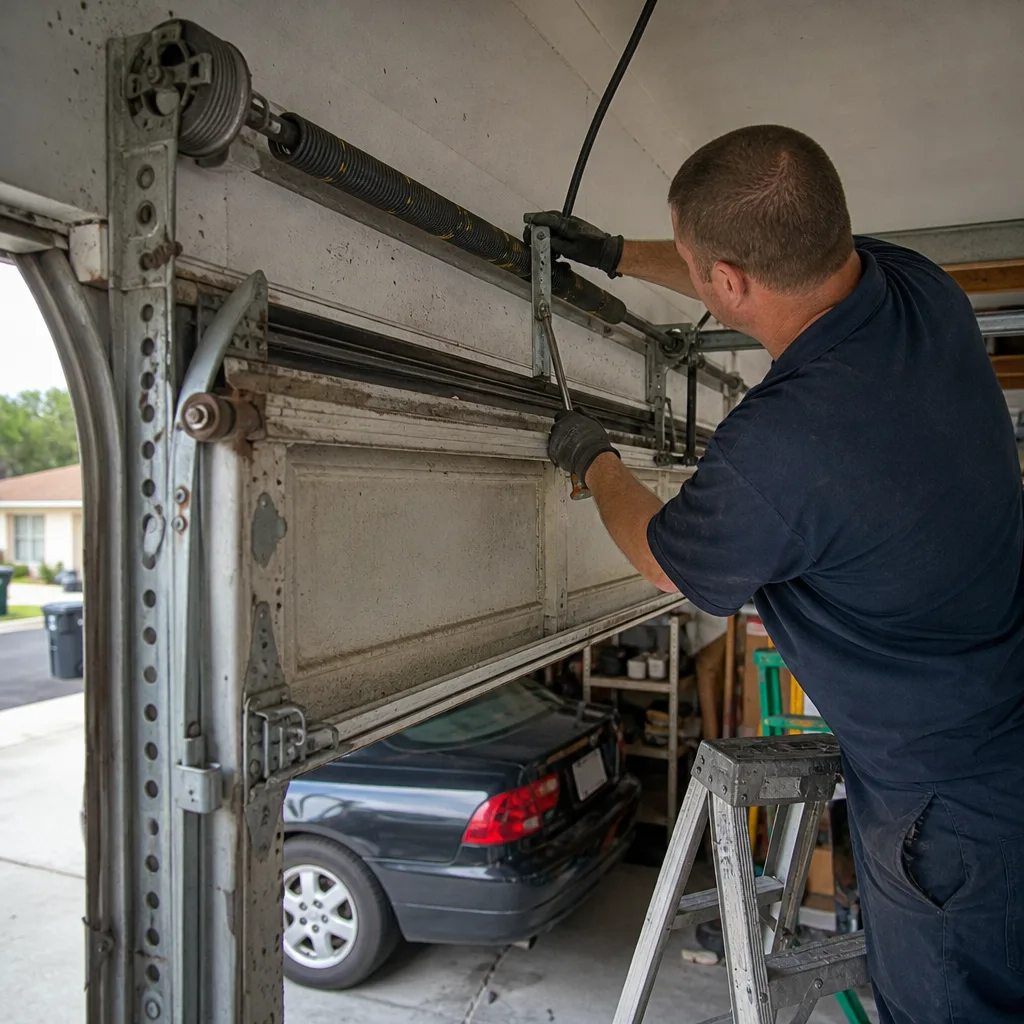 Before
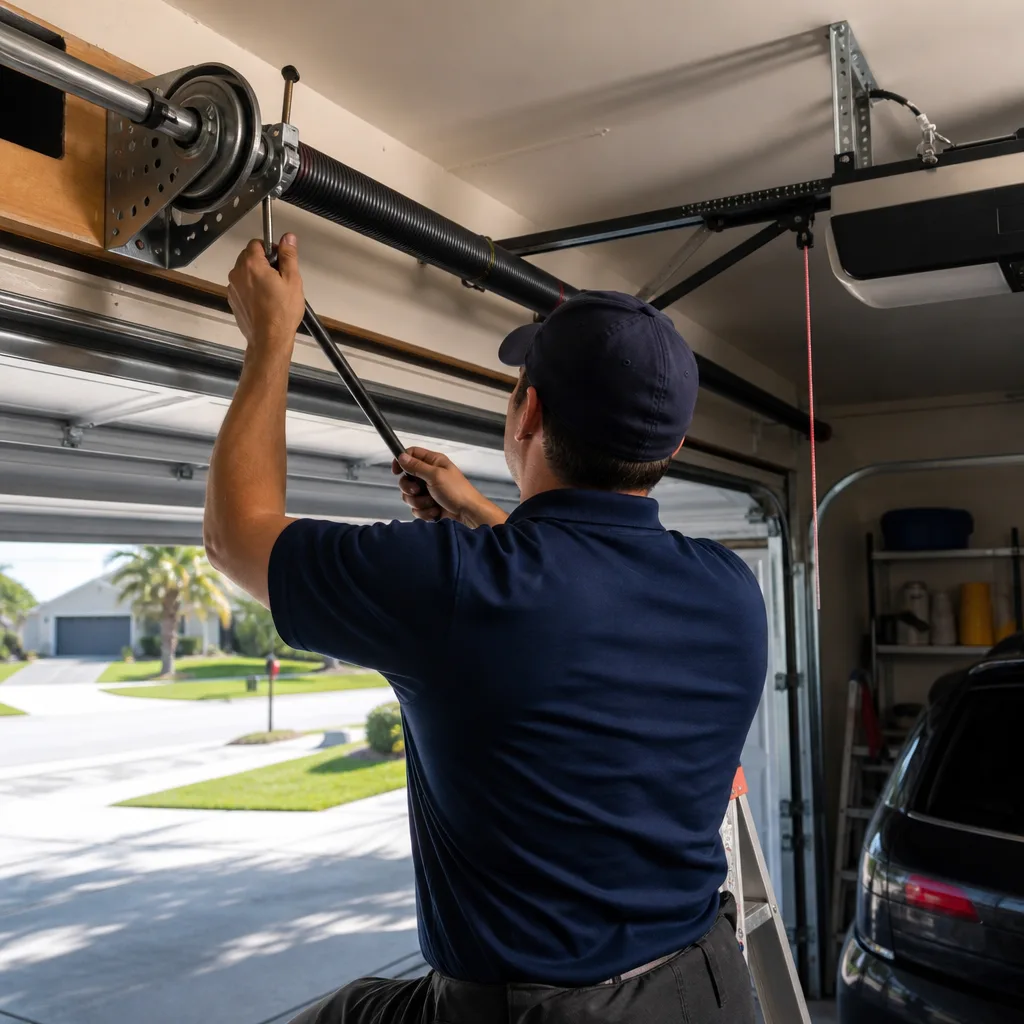 After
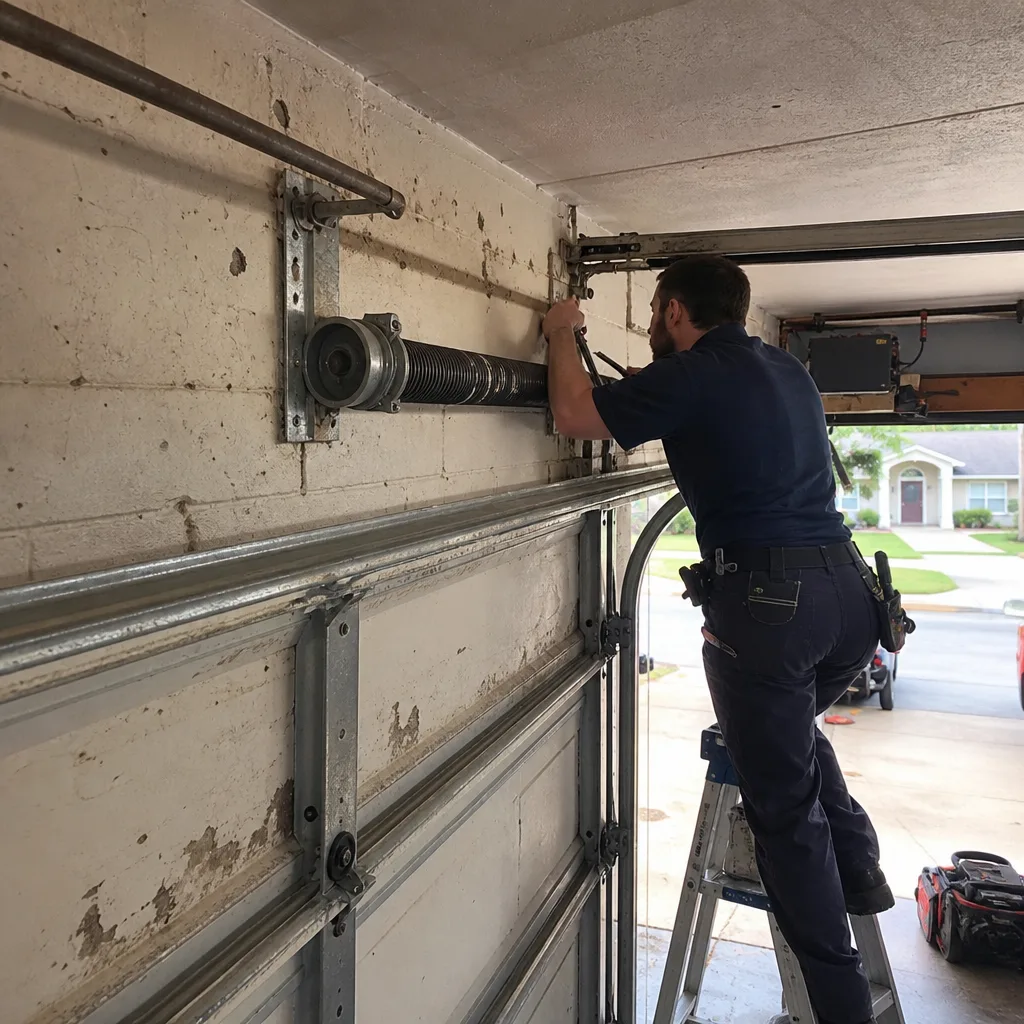 Before
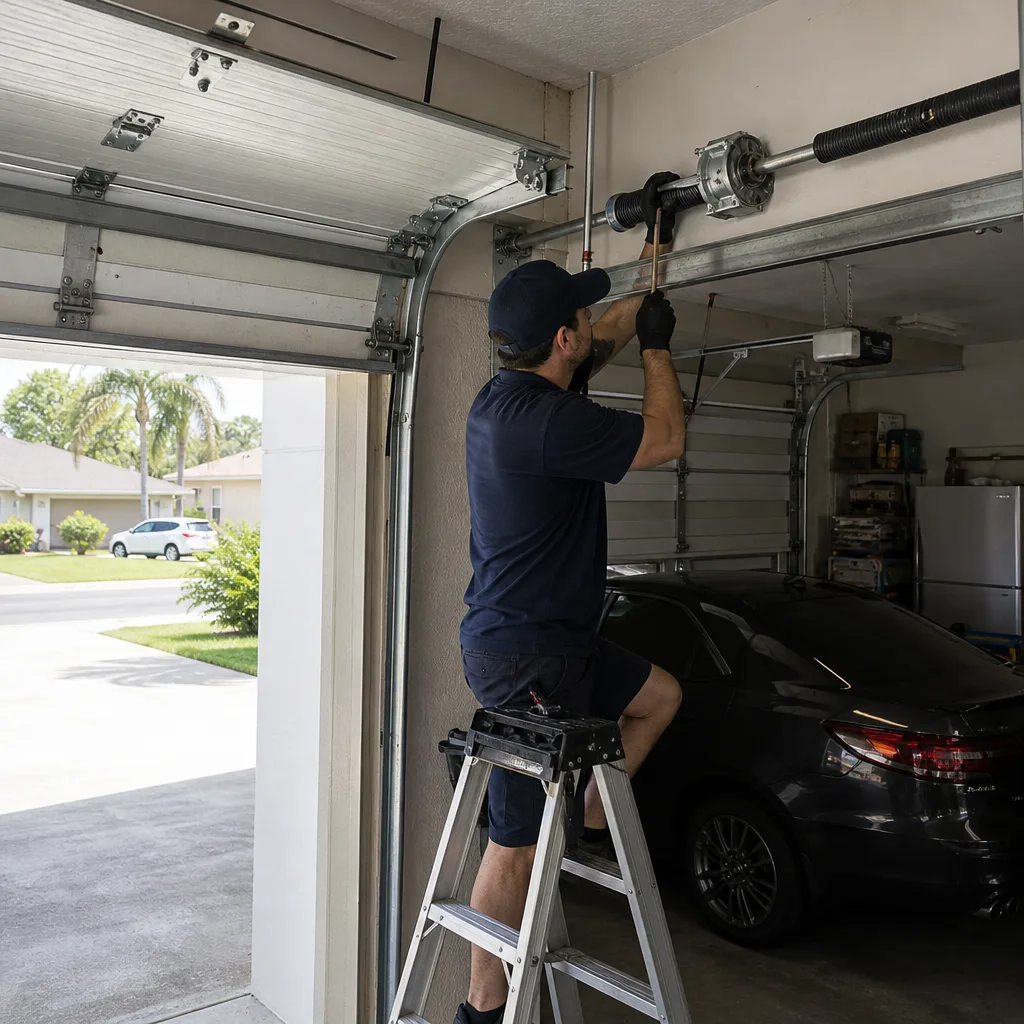 After
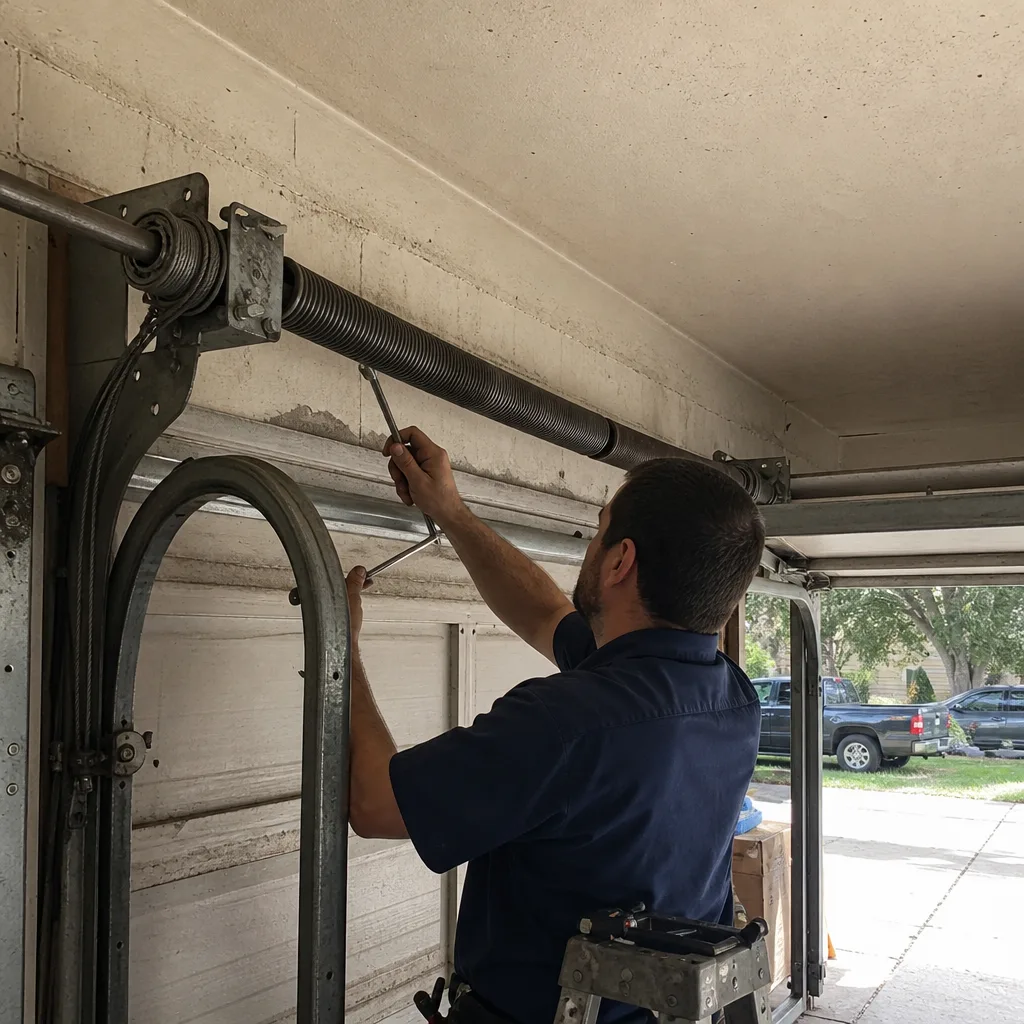 Before
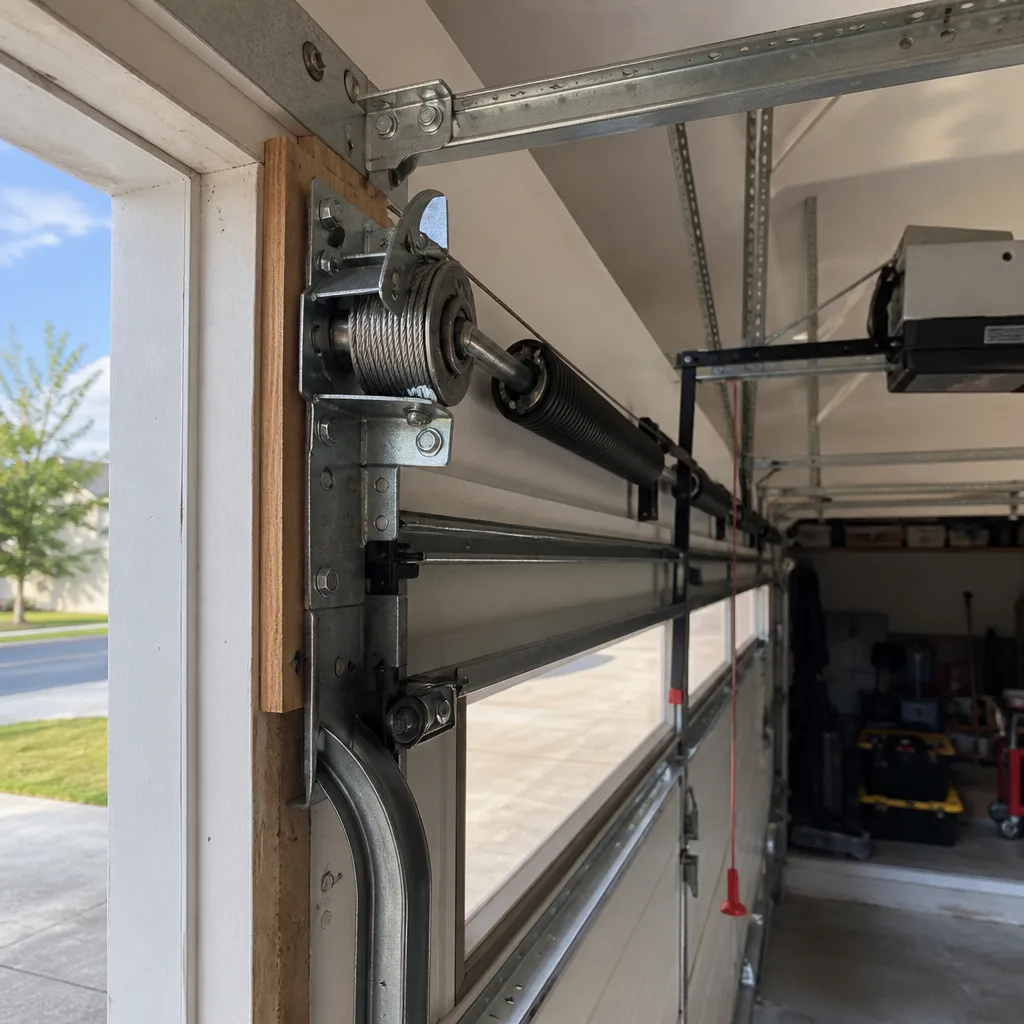 After