

Last updated October 31, 2026
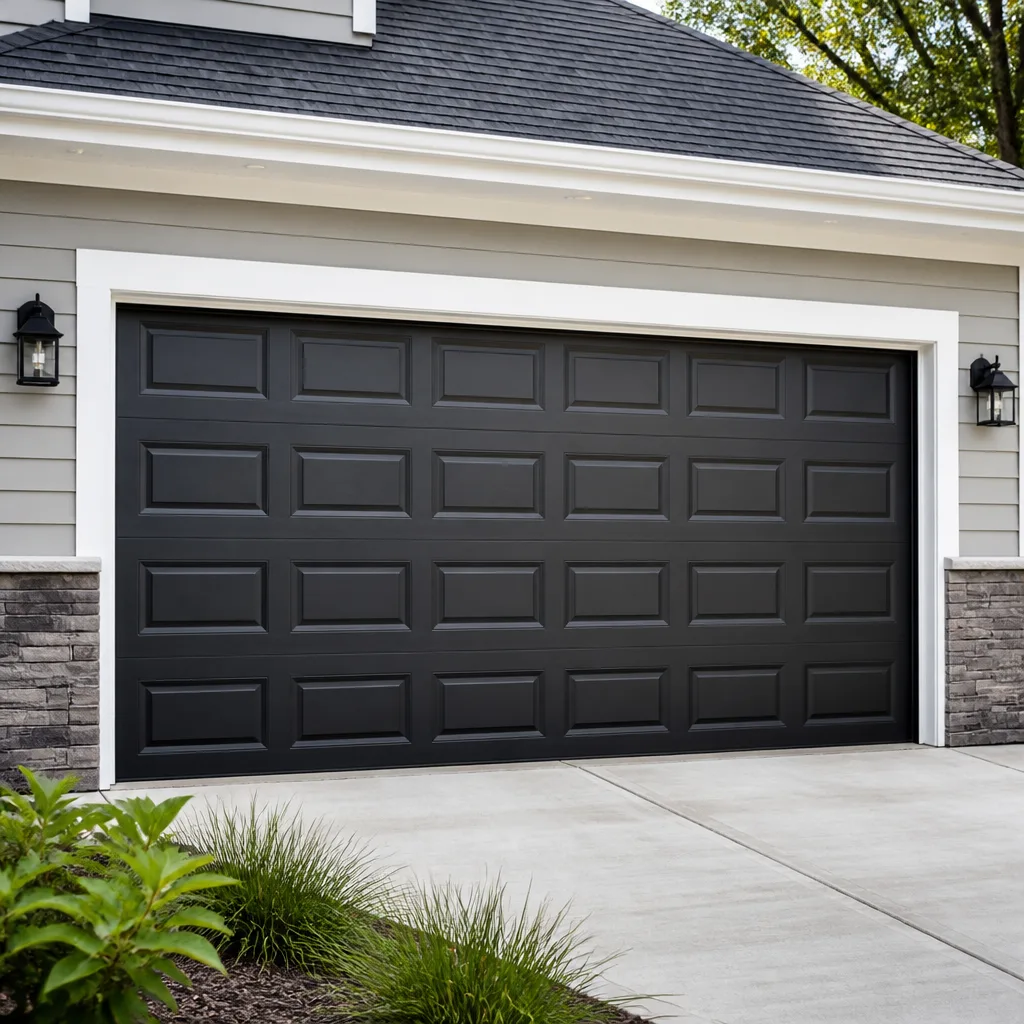 Raised-panel steel
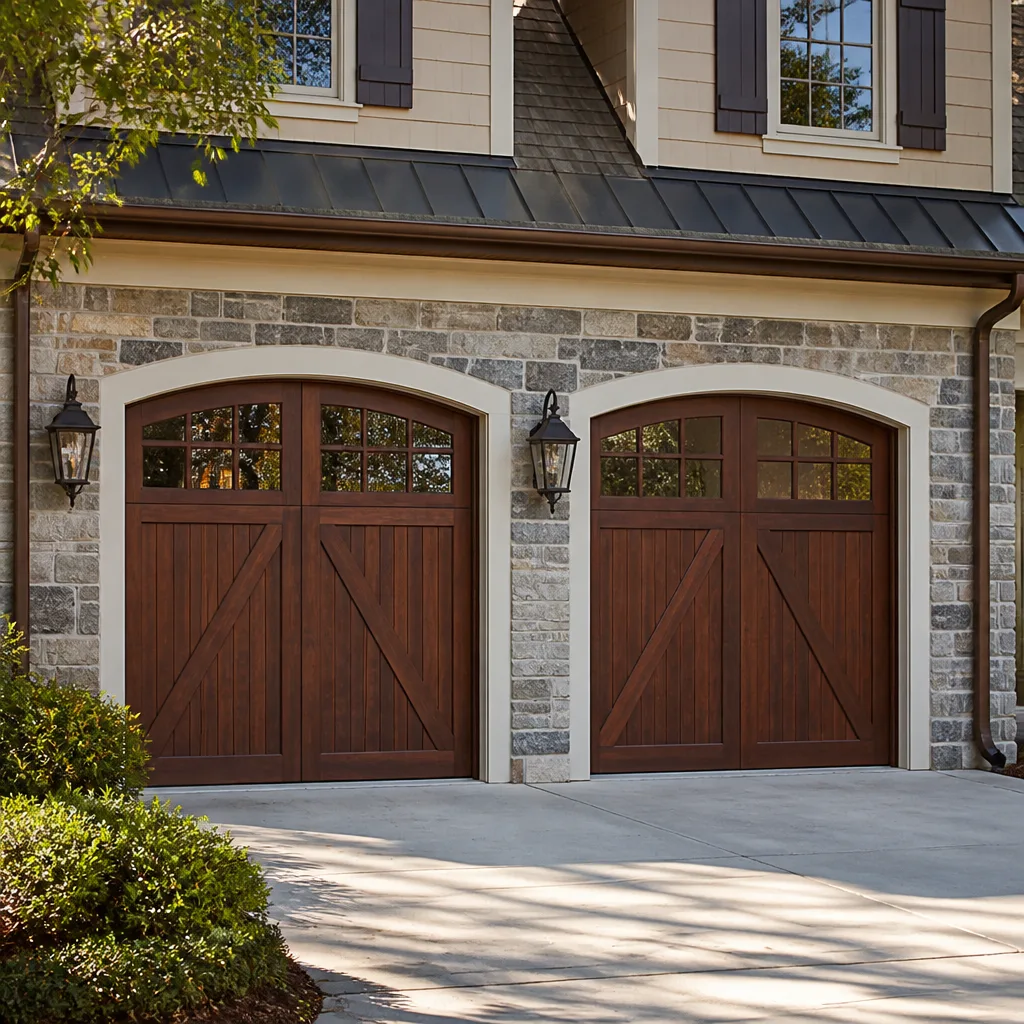 Carriage house
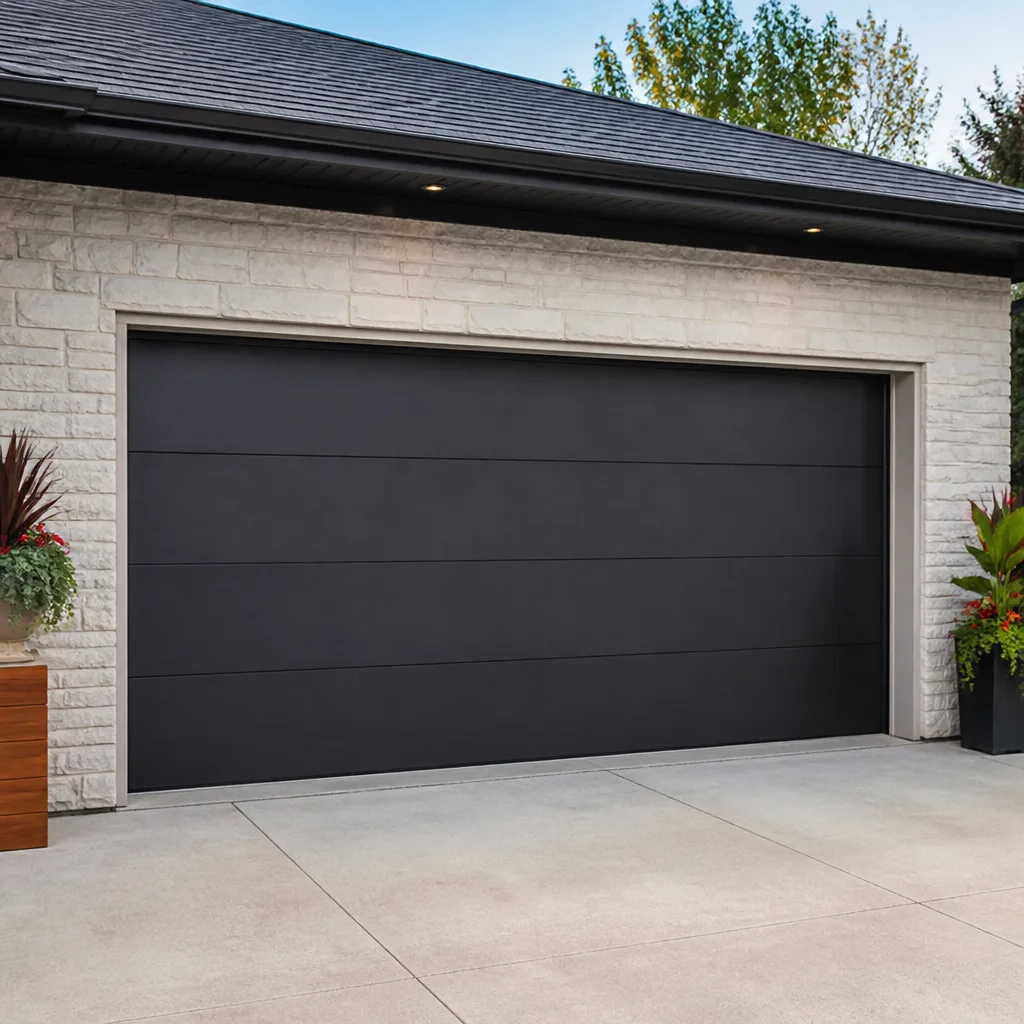 Modern flush
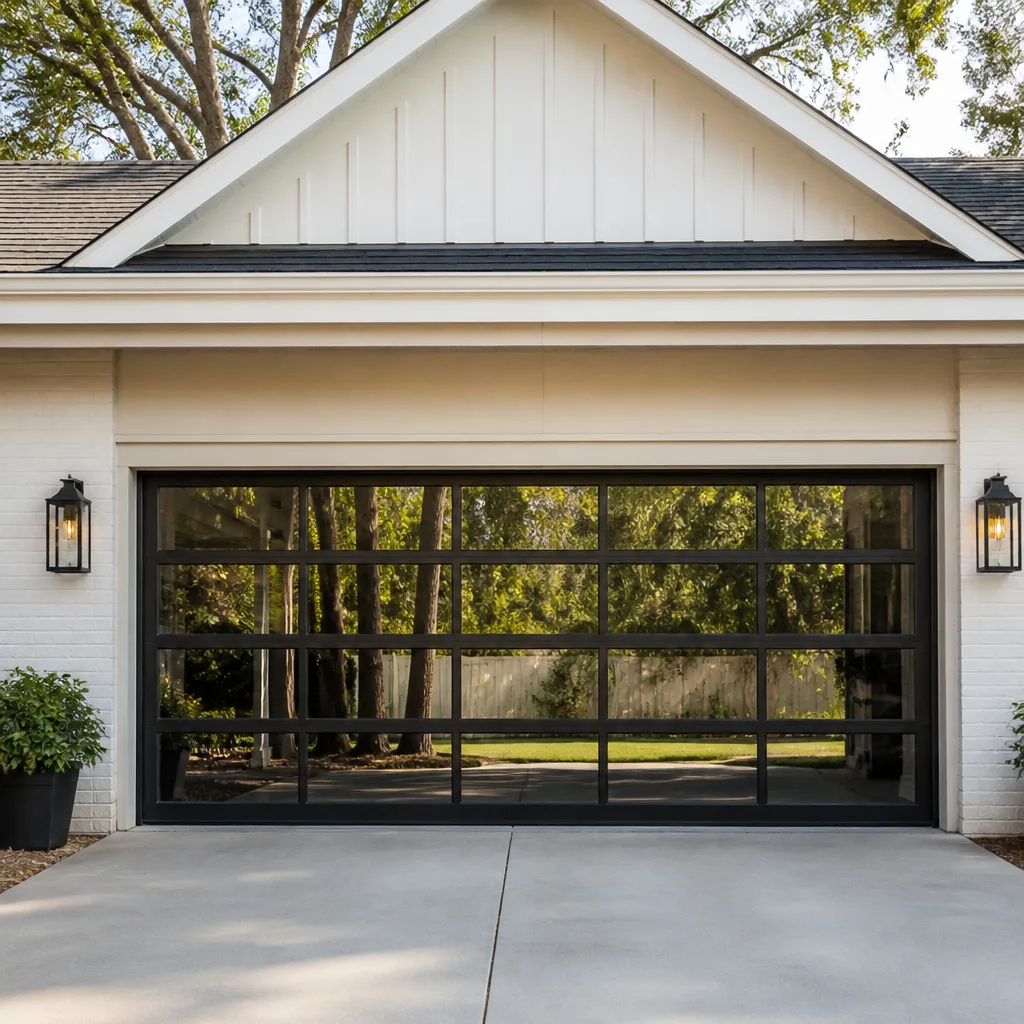 Full-view glass
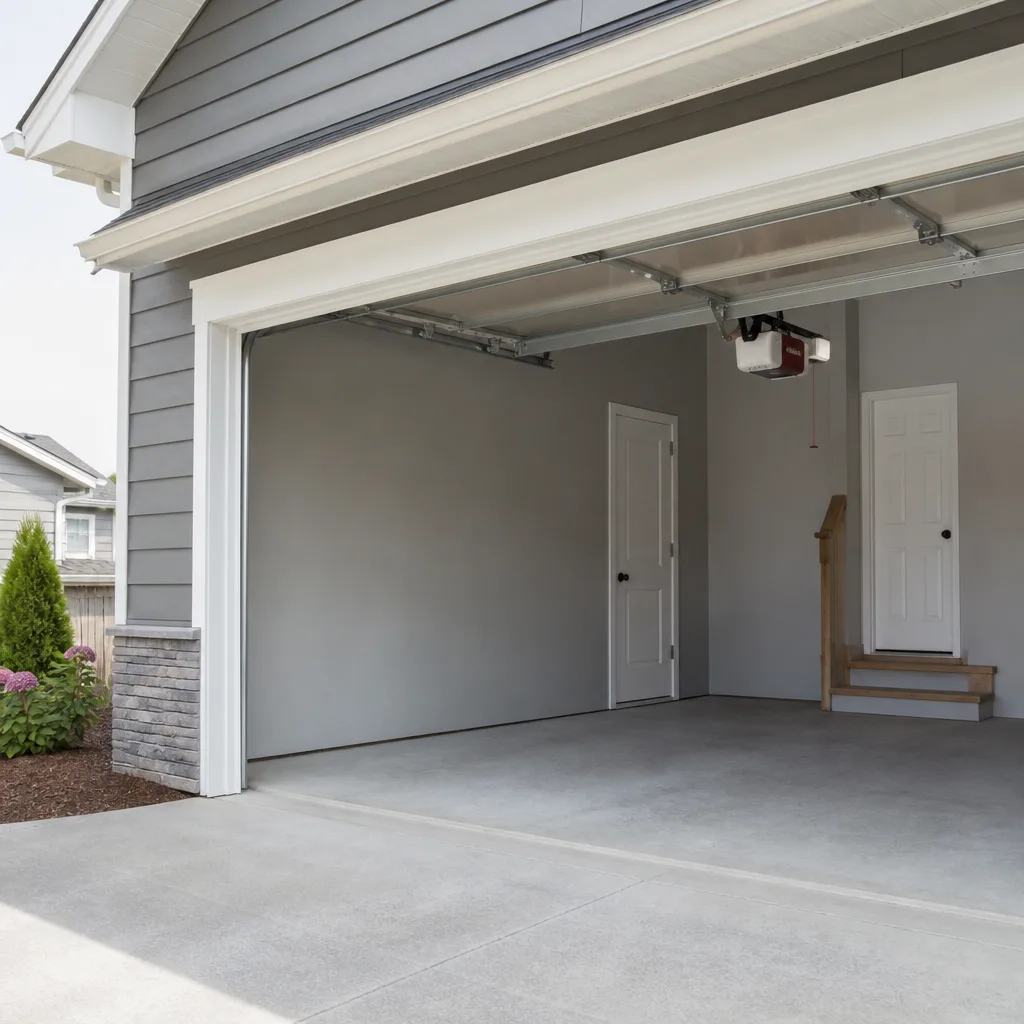 LiftMaster openers
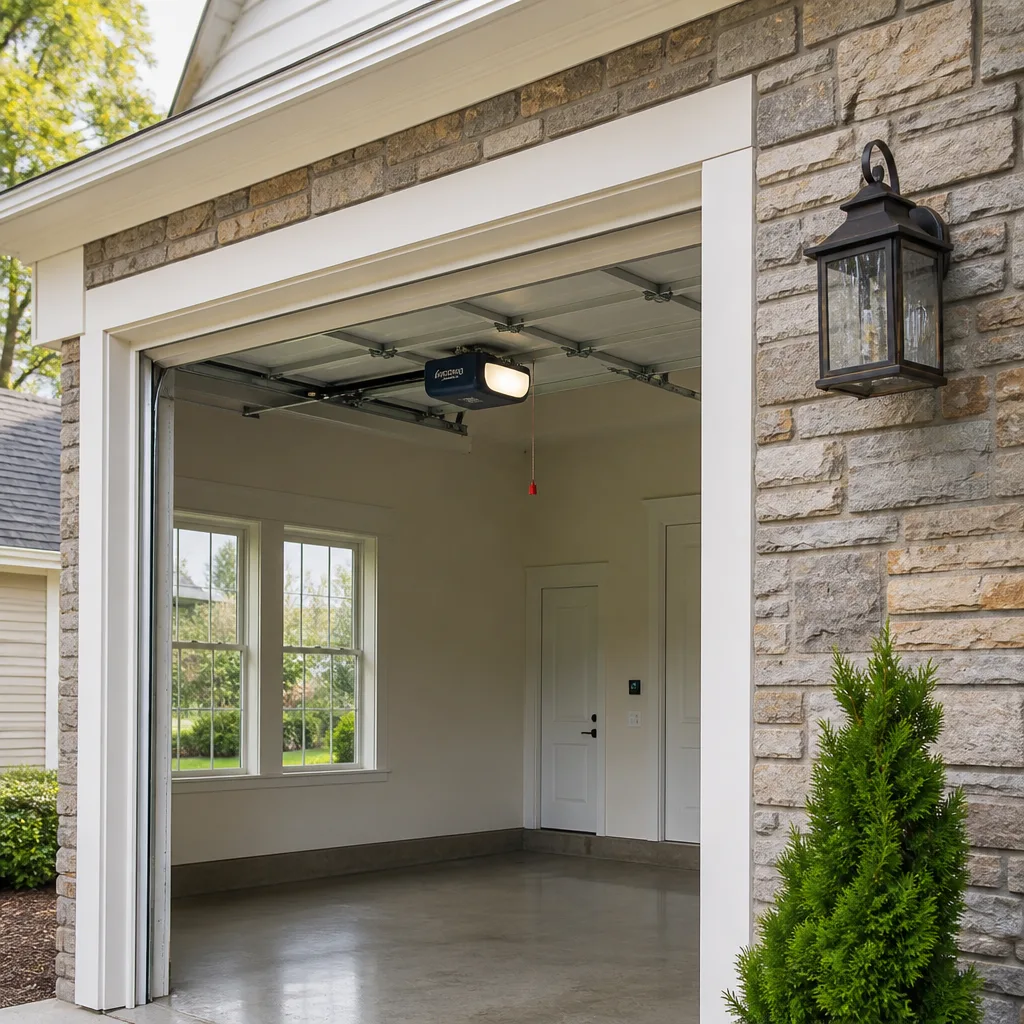 Chamberlain openers
Full 25-point door and opener safety check with every visit - springs, cables, rollers, tracks, and your LiftMaster or Chamberlain opener included
You get a price before we start. It does not change when the truck arrives.
Get your free estimateGarage Door Emergency Preparedness Guide for Lakeland Homes
A garage door stuck in the open position with a named storm 18 hours out isn’t a maintenance problem – it’s a structural vulnerability. Most Lakeland homeowners don’t know where their manual release cord is, let alone how to use it safely under pressure. This guide walks you through the two emergency scenarios we see most often in Lakeland – a door stuck open before a storm, and a door that won’t open after a power outage or impact – with step-by-step protocols, the tools to keep on hand, and clear thresholds for when to stop troubleshooting and call an emergency technician. For more on diagnosing issues yourself, see our Garage Door Repair Troubleshooting: Common Problems and How to Fix Them.
Styles & brands we work with
Quick Answer
A garage door emergency in Lakeland usually means one of two things: a door stuck open with severe weather approaching, or a door that won’t respond after a power outage or impact. In both cases, your immediate priority is securing the door manually using the red emergency release cord, then assessing whether the issue is power-related, mechanical, or structural. For a full breakdown of routine upkeep that prevents these emergencies, check our Garage Door Repair Maintenance Checklist for Lakeland Homeowners. If the door is off its tracks, has a snapped cable, or won’t hold position manually, call (866) 253-2286 – the door is unsafe to operate and needs a garage door specialist who works with your specific hardware.
Table of Contents
- The Two Emergency Scenarios Lakeland Homes Face Most
- Manual Release Operation Protocol: The Exact Sequence
- Storm-Specific Emergency Procedures for Lakeland
- Post-Outage Restart Sequence by Opener Brand
- Damage Assessment After a Storm or Impact
- Emergency Kit Contents for Your Lakeland Garage
- Common Mistakes to Avoid
- When to Call a Professional
- Frequently Asked Questions
- The Bottom Line
For a broader look at how we approach emergency and non-emergency repairs across the equipment we service, start with the Lift Line Garage Door Repair home page.
The Two Emergency Scenarios Lakeland Homes Face Most
Lakeland’s climate creates a specific pattern of garage door failures. Afternoon thunderstorms roll through from roughly June through September, often with little warning. Hurricane season runs from June 1 through November 30, and while Polk County sits inland, Lakeland regularly feels the effects of named storms – high winds, heavy rain, and most relevant to garage doors, power outages and flying debris. On top of that, the humid subtropical climate accelerates rust on springs, cables, and track hardware faster than homeowners expect.
Against that backdrop, our technicians see two emergency scenarios repeat constantly:
- The door stuck open or half-open before a storm. A torsion spring snaps while the door is up, or a cable slips and the door jams mid-travel. The homeowner watches the forecast and realizes they have hours, not days, to secure the largest opening in their home.
- The door won’t open after a power outage or impact. A surge knocks out the opener’s logic board, or wind-blown debris pushes a panel slightly off-track just enough to bind the rollers. The homeowner needs the car out – or in – and the door won’t move under power.
Both scenarios demand the same first skill: knowing how to operate your door manually. That skill is also the most commonly botched, which brings us to the protocol.
Manual Release Operation Protocol: The Exact Sequence
Every modern garage door opener has an emergency release mechanism – a red cord hanging from the trolley assembly on the opener rail. Pulling it disconnects the door from the opener carriage, and that’s when most mistakes happen. Here’s the sequence we teach Lakeland homeowners, followed by the error that leaves the release cord inaccessible just when you need it most.
Step-by-Step: Safely Disconnecting and Operating Your Door by Hand
- Close the door first if it will move under power. If the door is open and the opener still responds, press the wall button and let it close fully. You want gravity working with you, not against you.
- Pull the red emergency release cord straight down and release. Pull once, firmly, toward the floor. You’ll hear a click as the trolley disengages. Do not pull sideways or wrap the cord around your hand.
- Test that the door moves freely by hand. Lift the door a few inches from the bottom. It should move smoothly with moderate effort. A door that feels heavy or sticks mid-lift has a spring problem – stop and call a professional. Do not attempt to force it.
- Move the door slowly to the desired position. Keep your hands on the bottom edge, feet clear of the track. If the door starts to drop faster than you can control, let it go and step back. A door without a working spring can weigh 150 to 300 pounds.
- Secure the door once positioned. For the closed position, use a padlock through a track hole just above a roller, or slide a large screwdriver through a track bolt hole. For the open position, clamp locking pliers onto the track directly beneath a roller on both sides.
- Reconnect only when the opener issue is resolved. Press the opener’s wall button once. The trolley will return to the carriage and re-engage on the next cycle. If it doesn’t latch properly, pull the cord again with the door closed and run the opener through a full cycle.
The Common Mistake That Leaves the Release Cord Inaccessible
Many homeowners pull the release cord while the door is open and then manually lower the door. That sounds correct – but here’s the problem: the trolley is now at the back of the rail, near the opener motor, while the door is closed at the front. The red cord hangs from the trolley, meaning it’s now dangling somewhere near the middle or back of your garage ceiling. In a dim garage during a power outage, that cord becomes nearly impossible to find and reach, especially if you don’t have a stepladder. The fix is to always reconnect the trolley – or at minimum note where the cord now hangs and place a stepladder beneath it – before you manually move the door. In our experience across Lakeland homes, this is the mistake that turns a five-minute recovery into a panicked search in the dark.
Storm-Specific Emergency Procedures for Lakeland
When a tropical system is tracking toward Florida and you have hours, not days, the goal shifts from repair to securing the opening. Here’s the protocol we recommend for Lakeland homeowners who cannot get a technician out before landfall.
If the Door Is Stuck Open
- Disconnect the opener using the release protocol above.
- Lower the door manually if it moves on its track. If the door lowers smoothly, secure it in the closed position with a padlock or bolt through the track. A closed, locked door is your best defense against wind pressure and debris.
- If the door won’t move, do not force it. A door stuck open usually means a snapped cable, broken spring, or a panel off-track. Forcing it can pull the entire assembly off the header, turning a repair into a replacement.
- Board the opening from the inside. If the door cannot be lowered, use 3/4-inch plywood sheets screwed into the door frame studs to cover the opening. Work from inside the garage, not outside. This reduces the pressure differential that causes roof lift-off during hurricanes and keeps wind-born debris out.
- Reinforce the door from the inside with bracing if it’s closed. If your door is closed but old or single-layer, brace it with 2x4s wedged against the panels from inside. There are retrofit bracing kits available, and in Lakeland, homeowners installing new doors frequently ask about hurricane-rated options – something we cover when reviewing installation choices with Garage Door Installation in Jan-Phyl Village.
If the Door Is Stuck in Mid-Travel
A door stopped halfway up is under maximum spring tension and represents the most dangerous state. Do not stand under it. Do not try to push it up or pull it down. If the cables are intact and the door appears on-track, you may be able to slowly lower it by hand after pulling the release cord – but only if the door moves freely in one direction with light pressure. Any resistance means a mechanical failure. Board the opening and wait for professional service. A mid-travel garage door in Lakeland during a tropical storm is not a DIY project; it’s an emergency call to (866) 253-2286.
Doors That Won’t Open After a Power Outage
Power returns, the lights come back on, and the opener does nothing. Before you assume the opener is dead, work through the restart sequence below. If you’d rather have a technician handle it from the start, our Garage Door Opener Repair in Jan-Phyl Village page covers the full diagnostic approach.
Post-Outage Restart Sequence by Opener Brand
The four opener brands we see most often in Lakeland garages – LiftMaster, Genie, Chamberlain, and Craftsman – each respond to power interruptions with slight differences. Here’s the restart sequence for each, including the quirk that catches Lakeland homeowners off guard.
LiftMaster
- Unplug the opener for 30 seconds, then plug it back in. This clears the logic board’s surge state.
- Press and hold the wall button for five seconds. LiftMaster openers with battery backup will chirp twice if the backup is low or depleted.
- Check the LED on the motor unit. A solid green light means the opener has power and is ready. A blinking green means the safety sensors are misaligned or obstructed. A dark unit means a tripped GFCI outlet – check the outlet, not the opener.
- If the opener is on a myQ system, the app will show “offline” until the opener reconnects to the router. Wait 60 seconds and check again.
Genie
- Unplug the opener for 30 seconds, then plug it back in.
- Genie openers historically do not auto-reconnect to wall consoles after a power event. You may need to press the console button once to resync the console to the motor.
- If you have an Aladdin Connect unit, the app will take up to two minutes to re-establish connection. If it stays offline, verify the opener has Wi-Fi by checking the light on the Aladdin connect module.
- Genie’s IntelliCode remotes usually survive outages, but if the remote doesn’t respond, press the learn button on the motor and re-pair the remote – a 30-second procedure.
Chamberlain
- Unplug for 30 seconds and reconnect.
- Chamberlain openers with battery backup will run one full cycle on battery before recharging. If the door only moves a few inches, the battery is depleted – wait 30 minutes and try again.
- The wall control may show a series of arrows flashing. That’s the opener in “lock mode” – many homeowners activate it accidentally during a power flicker. Press and hold the lock button on the wall console for two seconds to clear it.
- If the opener is a Security+ 2.0 model and the remote doesn’t work, the myQ app can still operate the door as long as the unit has power.
Craftsman
- Unplug for 30 seconds and reconnect.
- Older Craftsman openers – the chain-drive units from the 1990s and 2000s – frequently have hard-wired limit switches that can lose their setting after a surge. Listen for the opener running but the door not moving: that’s the limit gear stripped, and it needs replacement.
- If the remote doesn’t respond, the opener’s receiver board may have reset. Press the learn button and re-pair all remotes, including any keypad mounted outside the garage.
- Many Craftsman openers in Lakeland garages are wired into a dedicated outlet. Confirm the outlet’s GFCI hasn’t tripped before assuming the opener failed.
Damage Assessment After a Storm or Impact
After winds batter the door or a vehicle clips a panel, the temptation is to hit the button and check that everything works. Before you do, perform these visual checks. You’re looking for damage that could make the door dangerous to operate.
- Check the panel alignment. Stand in front of the door, both sides visible. The panels should form straight horizontal lines. If any panel is bowed, dented inward, or sits proud of the panel below it, the door structure is compromised.
- Inspect the cables. The lift cables run vertically along both sides, near the track. A healthy cable is taut and sits in its drum groove. A slack cable, a frayed cable, or a cable resting outside its drum means the spring system may be damaged. Do not operate the door.
- Look at the track. The vertical tracks should be parallel and the horizontal tracks should be level. Any visible gap between the track and the wall, or any bend in the track, means the door will bind.
- Test the balance. Disconnect the opener with the release cord, then try to lift the door to waist height. It should stay where you leave it. If it drops or springs up, a spring has broken or weakened – and spring repair is never a DIY job.
- Listen for new sounds. With the door disconnected, move it by hand through its full travel. Grinding, popping, or rattling in the rollers or hinges signals damage that will worsen with every cycle.
If any of these checks fail, the safest action is to leave the door in the closed or secured position and request a professional assessment. Garage door springs under tension are genuinely dangerous – Lakeland emergency rooms see injuries every year from homeowners who attempted spring repairs or forced a jammed door. No time-savings is worth a hand injury. If you need a broader diagnosis of what’s repairable versus replaceable, our Garage Door Repair in Jan-Phyl Village page explains our repair-first approach.
Emergency Kit Contents for Your Lakeland Garage
Most emergency garage situations spiral because homeowners lack two or three basic items. Based on the calls we answer in Lakeland, here’s the five-item kit that makes almost every emergency more manageable. Keep these in a labeled container on a shelf near the door, not buried in a box.
- A padlock or two track locks. The fastest way to secure a closed door manually is a padlock through a hole in the vertical track. You’ll need one per side. If your track has no holes, a pair of locking pliers clamped on the track below a roller on each side does the same job.
- A battery backup unit. If your opener doesn’t have a built-in backup, consider a third-party unit compatible with your head. For reference, LiftMaster and Chamberlain units with integrated battery backup will run roughly 24 hours in standby or 10 to 20 full cycles depending on the model. Genie offers backup units on its higher-end belt drive models. Even a simple UPS sold for computers can keep an opener alive through a short brownout, though it won’t run a full cycle.
- A second programmed remote. The remote on your visor fails for predictable reasons: dead battery, lost programming after a surge, or physical damage. A spare remote already paired to your opener eliminates that failure point. This is the single cheapest way to avoid a locked-out garage.
- A stepladder tall enough to reach the release cord. Emergency release cords hang at roughly eight feet in a standard seven-foot-high garage. In a power outage, you need to reach it without a running opener. A three-step ladder stored near the door solves the problem.
- Replacement remote and keypad batteries. Most remotes use CR2032 coin cells; many keypads use 9-volt batteries. Keep both. When the remote dies at 6 a.m. on a workday, you’ll replace the battery in 90 seconds instead of driving a second car to work.
If you’re unsure which backup battery fits your opener, or need a second remote programmed, an opener specialist can match the exact hardware. We work across LiftMaster, Chamberlain, Genie, and Raynor equipment daily – the brand on your door is the brand we know.
Common Mistakes to Avoid
- Forcing a jammed door. The most expensive mistake in Lakeland is also the most common: a homeowner hits the opener button repeatedly or pushes on a stuck door until something gives. When a door jams, the problem is mechanical. Forcing it converts a $200 repair into a $1,500 panel or track replacement.
- Pulling the release cord while the door is open and ignoring the trolley position. As covered above, this leaves the cord unreachable and turns a simple disconnect into a ladder search in the dark. Always note where the trolley sits before you move the door.
- Attempting spring repair. Torsion springs are wound with 50 to 80 pounds of torque per quarter-turn, and a slipping winding bar at full tension is lethal. This is the one garage door component that has no realistic DIY path. Call a professional – every time.
- Ignoring the GFCI outlet. In many Lakeland homes, the garage opener is wired into a GFCI circuit shared with the garage outlets and sometimes an exterior outlet. A tripped GFCI looks exactly like a dead opener. Check the outlet before you declare the opener failed; resetting it takes five seconds.
- Leaving the door secured with only the opener. An opener is not a lock. If you’re evacuating for a hurricane, disconnect the door and lock the track mechanically. An opener that loses power can still release the door, and wind pressure can force an unlocked door upward.
- Operating a door you suspect has panel damage. A dented panel is not cosmetic – it changes the door’s weight distribution and can cause a cable to jump its drum on the next cycle. If you see visible panel deformation, secure the door and have it assessed.
- Using the wrong backup battery. Plugging in an incompatible battery or UPS can damage the opener’s board. Match the backup unit to your opener brand and model. If in doubt, a technician can identify what you have in under five minutes.
When to Call a Professional
Some situations are beyond the scope of safe homeowner action. Call a garage door specialist when: the door is off its track; a cable is snapped or unwound; a torsion spring is broken; the door is stuck in mid-travel and won’t move with light pressure; the opener runs but the door doesn’t move; or you have a named storm approaching and the door cannot be lowered and secured by hand. In any of these scenarios, further attempts to operate the door risk injury and compound the damage. Lift Line Garage Door Repair offers free estimates in Lakeland – call (866) 253-2286 and a technician will assess the situation and give you a clear price before any work begins.
Frequently Asked Questions
Pull the red emergency release cord hanging from the opener rail to disconnect the door, then lift the door by hand from the bottom edge. If the door is heavy or won’t move smoothly, the spring has failed – stop and call (866) 253-2286 rather than forcing it. Once power returns, press the opener button to re-engage the trolley automatically.
Disconnect the opener and attempt to lower the door by hand. If it won’t lower or feels unstable, do not force it – board the opening from inside with plywood screwed into the framing. A stuck-open door with a named storm approaching is an emergency, and a professional assessment is warranted before the winds arrive.
Emergency garage door repair in Lakeland typically ranges from $150 to $350 for common failures like a snapped cable or broken spring, with more extensive track or panel repairs running higher. Every estimate we provide includes the full price before work starts, so there are no surprises on the invoice.
Many opener failures are repairable – blown logic boards, stripped gears, faulty safety sensors, and failed capacitors all have replacement paths. Opener replacement is warranted when the motor itself fails or the unit is old enough that repair exceeds half the cost of a new opener. Our approach is repair-first; we only recommend replacement when the math and longevity justify it.
No. The price you are quoted before work begins is the price you pay. We walk through the diagnosis, explain exactly what needs replacing or adjusting, and agree on the number before any tool touches the door. If additional damage is discovered mid-repair, we stop and get your approval before proceeding.
We stock common parts for LiftMaster, Chamberlain, Genie, and Craftsman openers on our service vehicles, including safety sensors, logic boards, gears, remotes, and backup batteries. For less common failure points, parts are typically available same-day from our local supply chain. Call (866) 253-2286 and we’ll let you know over the phone what we’re dealing with.
The Bottom Line
Garage door emergencies in Lakeland reward preparation and punish improvisation. The homeowner who knows where the release cord is, has a spare remote and backup battery in a labeled kit, and can secure the door manually before a storm hits is in a fundamentally different position than the one who discovers these things at 9 p.m. in a downpour. The two scenarios that drive most local emergency calls – stuck-open doors before weather, and dead openers after outages – both have structured responses that don’t require special skill, only knowledge and the right few items on hand. When the situation exceeds safe homeowner action, a specialist who works on the brand already hanging in your garage is the fastest way back to a secure, operating door. For more guides & resources on protecting your home, explore our blog.
Written by the team at Lift Line Garage Door Repair, serving Lakeland since 2012.
See the difference
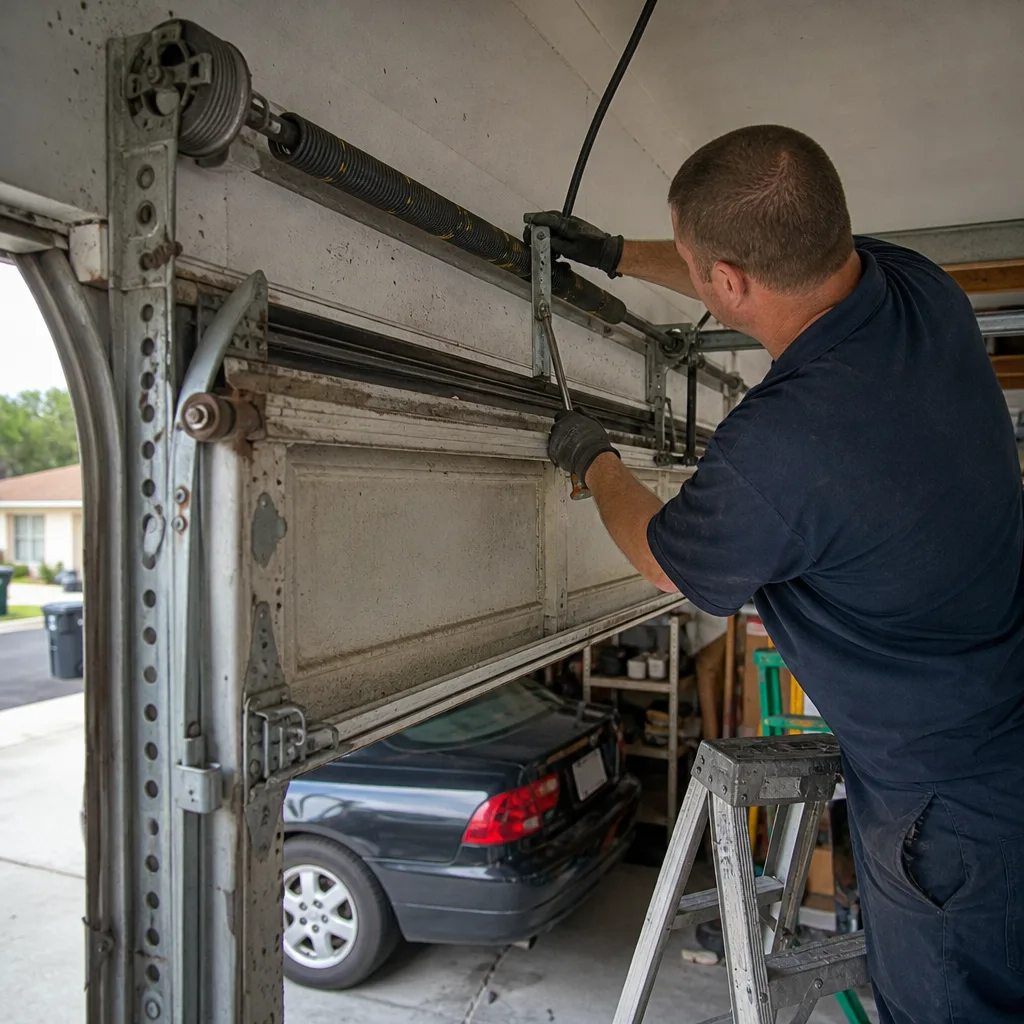 Before
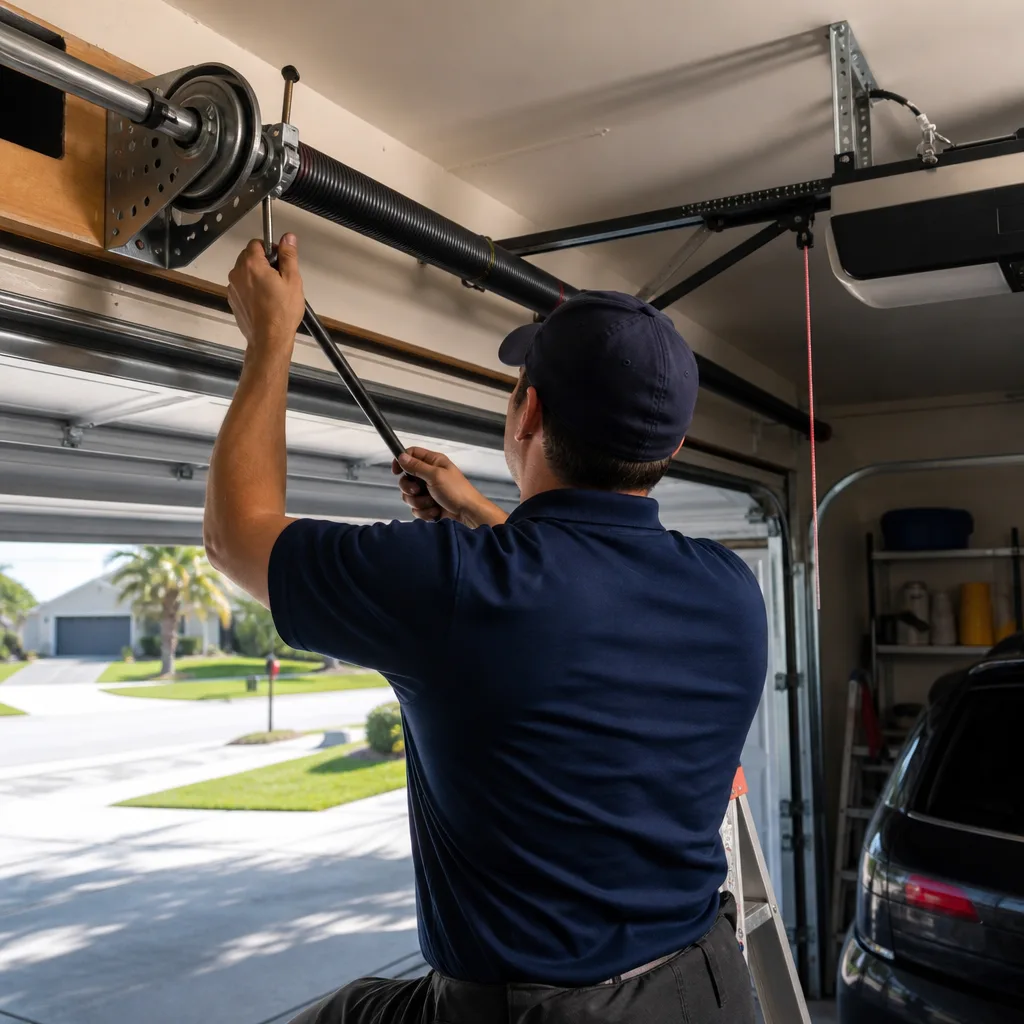 After
 Before
 After
 Before
 After